The Best Way to Cook a Turkey
There is no best method, only a best method for your bird, your kitchen and your nerve. Four questions settle it, and the first one is the only one that really matters.
By Mike M. · Published · Last updated

How this page is funded: Fryer & Feast is a participant in the Amazon Associates Program. If you buy through a link here we may earn a commission, at no extra cost to you. It never changes which products we recommend — see how we pick and our full affiliate disclosure. Every buy link goes straight to the retailer, so the price you see is the live one on the day you buy.
For most first-time hosts the best way to cook a turkey is an electric roaster oven: it takes a bigger bird than your oven will, it frees the oven for everything else, and there is no hot oil in it. Deep frying is the fastest and gives the best skin, at the cost of three gallons of hot oil outdoors and a real fire risk. The oven you already own is free, familiar and gives the best gravy, but it blocks the appliance you need for every other dish. Pick on the bird size and the oven schedule, not on which result sounds nicest.
Quick picks
| # | Product | Best for | Score | Price |
|---|---|---|---|---|
| 1 | No image Oster 22-Quart Roaster Oven with Self-Basting LidTakes a 26-pound bird, frees the oven, and holds everything warm afterwards. | Best for most people | 9.1 | |
| 2 | 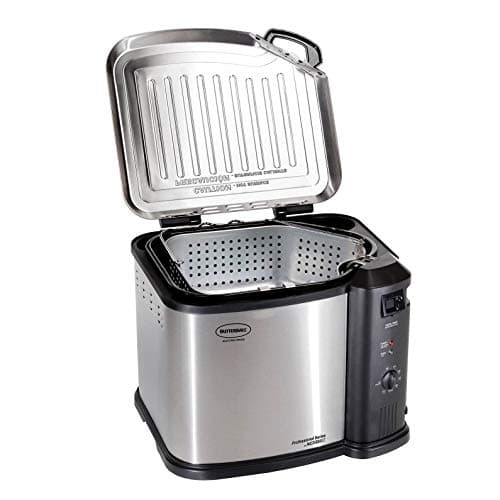 Masterbuilt Butterball XL Indoor Electric Turkey FryerFrying is the fastest method, and indoor electric is the version with a fraction of the risk. | Best for a fried bird without going outdoors | 8.9 | $349.99 · View on Amazon #ad We may earn a commission · Price as of October 17, 2026 |
| 3 | 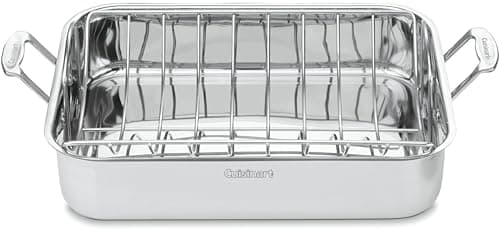 Cuisinart Chef's Classic 16-Inch Roasting Pan with RackThe only extra thing a conventional roast needs is a pan that fits the bird and makes the gravy. | Best for the oven you already own | 8.0 | $79.95 · View on Amazon #ad We may earn a commission · Price as of October 17, 2026 |
Scores are our own editorial rubric, explained on how we pick. Four criteria per category, scored out of ten, so the leading pick is clear at a glance.
The decision table
Four questions, in order. The first one usually answers it on its own.
| If this is true | Cook it in |
|---|---|
| Your bird is over 20 lb | A 22 qt roaster oven, or two smaller birds two ways |
| You have one oven and five other dishes | A roaster oven — it is the oven problem, not the bird problem |
| You want gravy from the drippings above all else | The oven, in a heavy pan |
| You want the best skin and the shortest cook | A fryer — indoor electric if you can, propane if you must |
| There is no outdoor space or it is freezing | Roaster oven or indoor electric fryer, never propane indoors |
| You are nervous and it is your first time | Roaster oven |
| There are small children in the house all day | Roaster oven or the oven — not an open-flame propane rig |
| You own nothing and want to spend nothing | The oven and a good pan |
Work out the bird size before any of this — the figure is about 1.5 pounds of bone-in turkey per guest, and how much turkey per person has the chart. A surprising number of people buy a 24-pound bird for twelve people and then go looking for an appliance that will take it.
What each method actually costs you
Every method is a trade. These are the real ones, stated plainly.
The oven costs you the oven. Four to five hours of the one appliance everything else needs. That is the whole cost, and on a small menu it is no cost at all. On a menu with dressing, potatoes, a gratin and rolls, it is the thing that makes the afternoon hard.
The roaster oven costs you browning and storage. A covered humid box browns less than dry oven heat, and a 22-quart appliance is a large object to keep. In exchange you get capacity, a free oven and a warming oven afterwards.
Frying costs you oil, gravy and risk. Three gallons of oil to buy, handle, cool and dispose of; no drippings, so no pan gravy; and a genuine fire hazard that has a specific set of rules attached to it. In exchange, the fastest cook and the best skin of any method.
Oil-less infrared costs you the point. A Char-Broil Big Easy roasts a bird quickly with no oil at all, which removes the main risk of frying. It also does not produce the shatter-crisp skin that is the reason people fry. Oil-less fryers covers where it fits.
Smoking costs you time and attention. Worth saying only to note it is not covered here: it is an all-day job with its own equipment, and it is not a first-time hosting method.
How long each method takes
Planning figures only. In every method the bird is done when the thermometer says so, not when the clock does — 165F in the deepest part of the breast, and where to put the thermometer matters more than the number.
| Method | Temperature | Rough timing | 14 lb bird |
|---|---|---|---|
| Deep fry | 350F oil | About 3 to 4 min per lb | 45 min to 1 hr |
| Roaster oven | 400F for 1 hr, then 350F | Normally 15 to 20 min per lb | 3.5 to 4.5 hr |
| Conventional oven | 325F to 350F | Similar to a roaster, slightly longer uncovered | About 4 hr |
| Oil-less infrared | Propane, vertical chamber | Roughly 10 min per lb | About 2.5 hr |
Two notes on the fryer row. The initial heat-up of the oil is 45 minutes to an hour on top of the cook time, so the real saving is smaller than it looks. And a stuffed bird adds 30 to 45 minutes in a roaster, and cannot be fried at all.
The roaster-oven numbers come from Nesco’s own instructions for an 18-quart roaster; the full chart including ham and other cuts is in roaster oven cooking times.
If you are down to two options
This page is the chooser. Once you have narrowed it to two appliances, the head-to-head pages go much deeper than there is room for here.
- Roaster oven vs oven — the browning question, the capacity question and whether it is worth owning a second appliance at all.
- Turkey fryer vs oven — speed and skin against gravy and risk.
- Roaster oven vs turkey fryer — the two bought appliances set directly against each other, which is the comparison most people actually need.
- Propane vs electric turkey fryer — if you have already decided on frying.
What matters more than the method
Four things decide whether the turkey is good, and none of them is the appliance.
Thaw it completely. The most common cause of a bad turkey in any method and the direct cause of nearly every fryer fire. Work the timetable backwards — how to thaw a turkey has the charts.
Use a thermometer. Every method on this page comes out well with an accurate probe and badly without one. If you buy one thing after reading this, buy that.
Brine or salt it ahead. A dry brine the day before does more for the eating quality than switching appliances does. Dry brine vs wet brine covers which.
Rest it, and carve late. Twenty to forty minutes tented loosely, and do not carve until you are serving — keeping the turkey warm is where more birds are ruined than in the cooking.
Then fit it to the day. The hour-by-hour plan for a single oven is in the Thanksgiving cooking timeline, and the whole-week version is in the hosting checklist.
Every pick, in detail
#1 · Best for most people
Oster 22-Quart Roaster Oven with Self-Basting Lid
The default answer for most first-time hosts. Twenty-two quarts takes a 26-pound bird, and the dimpled self-basting lid drips condensation back down so you are not opening it every 30 minutes.
The roaster oven wins the general case for a reason that has nothing to do with the turkey: it solves the oven problem. On a day with dressing, potatoes, a casserole and rolls to get through, the bottleneck is not the bird, it is that one oven cannot do five things in the same two hours.
Capacity is the second argument. Twenty-two quarts takes a bird most domestic ovens cannot fit with a rack and a pan under it, and the lowest setting holds the finished sides above 140F while you carve. That is two appliances for the price of one.
The honest cost is browning. A roaster is a covered box and a bird out of one is paler than a bird out of an oven. Taking the lid off for the last thirty minutes closes most of the gap. The detail is in how to use a roaster oven.
- Capacity
- 22 qt
- Max bird
- Up to 26 lb
- Lid
- Self-basting
- Insert
- Removable enamel pan
What’s good
- Up to a 26 lb turkey — bigger than most ovens manage comfortably
- Frees the oven entirely, which is the real constraint on the day
- Self-basting lid, so fewer lid-off heat losses
- Doubles as a warming oven for the sides once the bird is out
What’s not
- Browns less than an oven unless you lift the lid at the end
- A large appliance to store for eleven months
- No gravy on the stovetop — the cookwell is not a hob pan
- Needs its own outlet
Capacity
9.4
Frees the oven
9.8
Ease for a first host
9.2
Skin and browning
7.8
#ad We may earn a commission · Price as of October 17, 2026
#2 · Best for a fried bird without going outdoors
Masterbuilt Butterball XL Indoor Electric Turkey Fryer
The safest realistic first fryer: it lives indoors on a countertop, holds a 20-pound bird, and takes about a third of the oil a propane rig needs.
If what you actually want is fried turkey, the indoor electric fryer is the sane route to it. It uses about a third of the oil of an outdoor rig, it lives on a counter rather than a driveway, and the wind — which is what makes outdoor frying frustrating — is not a factor.
Frying is genuinely fast. Whole birds run at roughly three to four minutes per pound at 350F, which turns a four-hour roast into under an hour and a half. That is the real argument for it, more than the skin.
What you give up is gravy. There are no drippings from a fryer, so the gravy has to come from stock and the giblets. Plan that in advance rather than discovering it at four o’clock. If you want the outdoor version instead, the kits are in best propane turkey fryers.
- Type
- Indoor electric
- Max bird
- Up to 20 lb
- Oil
- About 2.75 gallons
- Also does
- Boil and steam
What’s good
- Fries a 20 lb bird in a fraction of the time an oven takes
- Indoors on a countertop — no propane, no wind, no yard
- About 2.75 gallons of oil rather than the five a big outdoor rig wants
- Boils and steams too, so it is not a once-a-year appliance
What’s not
- It is still hot oil, with everything that implies
- 20 lb ceiling, and the bird must be completely thawed and dry
- No drippings, so no pan gravy
- Manual temperature dial — the XXL is the one that holds for you
Speed
9.8
Skin and browning
9.6
Ease for a first host
8.2
Risk profile
8.0
#ad We may earn a commission · Price as of October 17, 2026
#3 · Best for the oven you already own
Cuisinart Chef's Classic 16-Inch Roasting Pan with Rack
The pan that does the whole job: it fits a normal holiday bird, the rack lifts it out in one piece, and the aluminum-encapsulated base means the gravy happens in the same pan on the stovetop.
Roasting in the oven is the default for good reasons. It is free, you already know how it behaves, the skin browns properly, and the drippings in the bottom of the pan are the best gravy you will get from any method.
The only real purchase is the pan, and it is worth getting right: a 16-inch pan with a rack, in something heavy enough to go on the stovetop afterwards. A flimsy pan buckles under a 16-pound bird and cannot make gravy. Alternatives, including the disposable route, are in best turkey roasting pans.
The cost is the schedule. A turkey occupies the oven for most of the afternoon, and everything else has to fit around it. That is the single problem a roaster oven exists to solve, and it is why so many people end up owning one.
- Pan size
- 16.8 x 12.8 in, 3.4 in deep
- Material
- 18/10 stainless, aluminum base
- Rack
- Solid stainless, included
- Warranty
- Limited lifetime
What’s good
- 16.8 x 12.8 in takes the 14 to 18 lb bird most tables need
- Rack included, so the bird lifts out whole
- Aluminum-encapsulated base means the gravy happens in the same pan
- No new appliance, no new storage problem
What’s not
- The oven is then unavailable for several hours
- A bird much over 18 lb will overhang the pan
- Heavy when loaded
- Takes real cupboard space for a once-a-year item
Cost to start
9.8
Gravy
9.8
Skin and browning
9.4
Frees the oven
3.0
Frequently asked questions
For most first-time hosts, an electric roaster oven: it takes a bigger bird than a domestic oven, it frees the oven for every other dish, and it holds the sides warm afterwards. Choose the oven instead if pan gravy matters most and the menu is small, and choose a fryer if you want the fastest cook and the crispest skin and will follow the safety rules.
For capacity and scheduling, yes — it takes a bigger bird and it leaves the oven free, which is the real constraint on a holiday afternoon. For browning and gravy, the oven wins: a roaster is a covered humid box, so the skin is paler, and the cookwell is not a stovetop pan.
It is if you want the skin and the speed and you will treat the oil seriously — completely thawed and dry bird, oil level set by water displacement, burner off while the bird goes in, outdoors on a flat non-combustible surface, extinguisher to hand. It is not worth it if you want pan gravy, if the only space is a garage or deck, or if it will be unsupervised for a second.
A 22-quart electric roaster oven — the Hamilton Beach 32215 is rated to 28 pounds and the Oster to 26, which is more than most domestic ovens will take with a pan and rack. Above that, two smaller birds cooked two ways is easier than one very large one, and it thaws and carves faster too.
Roughly 15 to 20 minutes per pound in a roaster oven or a conventional oven, about 3 to 4 minutes per pound in 350F oil, and around 10 minutes per pound in an oil-less infrared cooker. All of those are planning figures: the bird is done at 165F in the deepest part of the breast, whatever the clock says.
Sources
Related reading
- Roaster Oven vs Turkey FryerBird size, timing, risk, skin and what each one does after the turkey comes out — plus the one answer that suits most first-time hosts.
- Turkey Fryer vs OvenSpeed and oven space against simplicity and risk — plus the third option most people should take.
- Roaster Oven vs Oven for TurkeyBrowning and gravy against temperature stability and oven space — plus the approach that gets you both.
- The First-Thanksgiving Starter KitSeven purchases in priority order for a first holiday meal, plus what every other list gets wrong.
- How Much Turkey Per Person?The 1.5 pounds per guest rule with a chart from 4 to 30 people, plus the adjustments for leftovers, boneless breast, children and what your oven or roaster will actually hold.