Where to Put a Meat Thermometer in a Turkey
Bone conducts heat. A probe touching it reads high and tells you the bird is done when it is not — which is the one mistake that actually matters.
By Mike M. · Published · Last updated
How this page is funded: Fryer & Feast is a participant in the Amazon Associates Program. If you buy through a link here we may earn a commission, at no extra cost to you. It never changes which products we recommend — see how we pick and our full affiliate disclosure. We do not publish prices on this site — every buy link sends you to the retailer for the live price.
Put the probe in two places, and neither should touch bone:
- The thickest part of the breast — enter from the side of the bird, running the probe roughly parallel to the breastbone rather than toward it, about two inches deep
- The inner thigh — where the thigh meets the body, angling away from the thigh bone
Both should read 165F or above. Check both sides of the bird — ovens, roasters and fryers are not perfectly even.
Quick picks
| # | Product | Best for | Score | Price |
|---|---|---|---|---|
| 1 | 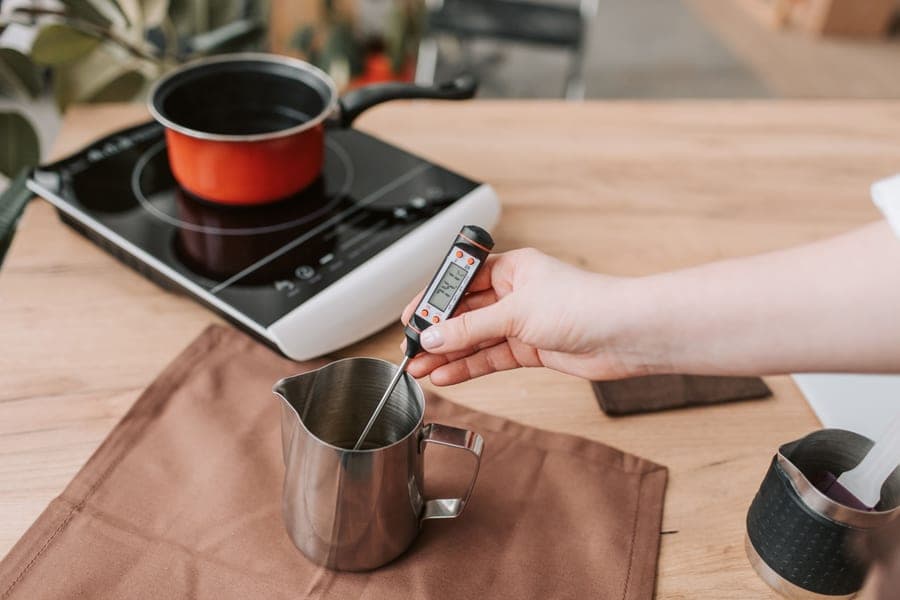 ThermoWorks Thermapen ONE Instant-Read ThermometerOne-second reads mean you take four readings, not one. | For checking | 9.1 | |
| 2 | ThermoPro Dual-Probe Leave-In ThermometerTwo probes track breast and thigh, which never finish together. | For monitoring | 8.7 |
Scores are our own editorial rubric, explained on how we pick. They are not customer ratings and we do not publish star ratings for products we have not handled.
Why touching bone is the mistake that matters
Bone conducts heat faster than meat. A probe resting against bone is reading the hottest thing inside the bird, not the coolest — and the coolest is what determines whether it is safe.
That means the error runs in the dangerous direction. It tells you the bird has reached 165F when the meat around it has not, so you pull it early and serve undercooked poultry believing you checked.
If the probe slides in and hits something hard, back it out and come in at a different angle. A reading that seems surprisingly high compared with another spot is usually bone.
The breast, exactly
Enter from the side of the bird, not from the top. A probe pushed straight down from above usually ends up against the breastbone or out through the cavity.
- Find the thickest part of one breast lobe, roughly halfway along and toward the wing end.
- Insert horizontally from the side, angling slightly toward the center of that lobe.
- Go about two inches in, or to the center of the muscle.
- If you feel resistance, you have found bone. Withdraw slightly and change angle.
- Read. Then repeat on the other breast.
The thigh, exactly
The inner thigh is the slowest part of the bird to come up to temperature, which makes it the one that decides when you are finished.
- Find the crease where the thigh meets the body.
- Insert into the thickest part of the thigh muscle, angling away from the thigh bone.
- Go in until you feel you are in the middle of the muscle.
- Read, then check the other thigh.
If the thigh is lagging well behind the breast — which is common — tent the breast with foil and keep cooking. That protects the part that is already done while the part that is not catches up.
Placing a leave-in probe
A leave-in probe sits in the bird for the whole cook, so placement matters even more — you only get one chance to put it in the right place.
- Put it in the breast, from the side, before the bird goes into the oven or roaster.
- With two probes, put the second in the inner thigh. That is the whole reason to own a dual-probe unit.
- Route the cable out of the oven door seal, or use a wireless probe if you are cooking in a roaster oven, where a cable breaks the lid seal.
- Set the alarm to about 160F rather than 165F — the bird carries on rising a few degrees while it rests.
- Confirm with an instant-read in two or three places before you commit.
Ignore the pop-up timer
The plastic pop-up in a supermarket turkey is calibrated conservatively so that a manufacturer never gets blamed for an undercooked bird. In practice they frequently trigger well past 165F, by which point the breast is dry.
Leave it in if you like — it does no harm — and ignore it. Your thermometer is the instrument.
Check your thermometer before the day
Two minutes, and it removes a whole category of doubt.
- Ice water: crushed ice topped with water, stirred, probe in without touching the sides. Should read 32F.
- Boiling water: rapidly boiling, probe in without touching the pan. Should read 212F at sea level, lower at altitude.
Some thermometers can be recalibrated; the rest should be replaced if they are off by more than a degree or two. Our thermometer roundup covers what to buy.
The other temperatures worth knowing
| What | Target | Why |
|---|---|---|
| Turkey breast and thigh | 165F | Published safe temperature for poultry |
| Stuffing cooked inside the bird | 165F | It sits in raw juices until it gets there |
| Frying oil | 350F | Below this the skin absorbs oil |
| Hot food being held | 140F or above | Above the temperature danger zone |
| Refrigerator | Below 40F | Below the danger zone, for thawing and brining |
The products, in detail
#1 · For checking
ThermoWorks Thermapen ONE Instant-Read Thermometer
One-second reads and the accuracy everyone else is measured against. If you buy one thing off this whole site, buy an accurate thermometer.
- Type
- Instant-read probe
- Read time
- About 1 second
- Accuracy
- Within about 0.5F
- Use
- Meat and oil spot checks
What’s good
- Fastest
- Most accurate
- Folds into a drawer
What’s not
- Expensive
- Not leave-in
Accuracy
9.8
Speed
9.7
Build
9.2
Value
7.8
#2 · For monitoring
ThermoPro Dual-Probe Leave-In Thermometer
The budget leave-in. Two probes means breast and thigh at once, which is the actual problem with a turkey — the two are never done at the same moment.
- Type
- Corded leave-in, remote display
- Probes
- Two
- Alarm
- Programmable target temp
- Best for
- Budget-conscious first cooks
What’s good
- Two channels
- Programmable alarm
- Inexpensive
What’s not
- Corded
- Probes eventually fail
Accuracy
8.6
Convenience
8.8
Build
7.8
Value
9.4
Frequently asked questions
In the thickest part of the breast, entering from the side and running parallel to the breastbone, and in the inner thigh where it meets the body. Neither probe should touch bone.
At least 165F in both the breast and the inner thigh. That is the published safe internal temperature for cooked poultry, and there is no reliable visual substitute for measuring it.
Because the bird genuinely is at different temperatures in different places, and because a probe near bone reads high. Take the lowest reading as the true one, and make sure that lowest reading is 165F.
No. They are calibrated conservatively and often trigger well past 165F, by which point the breast is dry. Use your own thermometer.
Yes, by a few degrees during resting. Pulling at around 160F and letting it carry over to 165F gives a juicier bird than cooking all the way to 165F in the oven.
Sources
Related reading
- The Best Meat Thermometers for TurkeyFour thermometers ranked — instant-read, wireless and leave-in — and why the fryer or oven gauge does not count.
- How Long to Fry a TurkeyFrying times per pound at 350F, and the internal temperature that actually decides when to pull the bird.
- How to Use a Roaster OvenThe whole method from preheat to holding the sides warm afterward, with times by weight.
- How to Carve a TurkeySix steps, in order, plus the resting rule and the warm-platter trick that keeps it hot.
- Turkey Fryer Safety: How to Do This Without IncidentTen ordered safety steps from published fire-safety and turkey-industry guidance, plus the gear that backs them up.