How to Keep a Turkey Warm After Cooking
A whole bird will sit happily for an hour. Carved meat starts drying the moment the knife goes in. Those are two completely different problems, and most advice only solves the first.
By Mike M. · Published · Last updated
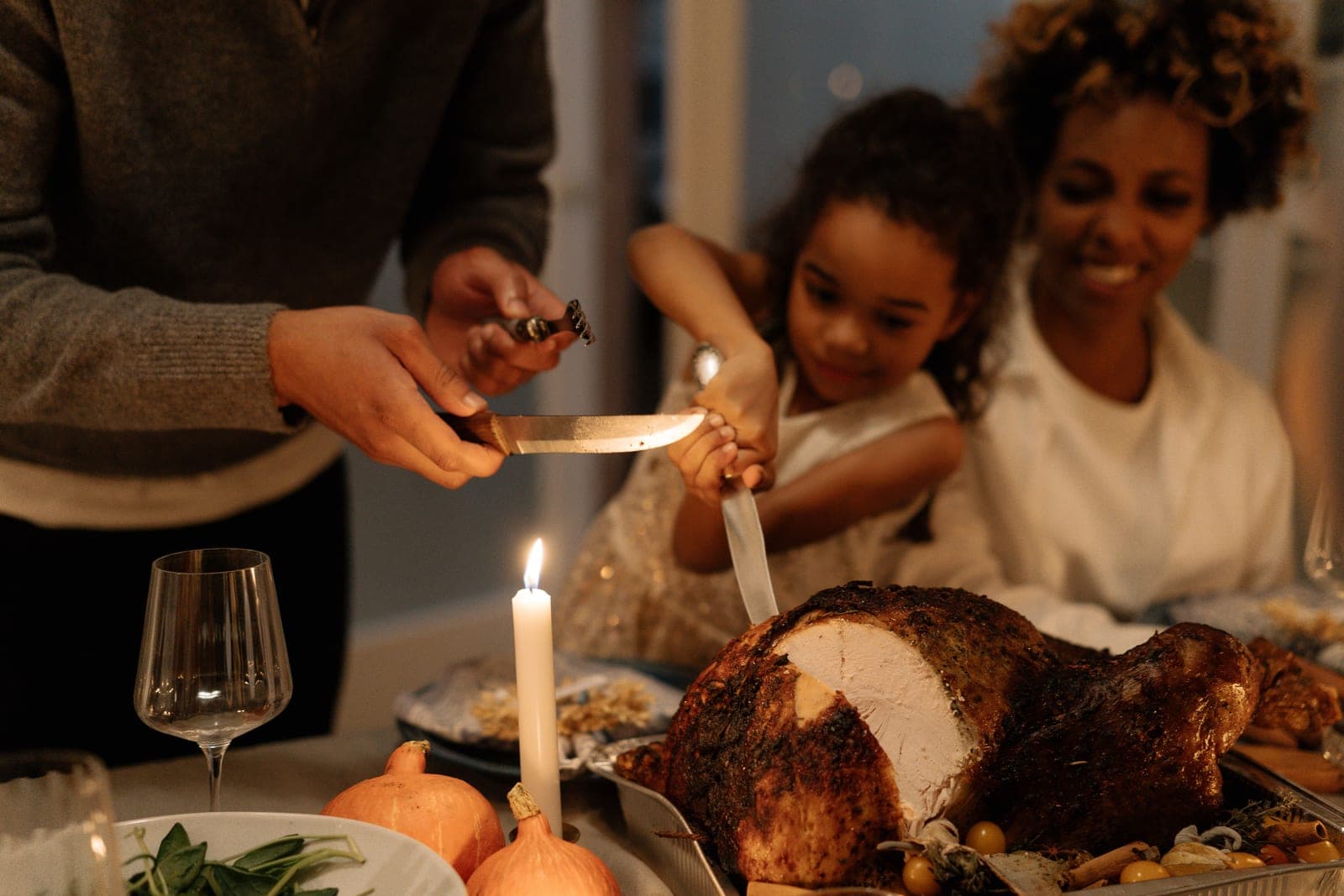
How this page is funded: Fryer & Feast is a participant in the Amazon Associates Program. If you buy through a link here we may earn a commission, at no extra cost to you. It never changes which products we recommend — see how we pick and our full affiliate disclosure. Every buy link goes straight to the retailer, so the price you see is the live one on the day you buy.
Leave the turkey whole, tent it loosely with foil and let it rest on the counter for up to an hour; past that, hold it in an oven or roaster set to its lowest setting with the food itself staying at 140F or above. Do not carve until you are ready to serve. Carved meat has far more exposed surface and dries within minutes, and if you must hold it carved, keep it in a shallow layer with a few spoonfuls of stock and foil pressed onto the surface.
Quick picks
| # | Product | Best for | Score | Price |
|---|---|---|---|---|
| 1 | 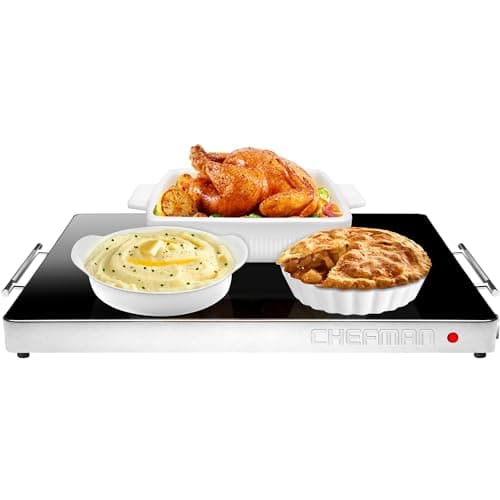 Chefman Electric Warming Tray, 21 x 16 inA 21 by 16 inch surface takes the platter and two sides, where the food can be seen. | Best for holding carved meat at the table | 9.2 | $74.99 · View on Amazon #ad We may earn a commission · Price as of October 17, 2026 |
| 2 | No image Oster 22-Quart Roaster Oven with Self-Basting LidA 150F floor and 22 quarts of space makes it the one appliance that holds everything. | Best for holding a whole bird or a big batch | 9.2 | |
| 3 | 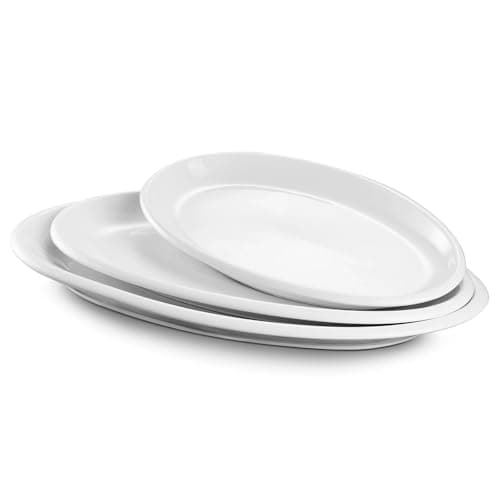 DOWAN Oval Serving Platter Set of 3A warmed 16-inch platter adds twenty minutes of holding for free. | What you carve onto | 9.1 | $31.99 · View on Amazon #ad We may earn a commission · Price as of October 17, 2026 |
Scores are our own editorial rubric, explained on how we pick. Four criteria per category, scored out of ten, so the leading pick is clear at a glance.
First, the rest — which is not the same as holding
A turkey has to rest. Twenty to forty minutes for a normal bird, loosely tented with foil, on the counter. This is not a holding strategy, it is a cooking step: the juices redistribute and the internal temperature carries on climbing several degrees from residual heat.
Three things people get wrong about the rest:
- Tent loosely, do not wrap. Foil pressed onto the skin traps steam against it and turns crisp skin to soft skin in about ten minutes. A loose tent holds heat without sealing it.
- Rest it out of the pan. On a board or a warmed platter. Sitting in hot drippings keeps cooking the underside.
- Build the rest into the plan, not onto the end of it. The bird finishing an hour before service is a feature. It frees the oven for everything else, which is exactly how the cooking timeline is structured.
A whole bird tented on the counter stays genuinely hot for about an hour. If that is all the time you need, you are already done — no appliance required.
Holding for one, two or three hours
Past an hour you need a heat source, and the method depends on how long.
| How long | Method | Expect |
|---|---|---|
| Up to 1 hour | Whole, tented with foil, on a warmed platter | No loss at all |
| 1 to 2 hours | Whole, in an oven or roaster on its lowest setting | Slight softening of the skin |
| 2 to 3 hours | Whole, low oven or roaster, a little stock in the pan, covered | Skin is no longer crisp; meat still good |
| Over 3 hours | Carve, shallow layer, stock, foil on the surface, low oven | Noticeably drier; serve with plenty of gravy |
The safety floor applies throughout: food held hot stays at 140F or above, because 40F to 140F is the USDA Danger Zone. Set the appliance low, then check the food with a probe rather than trusting the dial — a bird in a 170F oven is not necessarily a bird at 170F.
If you are holding in a roaster oven, the water-pan method matters: about an inch of hot water in the cookwell turns it into a gentle humid box rather than a dry one. Using a roaster oven to keep food warm has the detail.
The carved-meat problem
Carving multiplies the exposed surface area of the bird several times over, and surface area is where moisture leaves. A whole bird is a sealed object with its own skin on; a tray of slices is not. This is why a turkey that was perfect at two o’clock can be dry at three.
The fix, in order of importance:
Carve as late as you possibly can. The single biggest factor. If the meal is delayed, delay the carving, not the other way round.
Shallow layer, not a heap. One or two slices deep in a wide dish. A deep pile of meat holds heat but the top layer dries while the bottom steams.
A few spoonfuls of liquid in the dish. Stock, pan juices, or thin gravy. Not enough to poach the meat — enough to keep the base humid.
Foil pressed onto the surface. This is the one place you do want contact rather than a tent. Air between the foil and the meat is where the drying happens.
Keep the skin separate. If you want crisp skin on the table, take it off in pieces and hold it uncovered somewhere warm. Skin under foil goes soft, every time.
Carve properly and the whole job gets easier — meat off the bone in large pieces, then sliced, holds much better than thin slices cut on the bird. The method is in how to carve a turkey.
Which appliance to use
The oven, lowest setting. Free and effective if the oven is free, which on a holiday afternoon it usually is not. Most ovens will not go below about 170F, so cover everything and expect it to dry faster than a roaster with water in it.
A roaster oven. The best option if you own one, and the reason to own one. Lowest setting, an inch of hot water, lid on. It is also the appliance that was probably cooking the bird in the first place, so it is free the moment the turkey comes out.
A warming tray. Right when the meat needs to be visible and reachable — a carving platter on a tray at the end of the table. It heats from below only, so cover the platter and accept that this is a thirty-to-sixty-minute solution, not a three-hour one. The options are in best warming trays.
A chafing dish. Genuinely good for carved meat in a shallow pan with stock, and the only option with no power cord. Overkill for a family dinner, correct for a buffet — how to set up a buffet table.
A cooler. The barbecue trick, and it works: a clean cooler lined with towels, the foil-wrapped bird inside, lid shut. It will hold a whole turkey hot for a couple of hours with no power at all. Use it when the oven and the roaster are both busy, and check the temperature before serving, because a cooler holds heat rather than adding any.
The full ranking of methods across every dish, not just the bird, is in how to keep food warm for a party.
What not to do
Do not hold it at 200F to be safe. Holding is not cooking. A bird held above about 170F carries on cooking and the breast will be dry by the time it reaches the table. Lowest setting that keeps the food above 140F, no higher.
Do not wrap a whole bird tightly in foil for an hour. It steams the skin. Tent it instead, or accept that the skin is being traded for moisture and take the skin off.
Do not hold it in the microwave or an unheated oven with the light on. Both are warm boxes without temperature control, and both leave the bird sitting somewhere in the Danger Zone.
Do not carve early to save time. It is the one decision that reliably makes the turkey worse, and carving a rested bird is quicker than carving a hot one anyway.
Do not forget the two-hour rule at the other end. What is left after the meal goes into the refrigerator within two hours of coming out of the heat, in shallow containers — then reheated properly rather than picked at cold.
The products, in detail
#ad We may earn a commission · Price as of October 17, 2026
#1 · Best for holding carved meat at the table
Chefman Electric Warming Tray, 21 x 16 in
The size is the point: 21 by 16 inches takes three serving dishes at once, which is the difference between a warm buffet and one warm side dish.
- Surface
- 21 x 16 in tempered glass
- Control
- Adjustable temperature
- Holds
- About 3 dishes
- Clean
- Wipe-down glass top
What’s good
- Large enough for a carving platter plus two serving dishes
- Adjustable temperature, so it is not one fixed setting
- Tempered glass top wipes clean after gravy
- Keeps the food where people can serve themselves
What’s not
- Warms from underneath only — a covered dish still dries on top
- Needs an outlet near the table
- Glass gets hot; it needs clearance from a cloth
- Not enough heat to recover a dish that has gone cold
Capacity
9.4
Control
8.8
Keeps food visible
9.6
Cleanup
9.0
#2 · Best for holding a whole bird or a big batch
Oster 22-Quart Roaster Oven with Self-Basting Lid
The default answer for most first-time hosts. Twenty-two quarts takes a 26-pound bird, and the dimpled self-basting lid drips condensation back down so you are not opening it every 30 minutes.
- Capacity
- 22 qt
- Max bird
- Up to 26 lb
- Lid
- Self-basting
- Insert
- Removable enamel pan
What’s good
- Takes a whole bird or several covered dishes at once
- 150F dial floor sits above the 140F safe-holding line
- Self-basting lid keeps moisture inside the box
- The appliance that roasted it can also hold it
What’s not
- Large footprint on a crowded counter
- No window, so checks cost heat
- Holding a carved bird for hours still dries it
- Needs its own outlet
Capacity
9.6
Control
9.0
Moisture retention
9.2
Ease of use
8.8
#ad We may earn a commission · Price as of October 17, 2026
#3 · What you carve onto
DOWAN Oval Serving Platter Set of 3
Measure before you buy. A carved 20-pound turkey wants the largest platter you can find, and this set's 16-inch oval is about as big as ceramic gets — with 14 and 12 inch platters for the sides.
- Sizes
- 16, 14 and 12 in oval
- Material
- White porcelain
- Oven safe
- Yes
- Warm it
- Hot water bath before plating
What’s good
- 16, 14 and 12 in ovals — the 16 in takes a carved 20 lb bird
- Porcelain holds heat far better than a cold board
- Oven safe, so you can warm it properly before plating
- The small platters take the dark meat and the sides
What’s not
- Heavy when loaded
- Cold porcelain pulls heat out of meat — warming it is not optional
- Three large pieces to store
- Chips if knocked against a worktop edge
Size
9.4
Heat retention
9.0
Looks
9.2
Value
8.8
Frequently asked questions
Keep it whole, tent it loosely with foil rather than wrapping it, and hold it on the lowest setting of an oven or roaster oven with the food staying at 140F or above. Add a little stock to the pan and cover it if you are holding more than two hours. Above all, do not carve until you are ready to serve — carved meat dries several times faster than a whole bird.
Up to an hour tented on the counter with no heat at all, and two to three hours in an oven or roaster set low, provided the meat stays at 140F or above. Beyond three hours the quality falls off noticeably even when the food is perfectly safe, so plan to serve inside that window.
At or above 140F, measured in the meat rather than read off a dial. The USDA Danger Zone is 40F to 140F, so anything below that floor is unsafe for a long hold. Do not go much above 170F either, because at that point the bird is still cooking and the breast will dry out.
Yes, and it works well for a couple of hours. Line a clean cooler with towels, wrap the whole bird in foil, put it in and shut the lid. A cooler holds heat rather than producing it, so start with a hot bird and check with a thermometer before serving that it is still above 140F.
After, and as close to serving as you can manage. Carving is what starts the bird drying, so every minute between the knife and the plate costs you. Resting the whole bird and carving late is both better eating and, in practice, faster — rested meat carves more cleanly than hot meat.
Sources
Related reading
- How to Keep Food Warm for a PartyEight methods ranked, with the 140F safety floor explained and the dishes that simply will not hold.
- How to Carve a TurkeySix steps, in order, plus the resting rule and the warm-platter trick that keeps it hot.
- Using a Roaster Oven to Keep Food WarmThe roaster oven as a holding appliance: the setting to use, the 140F floor, the water-pan trick, and the three foods that should never go in one.
- The Best Warming Trays for a Holiday BuffetFive ways to hold food above 140F until dinner, ranked — from a 21-inch glass tray to the slow cooker you already own.
- A Thanksgiving Cooking Timeline That Fits One OvenBackwards from dinner: what to make two days ahead, the oven schedule, the last hour, and how to hold everything at 140F while the table fills up.