Turkey Fryer Safety: How to Do This Without Incident
Frying a turkey is genuinely dangerous and pretending otherwise helps nobody. Here is exactly what goes wrong, and the ten steps that stop it.
By Mike M. · Published · Last updated
How this page is funded: Fryer & Feast is a participant in the Amazon Associates Program. If you buy through a link here we may earn a commission, at no extra cost to you. It never changes which products we recommend — see how we pick and our full affiliate disclosure. We do not publish prices on this site — every buy link sends you to the retailer for the live price.
How to deep fry a turkey safely, in order:
- Thaw the turkey completely, then pat it dry inside and out.
- Measure the oil with water and the bird in the pot, before you heat anything.
- Set the fryer up outdoors on level ground, clear of the house, garage, trees and any wooden deck.
- Keep two feet between the burner and the propane tank.
- Put on elbow-length heat gloves and safety glasses.
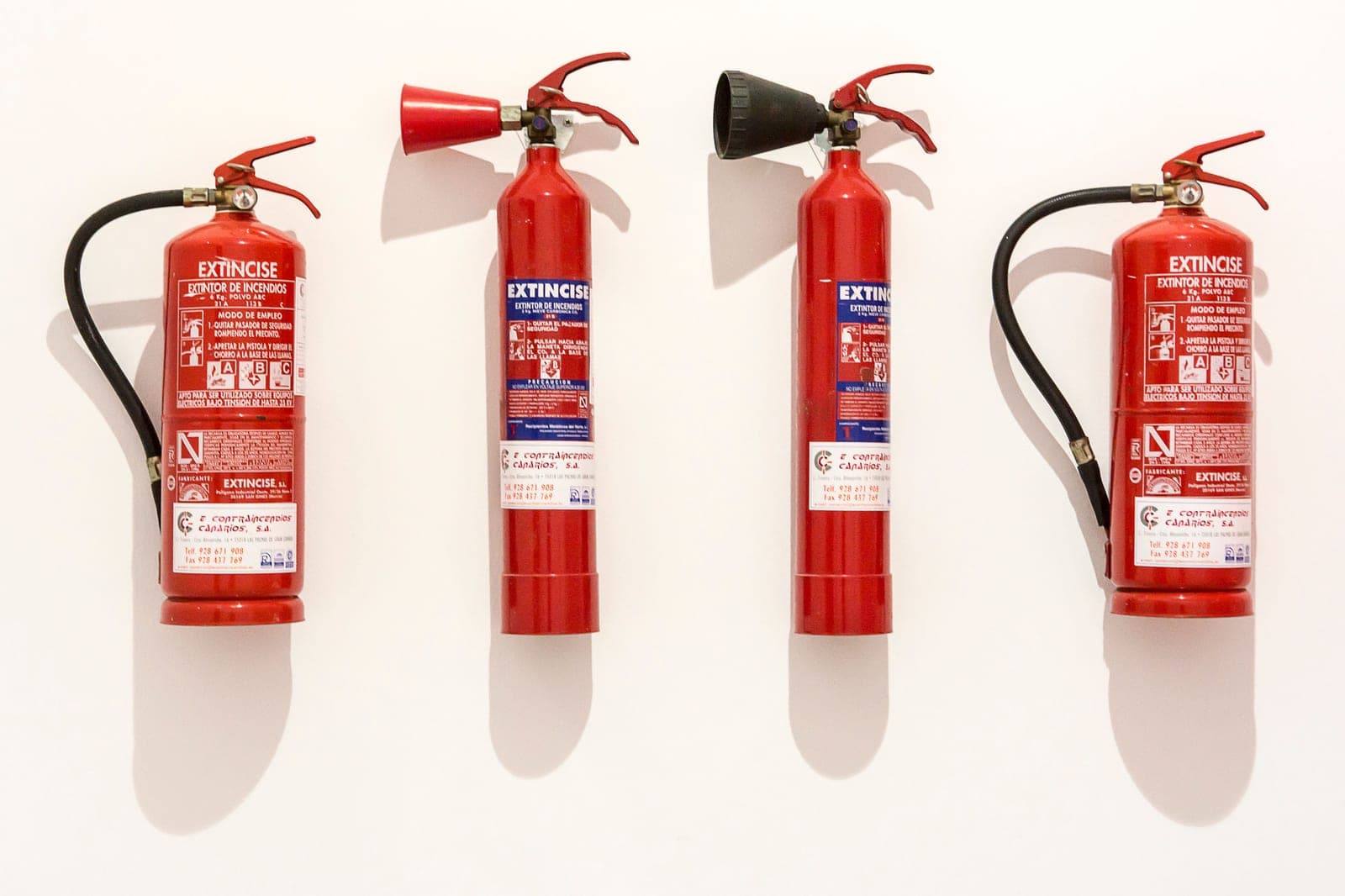
- Keep an ABC or grease-rated extinguisher within reach — never a hose.
- Heat the oil to 350F and never leave it unattended.
- Turn the burner off before lowering the bird in.
- Lower the turkey slowly, over several seconds, then relight.
- Cook to 165F internal, then lift out slowly and let it drain.
Quick picks
| # | Product | Best for | Score | Price |
|---|---|---|---|---|
| 1 |  Class K / BC Kitchen Fire ExtinguisherA fryer fire is a grease fire. Water makes it worse. | The item most people do not own | 8.9 | |
| 2 | Heat-Resistant Fryer Gloves, Elbow LengthThe forearm is what gets splashed, and mitts stop at the wrist. | For the lift | 8.9 | |
| 3 | 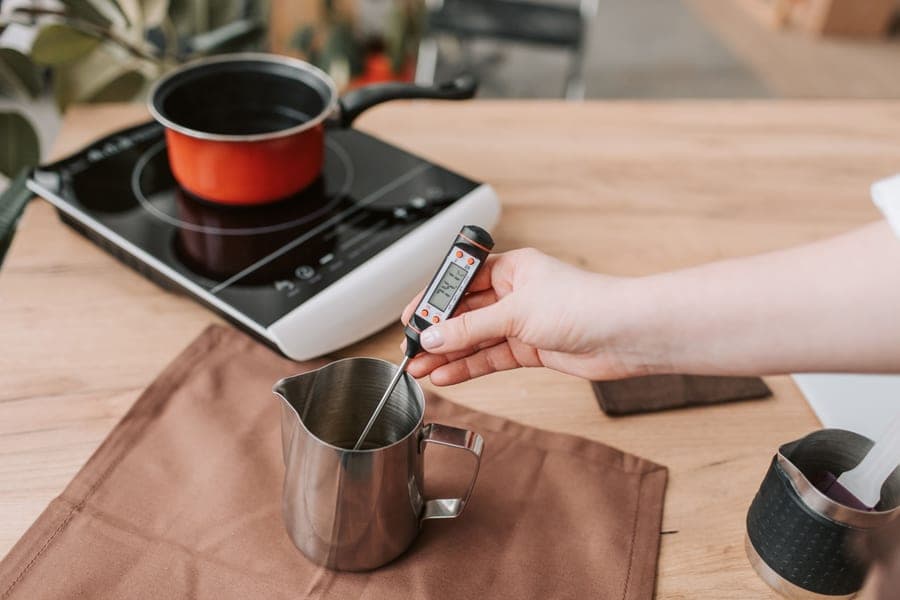 ThermoWorks Thermapen ONE Instant-Read Thermometer165F internal is the number, and the oil gauge cannot tell you. | For knowing dinner is safe | 9.1 | |
| 4 |  Char-Broil Big Easy Oil-Less Turkey FryerNo oil means no oil fire. The fire service says the same. | If you would rather remove the risk | 8.2 |
Scores are our own editorial rubric, explained on how we pick. They are not customer ratings and we do not publish star ratings for products we have not handled.
What actually goes wrong
Almost every turkey fryer disaster is one of three things, and none of them is exotic.
Ice meets oil. A partly frozen bird carries ice and water into 350F oil. Water boils at 212F, so it flashes to steam instantly and expands violently, throwing burning oil out of the pot. State Farm names this directly: never deep fry a frozen turkey, because ice or water mixing into hot oil causes flare-ups.
The pot was overfilled. The bird displaces oil. If the level was already near the rim, lowering a twelve-pound turkey pushes oil over the edge and onto an open flame. This is why you measure with water first, and why the National Turkey Federation teaches the method rather than a number.
The rig was in the wrong place. On a wooden deck, against the house, under an eave, in a garage, or on ground that was not level. Each of those turns a spill into a structure fire.
Thawing, which starts days earlier than you think
A refrigerator thaw needs roughly 24 hours for every four to five pounds of bird. That is four to five full days for a 20-pound turkey, and it is the step most first-time hosts discover too late.
| Turkey weight | Refrigerator thaw time | Take it out of the freezer |
|---|---|---|
| 8-12 lb | 2-3 days | The Sunday or Monday before |
| 12-16 lb | 3-4 days | The Saturday or Sunday before |
| 16-20 lb | 4-5 days | The Friday or Saturday before |
| 20-24 lb | 5-6 days | The Thursday or Friday before |
Thawed is not the same as dry. After it thaws, pat the bird thoroughly inside and out with paper towels and let it sit uncovered in the fridge for an hour. Surface water is the enemy.
Measuring the oil with water
This is the step people skip, and it is the one that prevents an overflow. The National Turkey Federation’s method:
- Put the thawed turkey in the fryer basket, in the pot.
- Add water until it sits one to two inches above the top of the bird.
- Lift the turkey out and let the water drain back in.
- Mark the water line on the inside of the pot — that is your oil line.
- Tip the water out and dry the pot completely. Any water left behind ends up under hot oil.
Full detail, including the quantities to buy, is in our oil volume guide.
Where the fryer goes
The National Turkey Federation is explicit: never fry indoors, in a garage, or in an attached structure; avoid wooden decks for fire reasons and concrete for staining. State Farm adds that outdoor fryers belong a safe distance from structures, off wooden decks and away from trees, with two feet between the burner and the tank.
In practice that means:
- Open ground, level, at least ten feet from the house
- Nothing overhead — no eave, no branch, no awning
- Not on grass that has dried out, not on a deck
- A clear walking path, because you will carry a hot bird along it
- Children and pets kept away from the whole area
During the cook
Never leave the oil unattended. Both the National Turkey Federation and State Farm state this plainly. Oil heats slowly and then faster, and it cannot be un-overheated.
If the oil smokes, turn the fryer off. Smoking means it has passed its smoke point and is heading toward its flash point. Turn it off and let it cool before doing anything else.
Kill the burner before the bird goes in. Turn the flame off, lower the turkey slowly over several seconds so the oil rises gradually rather than surging, then relight once it settles.
Wear the right protection. Elbow-length heat gloves and safety glasses. Not oven mitts, which end exactly where the splash lands.
If there is a fire
Never use water or a garden hose. State Farm’s wording is emphatic, and the physics is why: water hitting burning oil vaporizes instantly and carries burning oil upward and outward. You turn a pot fire into a fireball.
- If it is small and contained and you can do it safely, turn the gas off at the tank.
- Use an ABC or grease-rated extinguisher, aimed at the base of the flames.
- If it is not immediately controlled, get everyone away and call 911. A pot of oil is not worth anything.
- Never carry a burning pot. Never.
Worth repeating the NFPA’s position: they discourage oil turkey fryers entirely and suggest buying a fried turkey or using an oil-less fryer. If reading this page has made you uneasy, that is a reasonable conclusion to draw, and our oil-less guide covers the alternative.
Afterward
The pot is still dangerous for hours. Five gallons of oil holds heat far longer than people expect, and a pot at 200F at nine at night will still scald.
- Let the oil cool completely before moving or straining it
- Keep the area off-limits while it cools
- Strain through a fine sieve into the original jugs
- Never pour oil down a drain
- Wash everything that touched the raw bird immediately, per the National Turkey Federation
- Refrigerate leftovers within two hours
The products, in detail
#1 · The item most people do not own
Class K / BC Kitchen Fire Extinguisher
Grease fires are not water fires. A Class K or BC-rated extinguisher within arm's reach is the single item that separates an incident from a claim.
- Rating
- Class K or BC
- Never use
- Water on an oil fire
- Placement
- Within reach, outdoors with you
- Check
- Gauge in the green before the day
What’s good
- Class K or BC is rated for cooking-oil fires
- Stays outside with you, where the fryer is
- Cheap relative to what it protects
What’s not
- Check the gauge before the day, not during
- A small unit buys seconds, so position matters
Safety value
9.9
Build
8.6
Ease of use
8.0
Value
9.0
#2 · For the lift
Heat-Resistant Fryer Gloves, Elbow Length
The cheapest safety upgrade on this entire site. Short oven mitts end at the wrist, which is exactly where hot oil finds you.
- Length
- Past the elbow
- Rating
- Look for 900F+
- Surface
- Textured, non-slip grip
- Use
- Lowering and lifting the bird
What’s good
- Covers past the elbow
- Grips when wet
- Cheapest meaningful safety upgrade there is
What’s not
- Bulky — practice the lift first
- Ratings vary; check for 900F+
Safety value
9.8
Build
8.4
Comfort
7.8
Value
9.6
#3 · For knowing dinner is safe
ThermoWorks Thermapen ONE Instant-Read Thermometer
One-second reads and the accuracy everyone else is measured against. If you buy one thing off this whole site, buy an accurate thermometer.
- Type
- Instant-read probe
- Read time
- About 1 second
- Accuracy
- Within about 0.5F
- Use
- Meat and oil spot checks
What’s good
- One-second reads
- Accurate enough to trust once
- Used constantly the rest of the year
What’s not
- Expensive
- Not a leave-in probe
Accuracy
9.8
Speed
9.7
Build
9.2
Value
7.8
#4 · If you would rather remove the risk
Char-Broil Big Easy Oil-Less Turkey Fryer
No oil at all — infrared heat in a vertical chamber. You lose the shatter-crisp skin and you remove the single largest way a fried turkey goes wrong.
- Type
- Oil-less infrared, propane
- Max bird
- Up to 16 lb
- Oil
- None
- Cook time
- Roughly 10 min per lb
What’s good
- Eliminates the hazard rather than managing it
- Nothing to dispose of
- Still gives crisp, browned skin
What’s not
- Not true frying
- 16 lb ceiling
- Still propane, still outdoors
Safety
9.3
Results
8.2
Capacity
6.8
Value
8.4
Frequently asked questions
No. The bird must be completely thawed and dried. Ice or water entering 350F oil flashes to steam and expels burning oil from the pot — State Farm names this explicitly as a cause of flare-ups, and the National Turkey Federation requires a fully thawed bird.
A safe distance from any structure, off wooden decks and away from trees, with nothing overhead. State Farm also specifies two feet between the burner and the propane tank. Ten feet from the house on level open ground is a sensible working minimum.
Never use water or a hose. If it is safe, shut the gas off at the tank and use an ABC or grease-rated extinguisher at the base of the flames. If it is not controlled immediately, move everyone away and call 911. Never attempt to carry a burning pot.
No. The National Turkey Federation advises against wooden decks because of the fire hazard, and against concrete because of staining. Level open ground, well clear of the house, is the right surface.
Measure it. The published guidance is an internal temperature of at least 165F, checked in the thickest part of the breast and the inner thigh without touching bone. The fryer’s oil gauge tells you nothing about this.
Sources
Related reading
- How to Deep Fry a TurkeyThe whole process in order, with the numbers sourced — thaw, measure, heat to 350F, cook to 165F, rest.
- How Much Oil Does a Turkey Fryer Hold?Oil volume by pot size and bird weight, and the water-displacement method that beats every chart.
- The Best Oil-Less Turkey FryersInfrared, indoor electric or a roaster oven — three honest ways to cook the bird without five gallons of hot oil.
- The Best Electric Turkey FryersIndoor electric fryers, ranked — plus the no-oil outdoor alternative if you want electric for safety reasons.
- The Best Meat Thermometers for TurkeyFour thermometers ranked — instant-read, wireless and leave-in — and why the fryer or oven gauge does not count.