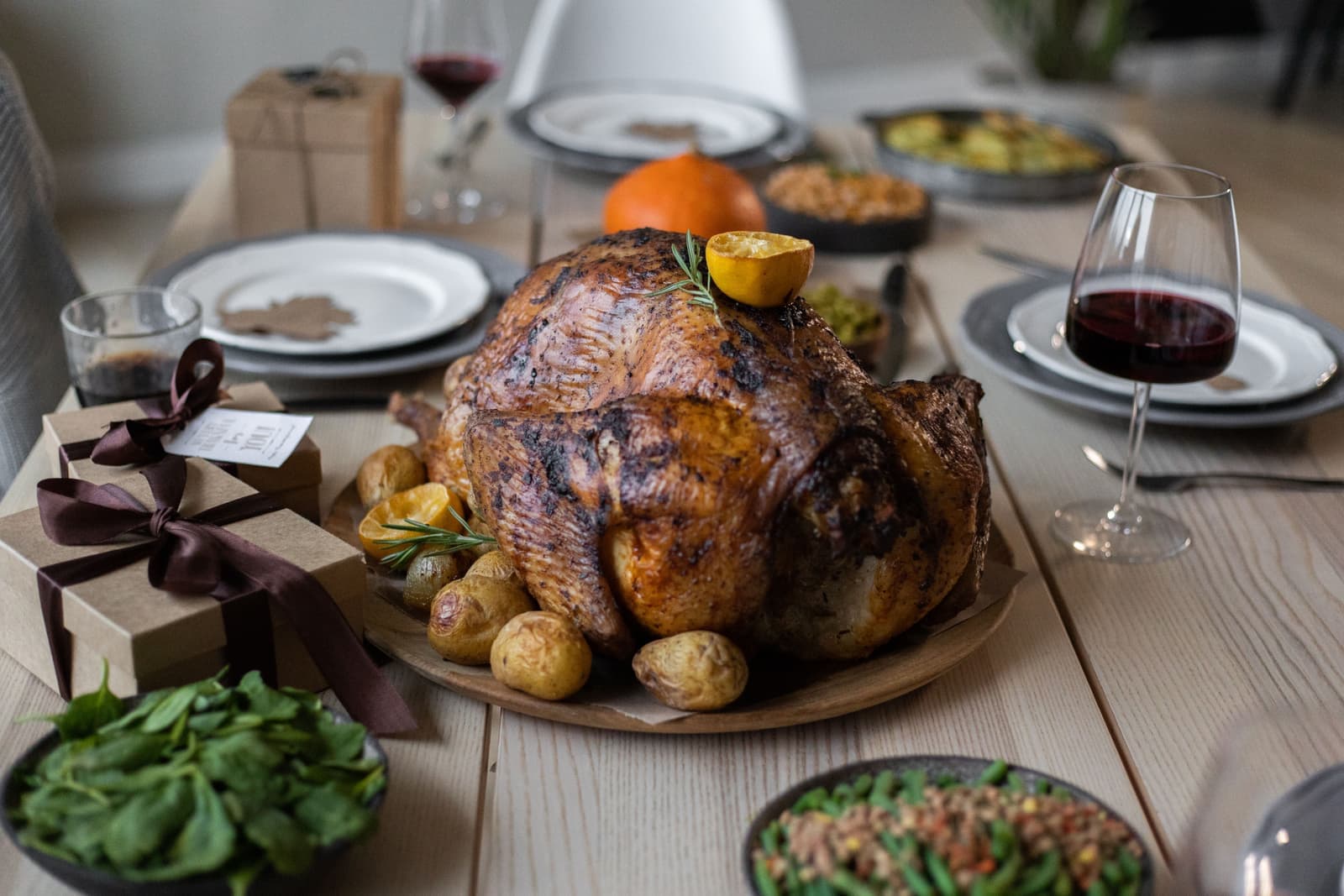
Best roaster oven overall
The Best Electric Roaster Ovens of 2026
Five roaster ovens ranked, plus the two accessories that make the difference. No oil, no flame, and your oven stays free.
Top pick: Oster 22-Quart Roaster Oven with Self-Basting Lid
The appliance that frees up your oven on the one day you need it most.
If you only buy one appliance before you host for the first time, make it this one. An electric roaster oven is an insulated countertop box with a heating element, a removable cookwell and a single temperature dial, and it solves the actual problem of the day: a turkey occupies your oven for four hours, during which you also need to roast potatoes, bake stuffing and warm rolls.
It does that for less than the cost of a turkey fryer kit, with no oil, no propane and no fire risk. It takes a bigger bird than any indoor fryer will — 22 to 28 pounds depending on the model — and because the chamber is small and well insulated, it holds temperature more steadily than most domestic ovens do.
It has exactly one weakness, and we are not going to dance around it: the skin does not brown as hard as it would in a conventional oven. That takes ten minutes at 425F at the end to fix, by which point your oven is usually free anyway. Start with the roaster oven roundup if you are shopping, or the method if you already own one.
Best roaster oven overall
Five roaster ovens ranked, plus the two accessories that make the difference. No oil, no flame, and your oven stays free.
Top pick: Oster 22-Quart Roaster Oven with Self-Basting Lid
Best roaster accessories
Liners, racks, a leave-in thermometer and a platter that actually fits a carved turkey.
Top pick: Roaster Oven Wire Rack and Lifter Set
Review
Our most-recommended roaster, reviewed honestly — including the browning weakness and the ten-minute fix.
Read the guideReview
Wrap-around heating, 18 quarts, and a smaller footprint — reviewed against the 22-quart alternative.
Read the guideHead to head
Capacity and self-basting against even heat and a smaller footprint, compared attribute by attribute.
Read the guide
Head to head
Browning and gravy against temperature stability and oven space — plus the approach that gets you both.
Read the guide
Guide
Roaster capacity to bird weight to guest count, in one table — plus when 28 quarts is genuinely too much.
Read the guideGuide
The whole method from preheat to holding the sides warm afterward, with times by weight.
Read the guideCapacity is the first decision. Eighteen quarts takes a bird up to about 22 pounds — enough for roughly 17 guests at the standard planning figure. Twenty-two quarts takes 26 pounds, and more usefully, it takes a bird on a rack with a bed of vegetables roasting in the drippings underneath. That second thing is what actually decides 18 versus 22 for most people.
The lid is the second. A dimpled self-basting lid returns condensation to the bird continuously, which means you never open the roaster during the cook. Every time you do open it, the chamber dumps heat it then has to rebuild. If your chosen model lacks one, brine the bird instead and you will not miss it.
The temperature range is the third, and it is underrated. The top end barely matters — you will roast at 325F. The low end decides whether the roaster gets a second job after the turkey comes out, holding your sides at a safe serving temperature while you carve. A model that dials down to 125F is worth paying attention to.
Our sizing guide has the full capacity table, and Oster versus Nesco settles the two most common contenders.
They do not preheat it. Fifteen to twenty minutes with the lid on, before the bird goes in. Starting cold silently adds half an hour to a schedule that has no half hour to spare.
They put water in the bottom. The bird releases plenty of its own liquid, and added water steams it — which makes the pale-skin problem considerably worse. A dry well and a rack is the right setup.
They cook straight in the well with no rack. The underside stews in the drippings rather than roasting, and at the end there is no way to lift a hot 20-pound bird out in one piece.
They keep opening the lid. There is nothing to see, and each look costs real heat. A leave-in thermometer removes the reason to.
The reason a roaster earns its storage space, when a turkey fryer often does not, is that it is genuinely useful the rest of the year. It will hold a large braise or a pork shoulder, cook chili or soup for a crowd, bake a tray of ziti, or keep a buffet of food at a safe serving temperature for an afternoon.
That last use is worth planning for on the day itself. Once the turkey is out and resting, dial the roaster down and use it to hold the sides above 140F while you carve — which is the hardest single problem in hosting, solved by an appliance you already have running. Our guide to keeping food warm covers the full set of options.
For most first-time hosts, yes. It frees your oven the same way a fryer does, takes a bigger bird, uses no oil, costs less, and carries none of the fire risk. A fryer wins only if fried texture specifically is the point.
Eighteen quarts covers most tables — it takes a 22-pound bird. Go to 22 quarts if you cook larger than that, or if you want room for vegetables roasting under the turkey.
Because the chamber is humid and there is no radiant top element. Finish the bird in a 425F conventional oven for 10 to 15 minutes at the end, and rub the skin with butter or oil before it goes in.