Roaster Oven vs Turkey Fryer
Both of these free up your wall oven, and only one of them can start a fire. If you are buying one big appliance for your first Thanksgiving, this is the decision that matters most.
By Mike M. · Published · Last updated
How this page is funded: Fryer & Feast is a participant in the Amazon Associates Program. If you buy through a link here we may earn a commission, at no extra cost to you. It never changes which products we recommend — see how we pick and our full affiliate disclosure. Every buy link goes straight to the retailer, so the price you see is the live one on the day you buy.
Buy the roaster oven. For a first-time host it takes a bigger bird, it has no mechanism by which it can catch fire, it holds the food at a safe temperature for the whole afternoon afterwards, and it costs less than a fryer plus three gallons of oil.
Buy the fryer instead if, and only if, crisp skin and a ninety-minute cook are the reason you are hosting at all, your bird is under 20 pounds, and you are willing to take the safety procedure seriously. Both are legitimate choices. They are just not equally forgiving.
Quick picks
| # | Product | Best for | Score | Price |
|---|---|---|---|---|
| 1 | No image Oster 22-Quart Roaster Oven with Self-Basting LidTwenty-two quarts, a self-basting lid, and nothing about it can go badly wrong. | Best choice for most first-time hosts | 9.5 | |
| 2 | 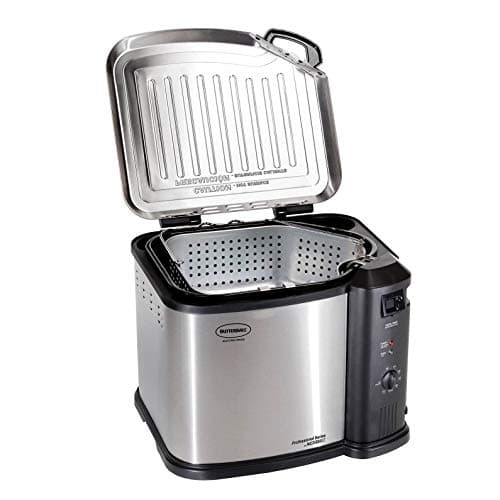 Masterbuilt Butterball XL Indoor Electric Turkey FryerFrying moved indoors: thermostatic, no flame, about a third of the oil a propane rig needs. | Best choice if you want to fry | 8.2 | $399.99 · View on Amazon #ad We may earn a commission · Price as of October 8, 2026 |
| 3 | 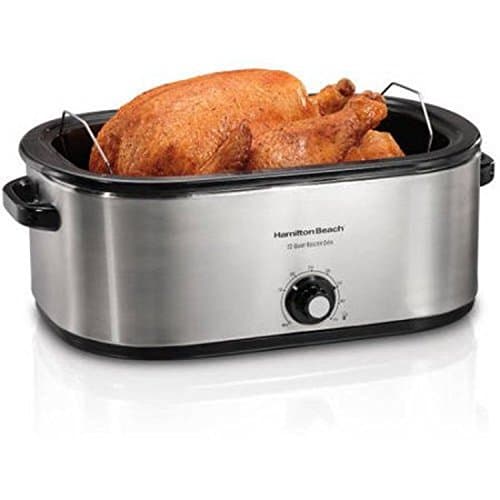 Hamilton Beach 32215 22-Quart Roaster OvenRated to 28 lb, which is more turkey than either of the appliances above will take. | Best roaster for a bigger bird | 9.4 | $199.99 · View on Amazon #ad We may earn a commission · Price as of October 8, 2026 |
| 4 | 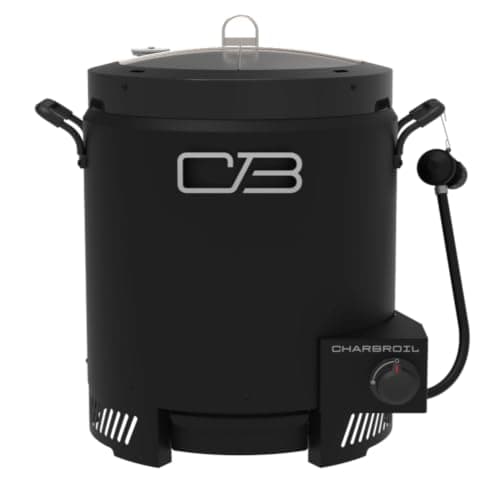 Char-Broil Big Easy Oil-Less Turkey FryerInfrared heat in a vertical chamber. Crisper than a roaster, and there is no oil to go wrong. | The middle path: fried texture, no oil | 8.5 | $149.99 · View on Amazon #ad We may earn a commission · Price as of October 8, 2026 |
Scores are our own editorial rubric, explained on how we pick. Four criteria per category, scored out of ten, so the leading pick is clear at a glance.
The comparison in one pass
Six attributes decide this. Here is where each appliance lands on all six.
- Bird size. Roaster oven wins, and not narrowly. The units here are rated to 26 and 28 pounds against a hard 20-pound ceiling on an indoor electric fryer. If your bird is over 20 pounds the decision is already made.
- Speed. Fryer wins, and not narrowly either. Frying runs in the region of three to four minutes a pound against a roaster taking much the same time as your wall oven. On a 16-pound bird that is roughly ninety minutes against the best part of an afternoon.
- Skin and texture. Fryer wins. This is the one thing a roaster oven cannot replicate; its lid traps steam by design, which is exactly why the meat stays moist and exactly why the skin stays soft.
- Risk. Roaster wins, decisively. A roaster oven has no oil and therefore no mechanism to start an oil fire. A fryer holds three gallons of oil at around 350°F and a wet bird is a genuine hazard.
- What it does afterwards. Roaster wins. Once the turkey is out and resting, a roaster oven becomes a large warm box that will hold sides above the food-safety floor for hours. A fryer full of cooling oil does nothing for you at all.
- Total cost. Roaster wins. The appliances are in a similar bracket, but a fryer needs about three gallons of oil on top, every time, and the oil is not a trivial line item.
Four to two for the roaster oven — and the two the fryer wins are the two that people who love fried turkey care about most. That is why this is a real decision rather than a formality.
Start with the bird, not the appliance
Most people approach this backwards: they decide they want to fry, then find out in November what the ceiling is. Do it the other way round. Settle the bird weight first, because for a large part of the audience it eliminates one option outright.
Work on a pound to a pound and a half of whole bird per person. That puts a table of eight at a 10 to 12-pound turkey, a table of twelve at 16 to 18 pounds, and a table of sixteen somewhere past 20 — which is where indoor electric frying stops being available to you. Nothing about that is a judgement on frying; the oil has to cover the bird and the pot has to contain the displacement, and those are physical limits.
Two ways out if your number is over 20 pounds. Either take the roaster oven, or take frying outdoors onto propane, where pot sizes go much larger. Outdoor propane is a meaningfully different safety proposition from a countertop unit, and propane versus electric lays out what changes. For the roaster route, roaster oven sizing maps quarts to bird weight, and feeding twenty people handles the case where one bird is not the answer at all.
What each one does to the shape of your day
This is the argument that gets missed, and for a first-time host it may be the most useful one. These two appliances do not just cook differently; they occupy different amounts of your attention at different times.
The roaster oven is a background appliance. It goes on early, it is closed, and the self-basting lid means you are not opening it every half hour. You are free to be in the kitchen doing the eight other things, and the wall oven and the stovetop are both free for them. At the end, the roaster stops being a cooker and becomes a holding cabinet: the bird rests, the sides go in, and everything stays above the safe-hold temperature until people sit down. That last part is worth real money on a day when nobody sits down when they said they would.
The fryer is a foreground appliance. For the ninety minutes it is running, it is the thing you are doing. You do not leave hot oil unattended, you do not let children near it, and you are checking temperature rather than stirring gravy. The compensation is that the ninety minutes is all it asks for; it finishes early and the day belongs to you afterwards. For a lot of hosts, the fryer is the better plan precisely because it is intense and then over.
Either way, the holding problem outlives the cooking. Hot food has to sit at or above 140°F, and a table of ten eats over a long enough window that this matters. Our guide to keeping food warm for a party ranks the methods, and warming tray versus buffet server covers the two appliances you would buy for it.
The risk difference is not a rounding error
We are not going to be coy about this, because it is the clearest distinction between the two appliances. A roaster oven cannot start an oil fire. There is no oil in it. The worst realistic outcome is a dry turkey.
A turkey fryer holds roughly three gallons of oil at around 350°F. Water hitting oil at that temperature flashes to steam instantly and throws the oil out of the pot — which is why the rule is that the bird must be completely thawed and patted dry, and why ice crystals in the cavity are the classic cause of a serious fire. The fire service’s own position on oil turkey fryers is skeptical for exactly this reason, and it is worth reading that position rather than taking ours.
Choosing an indoor electric unit removes a lot of the outdoor risk surface — no open flame, no propane, no tipping on soft ground — and it is the version we recommend if you fry. It does not remove the water rule, the three gallons of hot liquid, or the need for a grease-rated extinguisher within reach. If that list reads as a reason not to bother, that is a completely reasonable conclusion and the roaster oven is waiting. If it reads as a procedure you can follow, read the safety guide properly before the day, not on it.
So which one?
Buy the roaster oven if this is your first time hosting, your bird might be over 20 pounds, you want the wall oven free, you would rather have a warm-hold for the sides than a faster turkey, or anything about three gallons of hot oil in your kitchen makes you hesitate. That covers most people reading this, which is why it leads the picks above.
Buy the fryer if crisp skin is the whole point, your bird is comfortably under 20 pounds, you can give it a dedicated circuit and a clear counter, and you will read the safety procedure. It is a better turkey. It is also a more demanding afternoon.
Buy the oil-less cooker if you want the fried texture without the oil logistics and you have outdoor space. It is a real middle path rather than a compromise nobody wants, and the oil-less roundup covers it properly.
And if the honest answer is that you are not sure you want a second appliance at all, start with roaster oven versus your wall oven, which is a cheaper question to get wrong.
The products, in detail
#1 · Best choice for most first-time hosts
Oster 22-Quart Roaster Oven with Self-Basting Lid
The default answer for most first-time hosts. Twenty-two quarts takes a 26-pound bird, and the dimpled self-basting lid drips condensation back down so you are not opening it every 30 minutes.
The reason this is the default recommendation is not that it cooks a better turkey than a fryer. It is that it cooks an acceptable turkey while asking almost nothing of you. You plug it in, set a temperature, put the bird in the insert, and the failure modes are “slightly dry” and “pale skin” rather than anything involving the fire service.
Capacity is the other half of the argument. Twenty-six pounds is well past the hard 20-pound ceiling every indoor electric fryer carries, which means the roaster handles the bird your family actually buys rather than the bird the appliance would prefer. If you are feeding a larger table, see roaster oven sizing.
The honest weakness is the skin, and it is not a small thing if crisp skin is what people in your house look forward to. The fix is fifteen minutes under the broiler of your wall oven at the end, which does mean the wall oven is not entirely free — just free for the four hours that matter. Our roaster oven technique guide covers the browning sequence.
- Capacity
- 22 qt
- Max bird
- Up to 26 lb
- Lid
- Self-basting
- Insert
- Removable enamel pan
What’s good
- Takes a far bigger bird than any indoor electric fryer — up to 26 lb
- No oil, so the single largest holiday fire risk is simply absent
- Self-basting lid returns condensation to the bird instead of drying it out
- Doubles as a warm-hold for sides once the turkey is resting
- Removable enamel insert lifts out for cleaning
What’s not
- Skin comes out soft, not crisp, unless you finish it under a broiler
- Takes roughly as long as a conventional oven — this is not the fast option
- A 22-quart box is awkward to store the other eleven months
- Cooks by surrounding heat, so it browns less evenly than a good wall oven
Capacity
9.4
Safety
9.8
Ease of use
9.4
Value
9.2
#ad We may earn a commission · Price as of October 8, 2026
#2 · Best choice if you want to fry
Masterbuilt Butterball XL Indoor Electric Turkey Fryer
The safest realistic first fryer: it lives indoors on a countertop, holds a 20-pound bird, and takes about a third of the oil a propane rig needs.
An indoor electric fryer is the version of frying we would actually recommend to a beginner, because it removes the open flame, the propane tank and the uneven patio that account for most of what goes wrong outdoors. What it does not remove is the oil itself: three gallons of it has to be bought, poured, heated, cooled and then taken somewhere, and that logistics tail is the part people underestimate.
The payoff is real and it is not only about taste. Ninety minutes instead of four hours changes the shape of the day — the oven is free, the stove is free, and the turkey is not the thing dictating when everything else happens. If that is the appeal, the Butterball lineup covers which model to pick, and the safety guide is not optional reading.
- Type
- Indoor electric
- Max bird
- Up to 20 lb
- Oil
- About 2.75 gallons
- Also does
- Boil and steam
What’s good
- Ninety minutes rather than four hours, which reshapes the whole day
- Crisp skin and genuinely different meat texture — the thing a roaster cannot do
- Thermostat holds the oil temperature with no flame to manage
- Indoors means wind, rain and uneven ground stop being variables
- Boils and steams too, so it earns shelf space the rest of the year
What’s not
- Hard 20 lb ceiling, which rules it out for a lot of family-sized birds
- Needs about three gallons of oil, bought, handled, stored and disposed of
- Wants its own electrical circuit; it will trip a shared one
- Puts oil vapor through your kitchen for the rest of the day
- The water-and-hot-oil rule is unforgiving and has to be respected
Capacity
7.4
Safety
8.6
Ease of use
8.8
Value
8.0
#ad We may earn a commission · Price as of October 8, 2026
#3 · Best roaster for a bigger bird
Hamilton Beach 32215 22-Quart Roaster Oven
Stainless, 22 quarts and rated for a 28-pound bird, which is the biggest capacity here — and it holds food warm all afternoon once the bird is out.
- Capacity
- 22 qt
- Max bird
- Up to 28 lb
- Temp range
- 125F to 450F
- Lid
- Self-basting
What’s good
- Up to a 28 lb bird — the largest capacity of anything on this page
- Holds from 125F, low enough to use as a genuine warm-hold
- Stainless body rather than painted steel
- Self-basting lid, same working principle as the Oster
What’s not
- Same soft-skin limitation as every roaster oven
- Bigger again to store, and heavy to move full
- The low end of the dial is only useful if you actually need a warmer
- Nothing here is faster than a wall oven
Capacity
9.8
Safety
9.8
Ease of use
9.0
Value
8.8
#ad We may earn a commission · Price as of October 8, 2026
#4 · The middle path: fried texture, no oil
Char-Broil Big Easy Oil-Less Turkey Fryer
No oil at all — infrared heat in a vertical chamber. You lose the shatter-crisp skin and you remove the single largest way a fried turkey goes wrong.
- Type
- Oil-less infrared, propane
- Max bird
- Up to 16 lb
- Oil
- None
- Cook time
- Roughly 10 min per lb
What’s good
- No oil at all, which removes the fire mechanism and the disposal problem
- Roughly ten minutes per pound — much faster than any roaster oven
- Browns and crisps the outside in a way a roaster simply cannot
- Outdoor propane, so the kitchen stays free and the smell stays outside
What’s not
- Not actually frying — the skin is good, not shatter-crisp
- Rated to 16 lb, between the fryer and the roaster on capacity
- Needs propane and outdoor space in whatever weather November gives you
- One-trick appliance compared with a roaster that doubles as a warmer
Capacity
7.8
Safety
9.4
Ease of use
8.6
Value
8.4
Frequently asked questions
A roaster oven, for most people. It takes a bigger bird, it has no oil and therefore no fire risk, it frees the wall oven, and it holds the food warm after the turkey comes out. A fryer produces a better turkey in less time, but it asks for a dedicated circuit, three gallons of oil and a safety procedure followed properly.
No — it is much slower. A roaster oven takes roughly as long as a conventional oven, while deep frying runs in the region of three to four minutes per pound. On a mid-sized bird that is about ninety minutes against most of an afternoon. Speed is the fryer's clearest advantage.
Not on its own. A roaster oven's lid traps moisture by design, which is what keeps the meat juicy and what keeps the skin soft. The standard fix is to finish the bird under your wall oven's broiler for ten to fifteen minutes once it is cooked through. Our roaster oven guide covers the sequence.
The roaster ovens on this page are rated to 26 and 28 pounds. Indoor electric turkey fryers top out at 20 pounds, and that is a hard limit set by oil coverage, not a guideline. The oil-less infrared cooker sits between them at 16 pounds. If your bird is over 20 pounds, an indoor fryer is not an option.
The roaster oven, clearly. The appliances sit in a similar price bracket, but a turkey fryer also needs around three gallons of cooking oil every time you use it, plus somewhere to store and dispose of it afterwards. Electricity for either is a minor cost by comparison.
Yes, and it is one of the best reasons to own one. Set low once the turkey is out and it will hold sides above the 140°F food-safety floor for hours. A fryer gives you nothing after the bird comes out. For dedicated warming gear, see warming tray versus buffet server.
Sources
- National Turkey Federation — How to Deep Fry a Turkey (eatturkey.org)
- State Farm — Turkey fryer safety tips
- WebstaurantStore — How to Deep Fry a Turkey (times and temperatures)
- National Fire Protection Association — Thanksgiving safety
- USDA Food Safety and Inspection Service — "Danger Zone" (40F-140F)
- Oster 22-Quart Roaster Oven — manufacturer specifications
Related reading
- Roaster Oven vs Oven for TurkeyBrowning and gravy against temperature stability and oven space — plus the approach that gets you both.
- What Size Roaster Oven Do I Need?Roaster capacity to bird weight to guest count, in one table — plus when 28 quarts is genuinely too much.
- The Best Electric Roaster Ovens of 2026Five roaster ovens ranked, plus the two accessories that make the difference. No oil, no flame, and your oven stays free.
- The Best Butterball Turkey FryersEvery Butterball-badged indoor electric fryer currently on sale, ranked on bird capacity, controls and build, with the Masterbuilt siblings that do the same job for less.
- Propane vs Electric Turkey FryerCapacity and speed against safety and simplicity — laid out attribute by attribute.
- Warming Tray vs Buffet ServerThe flat heated surface against the lidded-pan unit, compared on dish shape, hold temperature, counter space and what happens the other 360 days of the year.