Dry Brine vs Wet Brine: Which Turkey Brine to Use
One is salt rubbed on and left in the fridge. The other is five gallons of liquid you have to find somewhere to put. For a first-time host, that difference decides it.
By Mike M. · Published · Last updated

How this page is funded: Fryer & Feast is a participant in the Amazon Associates Program. If you buy through a link here we may earn a commission, at no extra cost to you. It never changes which products we recommend — see how we pick and our full affiliate disclosure. Every buy link goes straight to the retailer, so the price you see is the live one on the day you buy.
Dry brine, for most people. You rub salt (and whatever aromatics you like) over and under the skin, leave the bird uncovered in the refrigerator overnight, and cook it. It needs no container, no gallons of liquid and no dedicated fridge shelf, and because the skin dries out rather than taking on water it browns and crisps far better. Wet brine if your main worry is overcooking a lean bird — the absorbed water buys you a margin for error.
If you are deep frying, dry brine is not just preferable, it is the safer choice: a fryer bird must be completely dry before it goes near hot oil, and a wet brine works directly against that.
Quick picks
| # | Product | Best for | Score | Price |
|---|---|---|---|---|
| 1 |  Heavy-Duty Turkey Brining Bags, Set of 2Two heavy bags rated to 38 lb with double-track zippers — the cheapest way to wet-brine without owning a bucket. | Best for a wet brine | 9.0 | $10.99 · View on Amazon #ad We may earn a commission · Price as of October 10, 2026 |
| 2 | 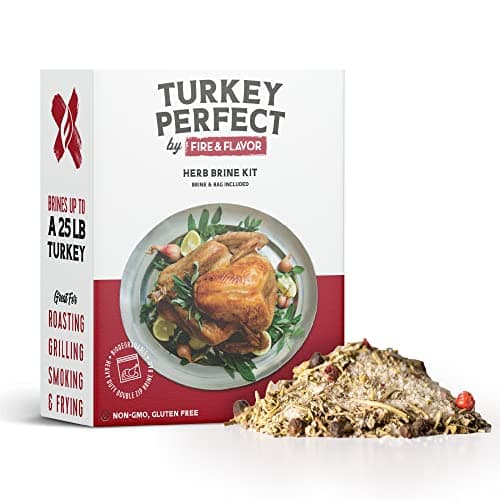 Fire & Flavor Turkey Perfect Brine KitBrine mix and a bag rated to a 25 lb bird in one box — dissolve, submerge, refrigerate. | Best if you want it decided for you | 9.0 | $14.95 · View on Amazon #ad We may earn a commission · Price as of October 10, 2026 |
| 3 | 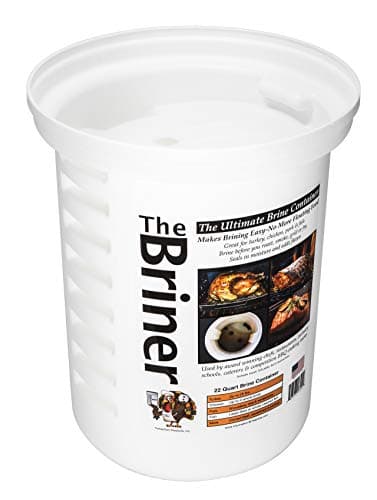 The Briner Ultimate Brine Container, 22 QtTwenty-two quarts with a locking plate that keeps the bird submerged — the problem no bag solves. | Best for a serious wet brine | 8.8 | $45.00 · View on Amazon #ad We may earn a commission · Price as of October 10, 2026 |
| 4 | 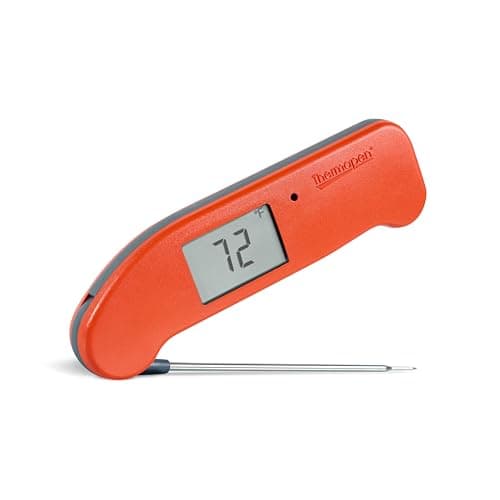 ThermoWorks Thermapen ONE Instant-Read ThermometerMost of what brining protects against is overcooking — and a probe protects against that directly. | What makes brining unnecessary | 9.3 | $125.00 · View on Amazon #ad We may earn a commission · Price as of October 10, 2026 |
Scores are our own editorial rubric, explained on how we pick. Four criteria per category, scored out of ten, so the leading pick is clear at a glance.
What each method actually does
A wet brine submerges the bird in salted water. Salt moves into the meat and the meat also takes on water, so the bird ends up heavier than it went in. That extra water is the point: it is a buffer, and it means a bird that runs a little long in the oven is still juicy. The cost is that the skin has been sitting in liquid for twelve hours.
A dry brine is salt rubbed on the surface and under the skin. The salt draws moisture out of the meat, dissolves in it, and that concentrated brine is then reabsorbed — so the salt ends up inside the meat without adding any water. Meanwhile the skin dries out on the outside, which is exactly the condition it needs to crisp.
The short version: wet brining adds insurance, dry brining adds flavor concentration and better skin. Both season the meat properly, which is the thing an unbrined bird lacks.
The practical differences that decide it
- Space. Dry brine needs a tray and a shelf. Wet brine needs a bag or a 22-quart bucket with five gallons of liquid in it, in a refrigerator that is already full of everything else you are cooking. This is the reason most people end up dry brining.
- Skin. Dry brine wins decisively. The surface dries in the refrigerator, which is a technique in its own right. A wet-brined bird has to be patted thoroughly dry and ideally left uncovered for a few hours to recover.
- Mess and risk. Dry brine involves no liquid to spill and nothing to leak over other food. A split brine bag or a carried bucket is a real hazard in a busy kitchen, and raw-poultry liquid is the one you least want distributed.
- Margin for error. Wet brine wins. If you have no thermometer and no confidence in your timing, the absorbed water genuinely helps.
- Gravy. A wet-brined bird gives saltier drippings, so taste before you season the gravy. Dry-brined drippings are more predictable.
If you are frying, this is not a preference
Dry brine. Not as a matter of taste — as a matter of safety.
A bird going into a turkey fryer must be completely thawed and patted dry. Water hitting oil at around 350°F flashes instantly to steam and throws the oil out of the pot, and ice crystals or trapped liquid in the cavity are the classic cause of a serious fryer fire. A wet brine deliberately loads the bird with water and leaves liquid in every fold and cavity.
A dry brine does the opposite. It seasons the meat and leaves the surface drier than it started, which is exactly the condition a fryer wants. If you insist on wet brining before frying, the bird has to be drained, patted dry inside and out and left uncovered in the refrigerator for several hours — and even then you are correcting something you chose to create.
The full procedure is in the fryer safety guide, and the frying method in how to deep fry a turkey.
Two cases where you should not brine at all
A kosher or pre-brined bird. Supermarket turkeys are very often sold already treated with a salt solution, and kosher birds are salted as part of the koshering process. Brining on top of that gives you a bird too salty to serve and gravy you cannot rescue. Read the label: if it lists a solution percentage, or says “enhanced”, “basted” or “self-basting”, do not brine it.
When you do not have the time. A rushed brine is worse than none. Wet brining a bird for two hours does very little and still leaves you a wet bird to dry; dry brining for an hour is just salting it. If the bird did not go into the refrigerator the night before, season it well, cook it to temperature and accept that the thermometer is doing the work.
The method and timings for when you do have the time are in how to brine a turkey.
And what about injecting?
Injecting is a third option and it is a different tool for a different job. A brine seasons the whole bird slowly and evenly over hours. An injection puts flavored liquid or butter directly into the breast and thigh in minutes, which is why it is popular with people frying — where the cook time is ninety minutes and there is no slow absorption happening.
The trade-offs are honest ones. Injecting is fast and needs no fridge space, but it distributes in pockets rather than evenly, and the puncture holes let juice escape during cooking. A brine is slower and more even. Doing both usually makes the bird too salty.
If injecting appeals, the tools are in basters and injectors. If you want the ready-mixed route to a brine instead, the kits are in turkey brine kits.
The products, in detail
#ad We may earn a commission · Price as of October 10, 2026
#1 · Best for a wet brine
Heavy-Duty Turkey Brining Bags, Set of 2
Buy the two-pack. One bag holds the bird, the second is the one you actually use after the first one tears at the worst possible moment.
If you have decided on a wet brine, a bag is the right vessel for almost every home kitchen. A 22-quart bucket holds the liquid better but needs a whole refrigerator shelf cleared, and the week of Thanksgiving is the week your refrigerator has least room in it. A bag conforms to the bird and slides into the space that is actually available.
Two rules. Double-bag it, and stand the whole thing in a roasting pan. A split brine bag over three shelves of food is the single worst outcome available here, and both precautions take ten seconds.
The method itself — salt ratio, timing by weight, what to do afterwards — is in how to brine a turkey, and the vessel options are ranked in brining bags and buckets.
- Rated
- Up to 38 lb
- Size
- 21.5 x 25.5 in
- Closure
- Double-track zippers
- Use
- Double-bag in a roasting pan
What’s good
- Rated to 38 lb, so it takes any bird you will buy
- 21.5 x 25.5 in, big enough to hold bird and liquid
- Double-track zippers, which is what stops a brine leak in a refrigerator
- Takes up less fridge space than a bucket because it conforms to the shape
What’s not
- Still needs a roasting pan under it — double-bag and contain it
- A leak in a refrigerator is a genuinely bad evening
- Single-use in practice, even if the bag survives
- Does nothing for the skin problem, which is wet brining's weakness
Suitability
9.0
Leak resistance
8.6
Fridge footprint
9.0
Value
9.4
#ad We may earn a commission · Price as of October 10, 2026
#2 · Best if you want it decided for you
Fire & Flavor Turkey Perfect Brine Kit
The complete answer for a first brine: measured salt and aromatics plus a bag rated to 25 pounds, so there is nothing to weigh and nothing to improvise.
- Includes
- Brine mix and bag
- Bag rated
- Up to 25 lb bird
- Flavors
- Herb, apple sage, lemon pepper
- Prep
- Dissolve, submerge, refrigerate
What’s good
- Mix and bag together, so there is no ratio to get wrong
- Bag rated up to a 25 lb bird
- Three flavor versions — herb, apple sage, lemon pepper
- Removes the main reason first-timers skip brining, which is uncertainty
What’s not
- More expensive than salt, sugar and water
- Wet brine, so it carries the skin penalty
- Still needs the fridge space and the containment pan
- Flavour is chosen for you
Suitability
9.0
Ease of use
9.6
Flavour
8.8
Value
8.4
#ad We may earn a commission · Price as of October 10, 2026
#3 · Best for a serious wet brine
The Briner Ultimate Brine Container, 22 Qt
The reusable answer if you brine more than once a year, and the only one with a locking plate that holds the bird under the brine instead of letting it float.
- Capacity
- 22 qt
- Fits
- A turkey up to 25 lb
- Feature
- Locking plate keeps food submerged
- Made in
- USA
What’s good
- 22 qt takes a turkey up to 25 lb with liquid to cover
- Locking plate holds the bird under the brine, which is the actual hard part
- Rigid, so it cannot split or leak
- Made in the USA, and it lasts indefinitely
What’s not
- Needs a cleared refrigerator shelf, which is scarce the week of Thanksgiving
- Bulky to store the rest of the year
- Heavy and awkward to move once it is full of liquid
- Overkill if you brine once a year
Suitability
9.4
Leak resistance
9.8
Fridge footprint
7.2
Value
8.6
#ad We may earn a commission · Price as of October 10, 2026
#4 · What makes brining unnecessary
ThermoWorks Thermapen ONE Instant-Read Thermometer
One-second reads and the accuracy everyone else is measured against. If you buy one thing off this whole site, buy an accurate thermometer.
Worth saying bluntly: the most common cause of a dry turkey is not the absence of a brine. It is thirty extra minutes in the oven. A brine gives you a margin for error against that; a thermometer removes the error.
Which is why a first-time host short on time, fridge space and patience can reasonably skip brining altogether, buy a probe, and get a better bird than someone who brined and then overcooked it. Brine because you want the seasoning through the meat, not because you are afraid of dryness.
Probe placement matters as much as the tool — see the thermometer guide.
- Type
- Instant-read probe
- Read time
- About 1 second
- Accuracy
- Within about 0.5F
- Use
- Meat and oil spot checks
What’s good
- One-second reads, so you pull the bird at the right moment
- Removes the actual cause of dry turkey, which is time not seasoning
- Works on brined and unbrined birds alike
- Useful every time you cook anything, not once a year
What’s not
- Does not season the meat, which is the other half of what brining does
- Premium price for one function
- Instant-read, so you have to go and check
Impact on result
9.6
Accuracy
9.8
Build
9.4
Value
8.4
Frequently asked questions
A dry brine, for most home cooks. It needs no container and no fridge shelf full of liquid, there is nothing to spill, and the skin browns and crisps far better because the surface dries out rather than taking on water. A wet brine is the better choice if your main worry is overcooking.
It makes crisp skin harder. The surface has been in liquid for hours, so a wet-brined bird has to be patted thoroughly dry and ideally left uncovered in the refrigerator for a few hours before cooking. A dry brine dries the skin as part of the process.
Dry brine only. A fryer bird must be completely thawed and dry — water hitting 350°F oil flashes to steam and throws oil out of the pot, which is the classic cause of a fryer fire. A wet brine deliberately works against that requirement.
No. Kosher birds are salted during koshering and supermarket turkeys are frequently sold pre-treated with a salt solution. Brining on top gives you meat too salty to serve and gravy you cannot fix. Check the label for a solution percentage or the words enhanced, basted or self-basting.
No. Brining seasons the meat through and buys a margin against overcooking, but the usual cause of a dry turkey is extra time in the oven, not the absence of a brine. An unbrined bird pulled at the right internal temperature beats a brined bird left in too long.
Brine for even seasoning over hours; inject for speed and for frying, where the cook time is too short for slow absorption. Injecting distributes in pockets and the puncture holes let juice escape, so it is a trade rather than an upgrade. Do one or the other, not both.
Sources
Related reading
- How to Brine a TurkeyThe ratio, the timing by weight, and the dry-brine method for when your fridge is already full.
- The Best Turkey Brine KitsThree brine kits ranked, plus the bag you need with them and the from-scratch alternative.
- The Best Brining Bags and BucketsBags, reusable buckets and the cooler method — with the honest answer about fridge space.
- The Best Turkey Basters and InjectorsFour basters and injectors compared, plus the straight answer on whether basting actually does anything for a turkey.
- Turkey Fryer Safety: How to Do This Without IncidentTen ordered safety steps from published fire-safety and turkey-industry guidance, plus the gear that backs them up.
- Where to Put a Meat Thermometer in a TurkeyExact probe placement, the target temperature, and why the pop-up timer should be ignored.