How to Thaw a Turkey (And How Long It Really Takes)
Nearly every holiday disaster traces back to the same Tuesday evening decision. Thawing is the one job you cannot speed up on Thursday morning, so it is the one to plan backwards from.
By Mike M. · Published · Last updated
How this page is funded: Fryer & Feast is a participant in the Amazon Associates Program. If you buy through a link here we may earn a commission, at no extra cost to you. It never changes which products we recommend — see how we pick and our full affiliate disclosure. Every buy link goes straight to the retailer, so the price you see is the live one on the day you buy.
Allow about 24 hours of refrigerator thawing for every 4 to 5 pounds of turkey, at 40F or below. That is 1 to 3 days for a 4 to 12 pound bird, 3 to 4 days for 12 to 16 pounds, 4 to 5 days for 16 to 20 pounds and 5 to 6 days for 20 to 24 pounds. If you are late, the cold water method runs at about 30 minutes per pound in a leak-proof bag with the water changed every 30 minutes. A turkey never thaws safely on the counter.
Quick picks
| # | Product | Best for | Score | Price |
|---|---|---|---|---|
| 1 | 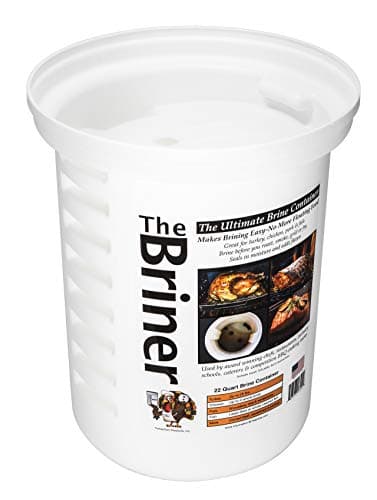 The Briner Ultimate Brine Container, 22 QtTwenty-two quarts, a locking plate that holds the bird under the water, and no sink tied up for six hours. | Best container for cold-water thawing | 8.8 | $45.00 · View on Amazon #ad We may earn a commission · Price as of October 17, 2026 |
| 2 |  Heavy-Duty Turkey Brining Bags, Set of 2The cold water method requires a leak-proof bag, and the supermarket ones are not it. | Best leak-proof bag | 8.6 | $10.99 · View on Amazon #ad We may earn a commission · Price as of October 17, 2026 |
| 3 | 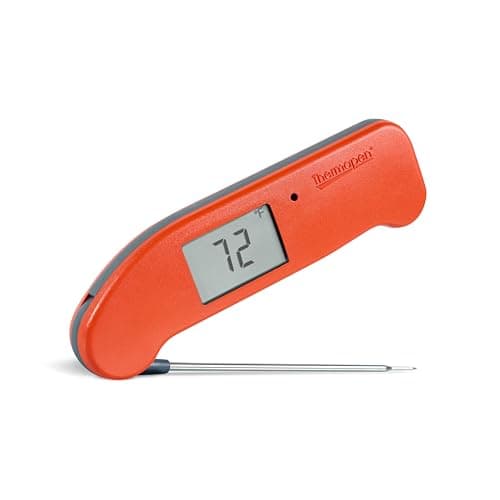 ThermoWorks Thermapen ONE Instant-Read ThermometerA bird that feels thawed on the outside can still be frozen at the centre, and that is the one that causes trouble. | How you know it is actually thawed | 9.3 | $125.00 · View on Amazon #ad We may earn a commission · Price as of October 17, 2026 |
Scores are our own editorial rubric, explained on how we pick. Four criteria per category, scored out of ten, so the leading pick is clear at a glance.
Refrigerator thawing: the chart
This is the method to use, and the only variable is whether you started early enough. The USDA figure is approximately 24 hours per 4 to 5 pounds in a refrigerator set at 40F or below. Butterball puts the same rule as at least one day per 4 pounds.
| Turkey weight | Refrigerator thawing time | Put it in the fridge on |
|---|---|---|
| 4 to 12 lb | 1 to 3 days | Monday or Tuesday for a Thursday meal |
| 12 to 16 lb | 3 to 4 days | Sunday or Monday |
| 16 to 20 lb | 4 to 5 days | Saturday or Sunday |
| 20 to 24 lb | 5 to 6 days | Friday or Saturday the week before |
Three practical notes on the method:
- Put it in a container. A tray, a roasting pan, anything with a lip. Thawing poultry drips, and those drips onto a shelf below are a cross-contamination problem.
- Breast side up, in the wrapper. Leave the original packaging on until you are ready to prepare it.
- Thawed early is fine. Butterball says a thawed bird keeps in a refrigerator at 40F or below for up to 4 days before cooking, so erring early costs you nothing. Erring late costs you the afternoon.
Cold water thawing: 30 minutes a pound
This is the rescue method, and it works. Allow about 30 minutes per pound. A 16-pound bird is therefore roughly eight hours — a long day, but a Wednesday-night-to-Thursday-morning job rather than a disaster.
| Turkey weight | Cold water thawing time |
|---|---|
| 12 lb | About 6 hours |
| 14 lb | About 7 hours |
| 16 lb | About 8 hours |
| 20 lb | About 10 hours |
| 24 lb | About 12 hours |
The rules that make it safe:
- Leak-proof bag, always. Water getting into the bird is both a cross-contamination route and the reason a badly-thawed turkey tastes watery. A heavy brining bag is the right tool; a supermarket food bag is not.
- Cold tap water, fully submerged. Not warm, not hot. If the bird will not stay under, weigh it down or rotate it.
- Change the water every 30 minutes. This is the part people skip and it is the part that keeps the bird out of the Danger Zone. The water warms as it pulls heat out of the turkey; stale water stops working.
- Cook it immediately once thawed. Unlike a fridge-thawed bird, a cold-water-thawed turkey does not go back into the refrigerator to wait.
Why the counter is never an option
It is the most common question and it has a flat answer. A package of frozen poultry left thawing on the counter for more than two hours is not at a safe temperature. The centre may still be solid while the outer layer has been sitting in the 40F to 140F Danger Zone for hours, and that outer layer is where bacteria multiply fastest.
The same logic rules out the other improvised methods people reach for on Wednesday night:
- Hot water. Cooks the outside while the inside is frozen and puts the whole surface through the Danger Zone.
- The garage or an unheated porch. Only safe if it is reliably at or below 40F and you are measuring it, which almost nobody is. Weather is not a refrigerator.
- Overnight in a sink of standing water. Cold water thawing requires the water changed every 30 minutes. Eight hours of unchanged water is counter thawing with extra steps.
The microwave is a legitimate third USDA method for a small bird that fits, but with the same proviso as cold water: cook it immediately afterwards, because parts of it will already have begun to cook.
How to tell it is actually thawed
A turkey can feel thawed and have a solid core, and a solid core is what ruins both a fry and a roast. Three checks:
The cavity. Reach inside. If there is ice, or the giblet bag is frozen in place, it is not thawed. The cavity is the last part to go and it is the part that matters most — ice in the cavity dropped into 350F oil is the single cause of the fryer fire videos.
The legs. They should move freely at the joint. A bird with stiff, locked legs has frozen meat deep in the thigh.
A probe in the thickest part of the thigh. The definitive test. Anything well below refrigerator temperature means there is still ice. An instant-read thermometer answers in a second what poking does not answer at all.
If you are frying, there is a fourth step: dry it. Paper towel inside and out, then an hour uncovered in the refrigerator if there is time. Surface water is the second cause of oil spatter after ice, and turkey fryer safety covers why that matters so much more with oil than with an oven.
It is Wednesday night and the turkey is solid
This happens to a lot of people and it is recoverable. In order of preference:
Start cold water thawing now. Thirty minutes a pound, water changed every half hour. A 14-pound bird started at nine in the evening is thawed by four in the morning; started at six in the morning it is ready by one. Set an alarm for the water changes — it is the step that makes it safe.
Buy a smaller bird, or two. Two 10-pound turkeys thaw in roughly half the time of one 20-pound bird and cook faster too. If you have a roaster oven and an oven, two birds is genuinely easier than one big one.
Switch to a breast or a spatchcocked bird. A turkey breast thaws in a fraction of the time and feeds a smaller table perfectly well.
What not to do: fry a partly-frozen bird under any circumstances, or put a frozen turkey in a roaster oven and hope. Roasting from frozen in a conventional oven is technically possible and takes about fifty percent longer, but it cannot be stuffed, the giblets have to come out partway through, and it is a difficult cook to get right on a day with twenty other things happening.
Once it is thawed, the next decisions are brining or not — dry brine vs wet brine — and working the day backwards from the meal with the cooking timeline.
The products, in detail
#ad We may earn a commission · Price as of October 17, 2026
#1 · Best container for cold-water thawing
The Briner Ultimate Brine Container, 22 Qt
The reusable answer if you brine more than once a year, and the only one with a locking plate that holds the bird under the brine instead of letting it float.
- Capacity
- 22 qt
- Fits
- A turkey up to 25 lb
- Feature
- Locking plate keeps food submerged
- Made in
- USA
What’s good
- 22 qt takes a bird up to 25 lb
- The locking plate keeps the turkey submerged instead of bobbing
- Frees the sink, which you need for everything else that day
- Doubles as the brining container afterwards
What’s not
- Large to store for an appliance used once a year
- Still needs the water changed every 30 minutes
- Heavy to carry full — drain it before you move it
- Costs more than a packet of bags
Fit for the job
9.4
Keeps it submerged
9.8
Storage
7.4
Year-round use
8.6
#ad We may earn a commission · Price as of October 17, 2026
#2 · Best leak-proof bag
Heavy-Duty Turkey Brining Bags, Set of 2
Buy the two-pack. One bag holds the bird, the second is the one you actually use after the first one tears at the worst possible moment.
- Rated
- Up to 38 lb
- Size
- 21.5 x 25.5 in
- Closure
- Double-track zippers
- Use
- Double-bag in a roasting pan
What’s good
- Rated to 38 lb, so no bird is too big for one
- Double-track zippers, which is what keeps water out of the meat
- Two in the pack — the second one is the one you will actually use
- The same bag brines the bird afterwards
What’s not
- A bag of water needs supporting in a pan or a bucket
- Punctures if it catches on a wing tip
- Single use in practice
- Not a substitute for changing the water every 30 minutes
Leak resistance
9.0
Size
9.4
Value
9.2
Reusability
7.0
#ad We may earn a commission · Price as of October 17, 2026
#3 · How you know it is actually thawed
ThermoWorks Thermapen ONE Instant-Read Thermometer
One-second reads and the accuracy everyone else is measured against. If you buy one thing off this whole site, buy an accurate thermometer.
- Type
- Instant-read probe
- Read time
- About 1 second
- Accuracy
- Within about 0.5F
- Use
- Meat and oil spot checks
What’s good
- One-second read, so checking the cavity is a five-second job
- Accurate to about half a degree
- The same tool that tells you the bird is cooked
- Also spot-checks fryer oil, which no dial thermometer does as well
What’s not
- The most expensive instant-read on the site
- Battery to remember
- Overkill if you only roast once a year
- Not a leave-in probe
Accuracy
9.8
Speed
9.8
Build
9.2
Value
8.4
Frequently asked questions
In the refrigerator, about 24 hours for every 4 to 5 pounds at 40F or below — so 1 to 3 days for a 4 to 12 pound bird, 3 to 4 days for 12 to 16 pounds, 4 to 5 days for 16 to 20 pounds and 5 to 6 days for 20 to 24 pounds. In cold water it is about 30 minutes per pound, with the water changed every 30 minutes.
No. Poultry left out for more than two hours is not at a safe temperature: the outer layer sits in the 40F to 140F Danger Zone where bacteria multiply rapidly, even while the centre is still frozen. Use the refrigerator, cold water in a leak-proof bag, or the microwave.
Cold water, in a leak-proof bag, fully submerged, with the water changed every 30 minutes. Allow about 30 minutes per pound — roughly eight hours for a 16-pound bird. Cook it straight away once it is thawed; unlike a fridge-thawed turkey it should not go back into the refrigerator to wait.
Up to 4 days at 40F or below, according to Butterball, which is why starting early costs you nothing. A turkey thawed in cold water or the microwave is the exception — those should be cooked immediately.
Reach into the cavity: no ice, and the giblet bag comes out freely. The legs should move at the joint. The definitive check is an instant-read thermometer in the thickest part of the thigh — a reading well below refrigerator temperature means there is still ice inside, and that matters enormously if the bird is going into hot oil.
Never. Ice or water in the cavity flashes to steam in 350F oil and throws burning oil out of the pot — it is the direct cause of almost every turkey fryer fire. The bird must be completely thawed and then patted dry inside and out before it goes anywhere near a fryer.
Sources
Related reading
- Turkey Fryer Safety: How to Do This Without IncidentTen ordered safety steps from published fire-safety and turkey-industry guidance, plus the gear that backs them up.
- How to Brine a TurkeyThe ratio, the timing by weight, and the dry-brine method for when your fridge is already full.
- How Much Turkey Per Person?The 1.5 pounds per guest rule with a chart from 4 to 30 people, plus the adjustments for leftovers, boneless breast, children and what your oven or roaster will actually hold.
- A Thanksgiving Cooking Timeline That Fits One OvenBackwards from dinner: what to make two days ahead, the oven schedule, the last hour, and how to hold everything at 140F while the table fills up.
- How to Deep Fry a TurkeyThe whole process in order, with the numbers sourced — thaw, measure, heat to 350F, cook to 165F, rest.