What Does a Turkey Fryer Cost?
The fryer is the cheap part. The oil is usually the second purchase and often the bigger one, and the accessories a propane rig needs can run to half the price of the rig.
By Mike M. · Published · Last updated
How this page is funded: Fryer & Feast is a participant in the Amazon Associates Program. If you buy through a link here we may earn a commission, at no extra cost to you. It never changes which products we recommend — see how we pick and our full affiliate disclosure. Every buy link goes straight to the retailer, so the price you see is the live one on the day you buy.
Turkey fryers fall into three brackets: an indoor electric unit, a complete outdoor propane kit, and an oil-less infrared cooker. The cheapest complete propane kits and the cheapest indoor electrics sit close together; the oil-less cookers and the premium stainless rigs sit above them. What separates two setups on total cost is almost never the fryer. It is the oil, which you buy by the gallon and which the big outdoor pots need three to four times over, and the safety gear a propane rig has to have and an indoor electric mostly does not. Fuel is the smallest line of the three: by our arithmetic below, under a dollar of electricity or well under a gallon of propane per bird.
Quick picks
| # | Product | Best for | Score | Price |
|---|---|---|---|---|
| 1 | 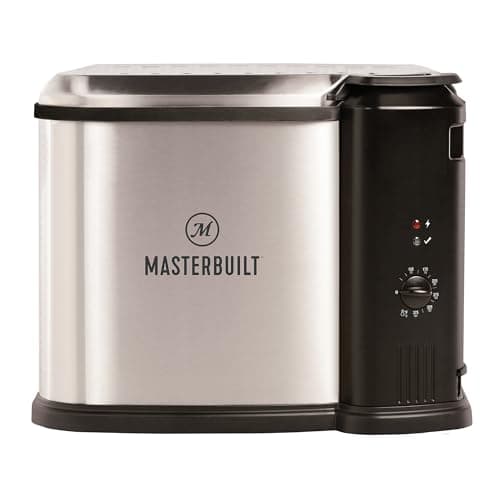 Masterbuilt MB20012420 3-in-1 10 Liter XL Electric Fryer, Boiler & SteamerAn indoor electric that needs about 2.75 gallons of oil instead of three or four, no propane, and none of the outdoor safety kit. | Lowest total cost of ownership | 9.3 | $149.99 · View on Amazon #ad We may earn a commission · Price as of November 5, 2026 |
| 2 | 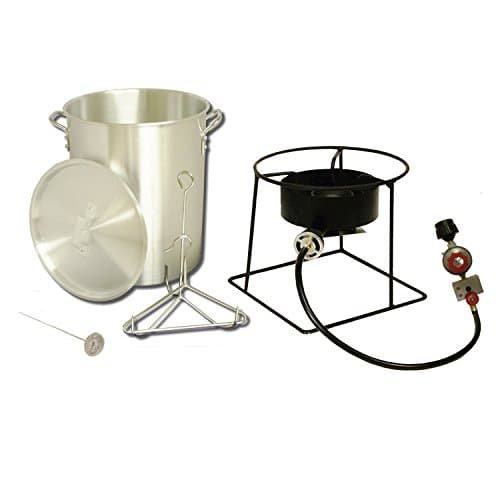 King Kooker 1266 Portable Propane Outdoor Turkey Fryer, 29 QuartA 38,000 BTU cast burner, a 29-quart pot, the hose and regulator, and the rack and lifting hook already in the box. | Cheapest complete outdoor rig | 8.8 | $139.23 · View on Amazon #ad We may earn a commission · Price as of November 5, 2026 |
| 3 | 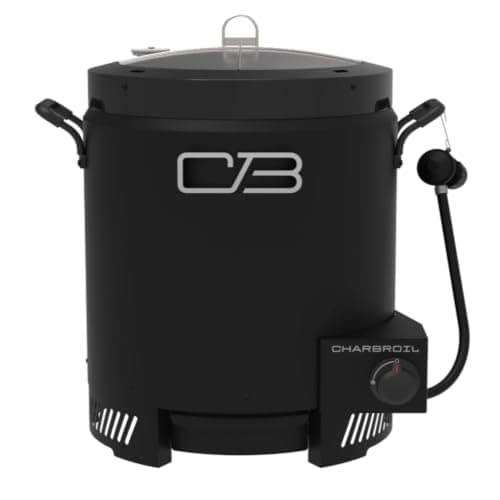 Char-Broil Big Easy Oil-Less Turkey FryerNo oil at all. The entire consumable bill is propane, which by our arithmetic is the smallest line on this page. | Cheapest to run, year two onward | 8.8 | $149.97 · View on Amazon #ad We may earn a commission · Price as of November 5, 2026 |
| 4 | 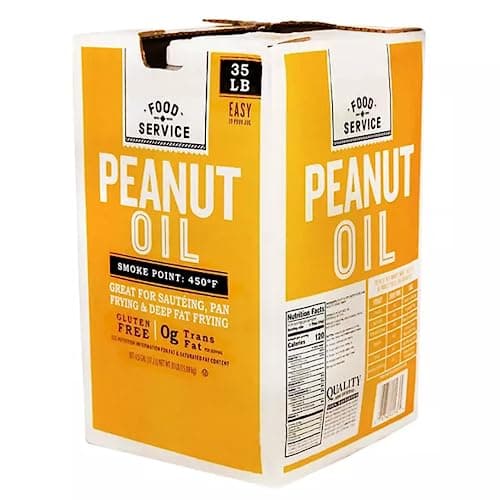 ANF Brands Pure Peanut Oil, 4.5 Gallon JugA 4.5-gallon jug covers a 30-quart pot with margin, and strained and stored properly it does three or more fries. | The line most people forget | 9.1 | $107.99 · View on Amazon #ad We may earn a commission · Price as of November 5, 2026 |
| 5 | 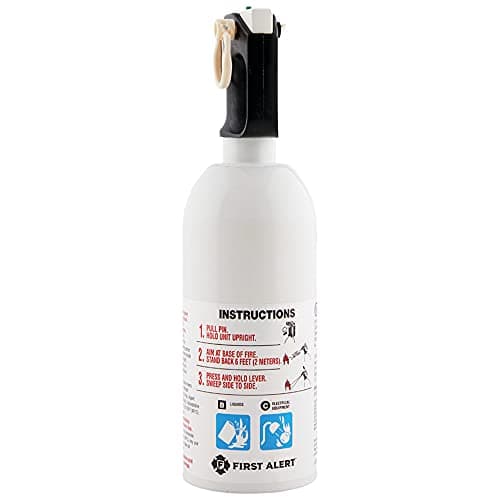 First Alert Standard Kitchen Fire ExtinguisherWater on burning oil makes it worse. A grease-rated extinguisher within arm's reach is the cheapest insurance on this page. | The accessory that is not optional | 9.4 | $22.99 · View on Amazon #ad We may earn a commission · Price as of November 5, 2026 |
Scores are our own editorial rubric, explained on how we pick. Four criteria per category on a published 8.4-9.8 scale, so the leading pick is clear at a glance. A product scores the same here as it does on every other page of this site.
The three brackets, and what you are paying for
Every turkey fryer on sale belongs to one of three groups, and the group decides the bracket far more than the brand does.
| Type | Bracket | What drives the price |
|---|---|---|
| Indoor electric | Entry to mid | Thermostat quality, digital timer, stainless build, bird capacity |
| Propane kit, aluminum pot | Entry | Burner BTU, what else is in the box |
| Propane, stainless pot | Mid to upper | Stainless rather than aluminum, pot volume, included thermometer and rack |
| Oil-less infrared | Mid to upper | The cooking chamber itself; there is no oil to buy |
Within a bracket, the useful question is not which model is cheapest but which one leaves the least to buy afterwards. Two propane kits at the same price are not the same purchase if one ships the hose, regulator, rack and lifting hook and the other ships a burner and a pot.
Live prices for every pick above sit on its quick-pick row and its product card, because a number written into this paragraph would be wrong within a week. What does not change week to week is the structure: the fryer is a one-off, and the oil is not.
What the box leaves out
This is where two setups at the same shelf price end up hundreds of dollars apart over a first year. The list of things you still need is shorter indoors than out.
| Still needed | Indoor electric | Propane rig | Oil-less |
|---|---|---|---|
| Oil, by the gallon | About 2.75 gal | About 3 gal and up | None |
| Propane cylinder and fill | No | Yes | Yes |
| Clip-on oil thermometer | Usually built in | Buy one you trust | Not applicable |
| Long waterproof gloves | Yes | Yes | Yes |
| Grease-rated extinguisher | Yes | Yes | Yes |
| Rack and lifting hook | In the box | Check — often not | In the box |
| Meat thermometer | Yes | Yes | Yes |
Two rows on that table are the ones people argue about. The clip-on oil thermometer is worth buying separately even when a kit includes one, because the gauge welded to a budget lid is the component most likely to be wrong, and a fryer running 40 degrees hot is how a bird burns outside and stays raw inside. And a meat thermometer is not an accessory at all. Oil temperature tells you nothing about the inside of the bird; only a probe does. Both are ranked in the fryer thermometer guide.
The oil is the real cost, and reuse is what fixes it
Here is the whole page in one line: buy the smallest pot that fits your bird. Oil scales with pot volume, not with how much turkey you are cooking, so a 44-quart pot used for a 14-pound bird is not a bigger fryer, it is a standing order for extra oil every year you own it.
- An indoor electric in this class runs on about 2.75 gallons.
- A 29 to 30-quart outdoor pot takes around three gallons — one properly sized jug, with margin.
- A 44-quart pot takes meaningfully more, which is the reason to buy one only if you genuinely cook that big.
Then halve it, or better. Published trade guidance puts frying oil at three to five uses, and up to five to seven under ideal conditions, if it is cooled, strained and kept in a sealed container somewhere cool and dark. Treat that as the default rather than the exception and the biggest line on this page divides by three. Our guide to reusing fryer oil has the smell-and-look test for when a batch is finished, and how to dispose of it covers the end of its life — which is a job with rules, not a trip to the bin.
One more lever: the exact volume is set by the water-displacement method, not by filling to a line. Doing it properly usually means less oil than you guessed, and it is also the step that stops the pot overflowing onto the burner. How much oil a turkey fryer needs walks through it.
What the fuel actually costs per bird
This is the part of the budget people most overestimate. The arithmetic below uses published energy figures and the ratings on the fryers themselves, and the conclusion is that fuel is the smallest line of the three — on either kind of fryer.
Indoor electric. These are 1,650-watt class appliances. Published frying guidance puts the cook at about three and a half to four minutes per pound, so a 14-pound bird is roughly an hour; round the whole job up to an hour and a half of element time to cover preheating generously. That is about 2.5 kilowatt-hours. The EIA projects the US residential electricity price at 18.2 cents per kilowatt-hour for 2026, which puts the electricity for the bird at somewhere under 50 cents. Even if you double our estimate of the element time, it does not reach a dollar.
Propane. A 38,000 BTU burner consumes 38,000 BTU of fuel an hour by definition, and the EIA puts a gallon of propane at 91,452 BTU. That is about 0.42 gallons an hour, so the same hour and a half of burner time is roughly two thirds of a gallon of propane — a modest slice of a 20-pound cylinder, which is why nobody refills between birds.
The interesting part is the comparison. At 3,412 BTU to the kilowatt-hour, our 2.5 kWh electric fry is about 8,500 BTU of energy. The propane rig puts roughly 57,000 BTU of fuel through the burner for the same bird — six or seven times as much. A 38,000 BTU flame heating a wide pot in open air is simply a different proposition from an enclosed element, and most of that heat goes into the yard.
Both numbers are small in dollars, and that is the useful finding. Fuel is not why one setup costs more than another. Oil is. Energy prices move, so treat the cents figure as current to the October 2026 EIA outlook rather than permanent — the structure of the answer is what lasts.
The accessories, ranked by whether you can skip them
Budget for the first three. Argue about the rest.
Do not skip: a grease-rated extinguisher. Published safety guidance is explicit that water must never go on a fryer fire, and a BC-rated extinguisher within reach is the difference between an incident and a claim. It costs a fraction of the fryer and it protects the kitchen for the rest of the year.
Do not skip: long waterproof gloves. Oil splashes up a forearm. A short oven mitt relocates the burn rather than preventing it.
Do not skip: a meat thermometer. Separate from the oil thermometer, non-negotiable, and the cheapest way to stop serving an undercooked bird. The thermometer guide ranks them.
Buy if your kit did not include it: a rack and lifting hook. Lifting a hot bird out on a bent coat hanger is where the frightening stories start. Many kits include one; check before you buy a second.
Skip, honestly: the marinade injector, if you have brined — the two jobs overlap, and the comparison is in brining versus injecting. Skip the branded fryer stand if your kit stands level on its own. And skip a second pot in a different size until you have fried twice and know which one you actually use. The full list of what is worth owning is in turkey fryer accessories.
Cost over three years, not one night
A fryer bought for one Thanksgiving is expensive whatever it cost. Spread over three, the ranking changes — and it changes on the consumables, not the purchase.
| Route | Year one | Years two and three | Where it lands |
|---|---|---|---|
| Indoor electric | Fryer, oil, gloves, thermometers | Oil top-ups only if the batch is reused; pennies of electricity | Cheapest overall for a 14 to 20 lb bird |
| Propane kit | Kit, cylinder and fill, three gallons of oil, gloves, extinguisher, oil thermometer | Oil, occasional refill | Highest first year; fine if you use it twice a year |
| Oil-less | Cooker, cylinder and fill, gloves | Propane only | Dearest to buy, cheapest to run, usually ahead by year three |
Two honest caveats on that table. It assumes you reuse the oil, which most people do not bother to do and which is most of the difference. And it ignores the thing that actually decides satisfaction: whether you wanted fried turkey. The oil-less route wins on money and loses on texture, and no spreadsheet settles that. If you are choosing between appliances rather than between budgets, start at the best way to cook a turkey.
Where the money actually gets wasted
Buying a pot two sizes too big. The commonest expensive mistake on this page. Extra pot volume costs extra oil every year, forever, and buys capacity you do not use. What size turkey fryer you need is sized by bird, not by ambition.
Buying a bundle, then replacing half of it. A cheap kit with a dubious lid gauge and a wire hook means two purchases. Read what is in the box before comparing prices.
Buying oil as supermarket bottles. Three gallons assembled from one-quart bottles costs a remarkable multiple of three gallons bought as three gallons.
Throwing good oil away. One fry out of a batch that had three or four in it is money poured down a drain it should never go down anyway.
Buying stainless for one night a year. Stainless is genuinely better and lasts decades. If the fryer comes out once a year, aluminum does the same job for less; if it comes out monthly for crawfish, stainless is the cheaper decision over time. The pots themselves are ranked in the fryer pot guide, and the material trade-off is in stainless versus aluminum.
What we would spend, three ways
The cheapest safe way to fry a turkey indoors. An entry indoor electric, one jug of oil sized to the pot, long waterproof gloves, a grease-rated extinguisher, an instant-read meat probe. That is the whole list, nothing else is needed, and the electricity is loose change.
The outdoor rig, done properly the first time. A complete propane kit that ships the hose, regulator, rack and hook; a 20-pound cylinder filled; three gallons of oil; a separate clip-on oil thermometer rather than trusting the lid gauge; gloves; extinguisher. Spend the extra on the thermometer and the gloves and save it on the pot material unless you will use the rig more than once a year. The field is ranked in the best propane turkey fryers.
The no-oil route. An oil-less infrared cooker, a cylinder, gloves, a meat probe. Highest first bill, lowest everything after, and no oil to buy, store or dispose of ever. Just be sure you are buying a roast rather than a fry.
Whichever one you pick, the first-timer shortlist across all three types is in the best turkey fryers, and the rules for the day itself — fully thawed bird, oil at 350F, never indoors with an outdoor rig — are in turkey fryer safety. No saving on this page is worth skipping that one.
The products, in detail
#ad We may earn a commission · Price as of November 5, 2026
#1 · Lowest total cost of ownership
Masterbuilt MB20012420 3-in-1 10 Liter XL Electric Fryer, Boiler & Steamer
The three-in-one version of the same idea — fry, boil or steam — which is the difference between an appliance you use once a year and one you use monthly.
On a three-year view this is the cheapest way to fry a turkey, and the reason is oil rather than electricity. An indoor electric pot in this class runs on roughly 2.75 gallons. A 30-quart outdoor pot wants around three, and a 44-quart wants more again. Oil is the line that repeats, so the pot that needs the least of it wins the arithmetic every year you own it.
The second saving is the one nobody counts. A propane rig needs long gloves, a clip-on oil thermometer you trust, a grease-rated extinguisher and somewhere flat and sheltered to stand. An indoor electric needs the gloves and the extinguisher you should own anyway, and nothing else. That gap is real money on the first purchase.
What it costs you is capability. Twenty pounds is the ceiling, and the circuit matters: this is a 1,650-watt class appliance and sharing a kitchen circuit with a roaster oven is how a breaker trips at the worst moment.
- Type
- Indoor electric
- Max bird
- Up to 20 lb
- Modes
- Fry, boil, steam
- Pot
- 10.6 qt, basket included
Why we picked it
- Oil requirement is the lowest of any real fryer here, which is where the money goes
- No propane tank, hose or regulator to buy or refill
- Fries, boils and steams, so it earns counter space more than once a year
- Indoors means no wind, no uneven ground and no second person needed
- Basket and lid in the box — nothing to buy twice
Good to know
At 1,650 W class draw it wants most of a 15-amp circuit to itself
Purchase cost
9.4
Oil cost per fry
9.8
Hidden extras needed
9.8
Use beyond the holiday
9.6
#ad We may earn a commission · Price as of November 5, 2026
#2 · Cheapest complete outdoor rig
King Kooker 1266 Portable Propane Outdoor Turkey Fryer, 29 Quart
The value propane kit: a 38,000 BTU cast burner, a 29-quart aluminum pot, the listed hose and regulator, and the turkey rack and lifting hook already in the box.
This is the honest floor for outdoor frying. The burner, the pot, the hose and regulator, the rack and the hook arrive together, and the 38,000 BTU rating is enough to bring the oil back up quickly after a cold bird goes in — which is the one performance number that matters on the day.
Count the rest before you decide it is the cheap option. You need a 20-pound propane cylinder and its first fill. You need about three gallons of oil. You need long waterproof gloves, because the splash goes up your forearm. And published safety guidance is unambiguous that a grease-rated extinguisher belongs within reach and the tank belongs a couple of feet back from the burner. Add those up and the complete first-year cost of this route is comfortably above the indoor electric even though the box costs about the same.
What you get for it is a bird size no indoor unit will take and a rig that boils crawfish and corn the rest of the year. If you will use it twice, it is good value. If it is one Thanksgiving, it is not.
- Type
- Outdoor propane kit
- Pot
- Aluminum, 29 qt
- Burner
- 38,000 BTU cast
- Included
- Cooker, hose and regulator, rack and hook
Why we picked it
- Burner, pot, hose, regulator, rack and hook in one purchase
- 38,000 BTU recovers oil temperature quickly when the bird goes in
- Nothing in the kit is the part you immediately replace
- Handles the big birds an indoor electric cannot
- Propane per fry is a fraction of a tank, so refills are rare
Good to know
An aluminum pot is softer than stainless and shows it over years
Purchase cost
9.6
Oil cost per fry
8.4
Hidden extras needed
8.4
Capability for the money
9.8
#ad We may earn a commission · Price as of November 5, 2026
#3 · Cheapest to run, year two onward
Char-Broil Big Easy Oil-Less Turkey Fryer
No oil at all — infrared heat in a vertical chamber. You lose the shatter-crisp skin and you remove the single largest way a fried turkey goes wrong.
The oil-less cooker is the one route whose running cost is almost nothing. Propane is the only consumable, and by the arithmetic in the fuel section below that is a fraction of a gallon per bird. Year one it is the most expensive of the three to buy. By year three, with no oil bought and none disposed of, it has usually passed the propane kit on total spend.
Be clear-eyed about what you are buying, though. Infrared heat in a vertical chamber produces a bird much closer to a very good roast than to a fried one. The skin browns and crisps in patches; it does not shatter. If the fried texture is the point of the exercise, this saves you money on the wrong thing — and the honest comparison is in our oil-less fryer guide.
- Type
- Oil-less infrared, propane
- Max bird
- Up to 16 lb
- Oil
- None
- Cook time
- Roughly 10 min per lb
Why we picked it
- Zero oil, which removes the biggest repeating cost
- Nothing to dispose of, store or sniff-test next year
- No oil means the single most dangerous failure mode is gone
- Roughly 10 minutes per pound, so the day is shorter
- Doubles as a cooker for pork shoulder and whole chickens
Good to know
Costs more up front than either cheap route
Purchase cost
8.4
Oil cost per fry
9.8
Hidden extras needed
9.4
Cost over three years
9.8
#ad We may earn a commission · Price as of November 5, 2026
#4 · The line most people forget
ANF Brands Pure Peanut Oil, 4.5 Gallon Jug
Peanut oil is the default for a reason: a high smoke point and a flavour that does not fight the bird. One 4.5-gallon jug covers a 30-quart pot with margin.
This is the purchase that decides whether frying a turkey is cheap or expensive, and it is the one that gets left off every budget. A 30-quart pot takes about three gallons. Buy that as single supermarket bottles and you will pay a startling premium per gallon; buy it as one jug sized for the job and you do not.
The number that rescues the whole exercise is reuse. Published trade guidance puts frying oil at three to five uses, and up to five to seven in ideal conditions, provided it is cooled, strained and stored in the dark. That divides the biggest line on the page by three or more — which is why reusing the oil properly is the highest-value thing on this page after buying the right size pot.
If anyone at the table has a peanut allergy, the swap is high-oleic sunflower oil, which fries at the same heat without putting peanut in the kitchen. It costs more per gallon, and that is the price of not having to ask the question.
- Volume
- 4.5 gallon jug
- Type
- Pure peanut oil
- Also
- Kosher certified
- Reuse
- Strain and refrigerate, 2-3 fries
Why we picked it
- One jug covers a 30 qt pot with oil left over
- High smoke point and a flavor that does not fight the bird
- Strained and refrigerated it serves several fries, which divides the cost
- Buying the right volume once beats buying four supermarket bottles
Good to know
It is the single largest consumable on this page, every time
Volume for the money
9.8
Frying performance
9.8
Reusability
9.4
Allergy friendliness
8.4
#ad We may earn a commission · Price as of November 5, 2026
#5 · The accessory that is not optional
First Alert Standard Kitchen Fire Extinguisher
Grease fires are not water fires. A BC-rated extinguisher within arm's reach is the single item that separates an incident from a claim.
- Rating
- UL 5-B:C
- Agent
- Sodium bicarbonate
- Never use
- Water on an oil fire
- Check
- Push-button pressure check before the day
Why we picked it
- BC-rated sodium bicarbonate agent, which is what an oil fire needs
- Costs a small fraction of the fryer and covers the kitchen all year
- Push-button pressure check, so you can verify it before the day
- Named explicitly in published turkey-fryer safety guidance
Good to know
One more thing to buy that is not fun
Cost against the risk
9.8
Correct for oil fires
9.8
Year-round usefulness
9.8
Ease of checking
9.4
Frequently asked questions
After the fryer itself, the consumables are the oil and the fuel. The oil is the large one: about 2.75 gallons for an indoor electric and around three for a 30-quart outdoor pot, which strained and stored properly does three or more fries. The fuel is small. Our arithmetic from published figures puts an electric fry at under 50 cents of electricity, and a 38,000 BTU propane burner at roughly two thirds of a gallon of propane for the same bird.
In dollars the two are close enough not to matter, because both are small. In energy they are not: a 1,650-watt element doing a 14-pound bird uses roughly 8,500 BTU of energy, while a 38,000 BTU burner puts about 57,000 BTU of propane through for the same job, because an open flame under a wide pot sends most of its heat into the air. The electric fryer is genuinely cheaper to own, but the saving comes from needing less oil and no safety kit, not from the fuel.
An entry indoor electric fryer, the smallest pot that fits your bird, one correctly sized jug of oil, and the oil reused across several fries. That combination has the lowest oil requirement, needs no propane cylinder and needs none of the outdoor safety hardware a propane rig does. If you already own a propane burner and a pot, then frying outdoors is cheaper still, because the purchase is done.
Only if you want fried turkey specifically. A fryer used once a year is an expensive way to cook a bird you could roast, and an electric roaster oven costs less to buy, needs no oil and frees up your kitchen oven. What a fryer buys is a texture and a cook time nothing else gives you. The three-in-one electric units make the case better than most, because boiling and steaming get used more than once a year.
You need a cylinder and its first fill, and budget for both as part of the rig. You will not need another for the frying itself — by the arithmetic above, a 38,000 BTU burner uses well under a gallon of propane to cook a turkey, which is a small slice of a 20-pound cylinder. Check the cylinder is in date and set it a couple of feet back from the burner, as published safety guidance requires.
Yes, and it is the single biggest saving available here. Trade guidance puts frying oil at three to five uses, and up to five to seven in ideal conditions, provided it is cooled, strained and stored sealed somewhere cool and dark. Reused three times, the largest line on your budget is a third of what it looked like. Oil that smells bitter, foams, has darkened sharply or smokes below frying temperature is finished, whatever the count says.
Sources
- U.S. Energy Information Administration — Short-Term Energy Outlook, October 2026 (residential electricity price)
- U.S. Energy Information Administration — British thermal units (Btu conversion factors for propane and electricity)
- WebstaurantStore — Can You Reuse Frying Oil?
- National Turkey Federation — How to Deep Fry a Turkey (eatturkey.org)
- State Farm — Turkey fryer safety tips
Related reading
- The Best Turkey Fryers of 2026Six fryers, ranked for someone doing this for the first time. Indoor electric wins, and we explain exactly why.
- The Best Electric Turkey FryersIndoor electric fryers, ranked — plus the no-oil outdoor alternative if you want electric for safety reasons.
- The Best Propane Turkey FryersFour complete outdoor propane kits compared on burner output, pot material, wind protection and what actually ships in the box.
- How Much Oil Does a Turkey Fryer Hold?Oil volume by pot size and bird weight, and the water-displacement method that beats every chart.
- Can You Reuse Turkey Fryer Oil?How many fries a jug has in it, the cool-and-strain routine, how long strained oil keeps, and the four tests that say throw it out.
- What Size Turkey Fryer Do I Need?Pot size to bird weight, in one table — plus the guest-count math that tells you which bird to buy in the first place.