Can You Reuse Turkey Fryer Oil?
Three gallons of peanut oil is not a single-use purchase. Here is how many fries it really has in it, and the four signs that say this batch is finished.
By Mike M. · Published · Last updated
How this page is funded: Fryer & Feast is a participant in the Amazon Associates Program. If you buy through a link here we may earn a commission, at no extra cost to you. It never changes which products we recommend — see how we pick and our full affiliate disclosure. Every buy link goes straight to the retailer, so the price you see is the live one on the day you buy.
Yes. Frying oil is good for roughly three to five uses, and up to five to seven if it is filtered and stored well. Let it cool below 100°F, strain it through a fine mesh or a coffee filter, and keep it in an airtight food-grade container somewhere cool and dark, where it will hold for one to two months. Discard it when it smells rancid, foams persistently, darkens sharply, or starts smoking below frying temperature.
Those numbers come from commercial kitchens, which fry far harder than you do. A home cook frying one turkey a year in high-oleic peanut oil is at the forgiving end of that range — but “a year” is the problem, not the frying, and that is the part this page spends most of its time on.
Quick picks
| # | Product | Best for | Score | Price |
|---|---|---|---|---|
| 1 | 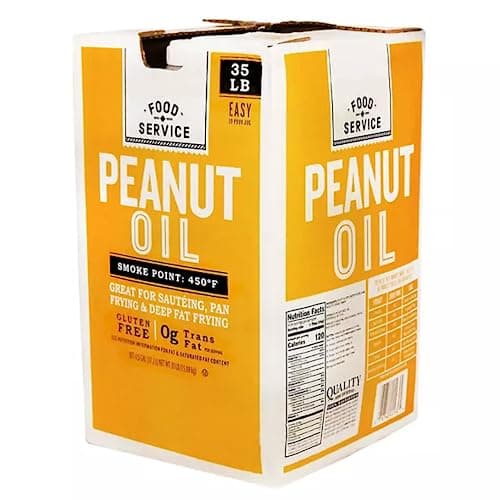 ANF Brands Pure Peanut Oil, 4.5 Gallon JugHigh smoke point and real stability at frying heat, which is exactly what survives a second and third session. | Best oil to reuse | 9.2 | |
| 2 | 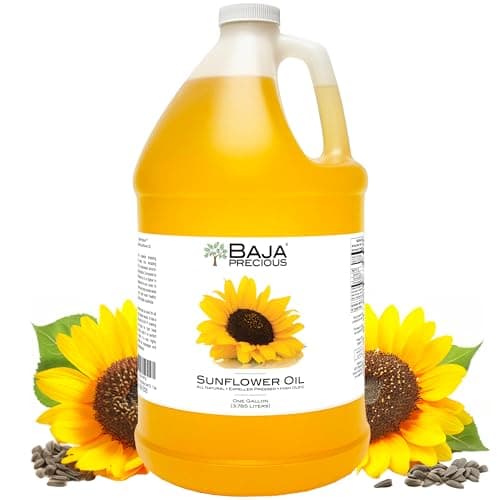 Baja Precious High Oleic Sunflower Oil, 1 GallonHigh-oleic sunflower is built for the same job — stable at heat, neutral in flavor, and it strains and keeps as well as peanut. | Best peanut-free oil to reuse | 9.0 | $34.99 · View on Amazon #ad We may earn a commission · Price as of October 10, 2026 |
| 3 | 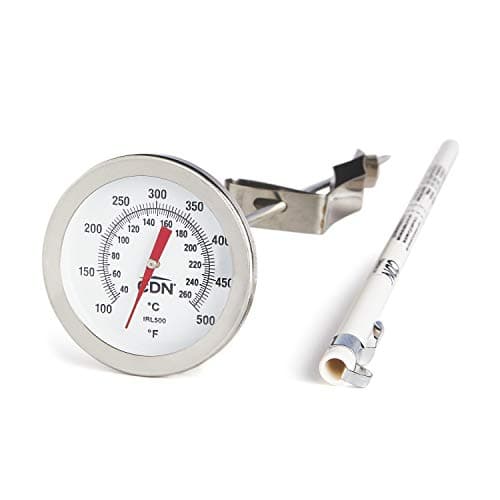 CDN Deep Fry Thermometer, 12 Inch Long StemReusable oil is oil that never got overheated — and the gauge on a cheap kit is often the thing that is wrong. | The tool that decides the question | 9.2 | $15.35 · View on Amazon #ad We may earn a commission · Price as of October 10, 2026 |
Scores are our own editorial rubric, explained on how we pick. Four criteria per category, scored out of ten, so the leading pick is clear at a glance.
How many times, honestly
Commercial kitchens get three to five uses out of a batch of frying oil as a matter of routine, and five to seven when filtration and storage are good. Those figures are the useful anchor because a restaurant fryer works far harder than yours: it runs all day, it fries battered and breaded food that sheds crumbs, and the oil never gets a rest.
A home turkey fry is gentler on oil than that. One bird, ninety minutes, no batter. So the honest home answer is the upper half of that range — call it three or four turkeys from one batch if you strain and store it properly, which for most households means two or three seasons rather than two or three weekends.
Which is where the real limit bites. The constraint on home fryer oil is almost never the number of fries. It is the eleven months in between.
The eleven-month problem
Strained frying oil keeps for one to two months under good conditions: airtight, food-grade container, cool and dark, away from heat and sunlight. Two months is not twelve. If you fry once a year and leave the jug on a shelf in the garage, the oil you saved in November is not the oil you pour in next November.
Two ways to make reuse actually pay. Either fry more than once a season — and this is a genuinely good reason to do a chicken, a batch of wings or a turkey breast in December while the oil is young — or refrigerate the strained oil, which slows oxidation considerably and is what the jug’s own label advice amounts to. Three gallons will not fit in most refrigerators, so this works best if you fried a smaller bird in a smaller pot.
What does not work is wishful thinking. If a jug has sat in a warm garage since last Thanksgiving, test it properly before you commit, and be prepared for the answer to be no. The disposal guide covers where it goes if it has turned.
How to cool and strain it properly
The sequence is short and the order matters.
- Shut it down and walk away. Cover the pot and leave it. You want the oil below 100°F before you handle or filter it — for a full pot that means overnight, not twenty minutes.
- Filter it. A fine mesh sieve works; a coffee filter or doubled cheesecloth rubber-banded over the mouth of the storage container works better. Pour slowly. Every crumb you leave in is a particle that will scorch next time and push the oil towards breakdown faster.
- Seal it and label it. Airtight, food-grade, with the date and the oil type on the side in marker. You will not remember in eleven months.
- Store it cool and dark. A basement shelf beats a garage; a refrigerator beats both. Heat and light are what age oil while it is sitting still.
Wear the long gloves for the pour even once it is cool. A three-gallon pot is heavy, the handles get slick, and the whole point of this exercise is to avoid a mess.
The four signs to stop reusing it
Any one of these is enough on its own. You do not need all four.
- It smells wrong. Good oil smells light and clean. Rancid oil is bitter or metallic, and the smell is the single most reliable test there is. Trust it over the look.
- It foams and stays foaming. A little bubbling when wet food goes in is normal. Persistent foam on the surface is the oil telling you it has broken down.
- It has gone noticeably dark. Oil darkens a shade with every use. A sharp change in color from one session to the next is a discard signal, not a patina.
- It smokes below frying temperature. This is the clearest one, and it is why a clip-on thermometer earns its place. If the oil is hazing at 300°F when it used to sit quietly at 350°F, its smoke point has dropped and the batch is done.
One more that is not about the oil: if the bird that came out of it tasted of something other than turkey, the oil has picked up flavor and will pass it on again. That is a judgment call rather than a safety one, but it is usually the point at which people decide for themselves.
Reusing it without undoing the safety work
Reused oil does not change the fryer rules, and it is worth saying plainly because a second fry can feel routine in a way the first one did not. The bird still has to be completely thawed and patted dry — water hitting 350°F oil flashes to steam and throws the oil out of the pot, and ice crystals in the cavity are the classic cause of a serious fire. A grease-rated extinguisher still belongs within arm’s reach, and water still never goes near a fryer fire.
The one thing reuse does change is the oil level. Strained oil comes back a little short of what went in, because some is absorbed and some stays in the filter. Top it up with fresh oil of the same type before you reheat rather than running a pot that does not quite cover the bird. Mixing a little new into old is fine; mixing peanut into sunflower means you can no longer tell anyone what is in the pot.
Full procedure in the fryer safety guide, and the volume arithmetic in how much oil a turkey fryer takes.
The products, in detail
#1 · Best oil to reuse
ANF Brands Pure Peanut Oil, 4.5 Gallon Jug
Peanut oil is the default for a reason: a high smoke point and a flavour that does not fight the bird. One 4.5-gallon jug covers a 30-quart pot with margin.
Reuse is where the price of peanut oil stops looking like a premium. Three gallons that fry three birds across two seasons costs less per turkey than three gallons of cheap vegetable oil that you throw away in November because it has gone dark and smells of fish.
The reason it lasts is the smoke point. Frying happens around 350°F; oils that smoke a long way above that have headroom, and headroom is what stops a single session from taking the oil most of the way to breakdown. Our oil comparison ranks the options on exactly that, and frying times and temperatures covers the 350°F target that keeps you inside it.
- Volume
- 4.5 gallon jug
- Type
- Pure peanut oil
- Also
- Kosher certified
- Reuse
- Strain and refrigerate, 2-3 fries
What’s good
- Stable enough at frying temperature to strain clean and come back
- High smoke point, so it is not already near breakdown on the first fry
- 4.5 gallons covers a 30-quart pot, and the jug doubles as the storage container
- Neutral enough that bird number two does not taste of bird number one
What’s not
- Ruled out entirely if anyone at the table has a peanut allergy
- A full jug is heavy to pour back and forth
- Dearer per gallon than vegetable oil — the reuse is what makes the maths work
Heat stability
9.6
Reuse potential
9.4
Flavour neutrality
9.0
Value
8.8
#ad We may earn a commission · Price as of October 10, 2026
#2 · Best peanut-free oil to reuse
Baja Precious High Oleic Sunflower Oil, 1 Gallon
The peanut-allergy answer. High-oleic sunflower is expeller pressed, neutral in flavour and stable at frying heat, so nobody has to ask what the oil is.
- Volume
- 1 gallon
- Type
- 100% high-oleic sunflower
- Processing
- Expeller pressed, non-GMO
- Why
- No peanut in the kitchen
What’s good
- High-oleic composition is specifically what makes an oil reusable
- No peanut in the house, so nobody has to be asked
- Expeller pressed and non-GMO
- One-gallon jugs store more easily on a shelf than one large drum
What’s not
- Needs three or four jugs for a full pot, so storage is three or four containers
- Higher cost per gallon than peanut
- Harder to find in a grocery store at short notice in November
Heat stability
9.2
Reuse potential
9.2
Flavour neutrality
9.4
Value
8.0
#ad We may earn a commission · Price as of October 10, 2026
#3 · The tool that decides the question
CDN Deep Fry Thermometer, 12 Inch Long Stem
A dial on a 12-inch stem that reads oil temperature continuously. The gauge built into a cheap kit is often the thing that is wrong.
- Range
- 100F to 500F
- Stem
- 12 in stainless
- Dial
- 1.75 in, glass lens
- Reads
- Oil, not meat
What’s good
- Reads 100F to 500F, which brackets both the 350F fry and the sub-100F strain point
- 12-inch stem clips to the pot rim and reads continuously
- Tells you if the oil is smoking below frying temperature — the clearest discard signal
- Cheap insurance against ruining three gallons in one session
What’s not
- Reads the oil, not the bird — you still need a meat thermometer
- A dial gauge is slower to settle than a digital probe
- The glass lens fogs if you let steam sit under it
Accuracy
9.0
Build
8.8
Ease of use
9.2
Value
9.6
Frequently asked questions
Three to five uses is the normal range, and five to seven is achievable with good filtering and storage. For a home cook frying one unbattered turkey at a time, the upper half of that range is realistic — but strained oil only keeps one to two months, so the practical limit is usually storage time rather than the number of fries.
One to two months in an airtight food-grade container kept cool and dark. Refrigerating it extends that considerably. A jug left in a warm garage from one Thanksgiving to the next is very unlikely to still be good, regardless of how clean it looked going in.
Four signals, any one of which is enough: it smells rancid, bitter or metallic; it foams persistently rather than briefly; it has darkened sharply since the last use; or it starts smoking below normal frying temperature. The smell test is the most reliable of the four.
Not strictly, but it helps a lot. Cool and dark is the minimum — a basement shelf rather than a garage. Refrigeration slows oxidation and is the best option if the volume will fit, which usually means you fried a smaller bird in a smaller pot.
Yes, and peanut oil is one of the better candidates for it. Its high smoke point means a single turkey fry does not take it close to breakdown, so strained and stored properly it usually has two or three more birds in it. Strain it below 100°F and keep it sealed, cool and dark.
Topping up strained oil with fresh oil of the same type is normal and sensible — you lose a little volume to absorption and the filter every time, and the bird still has to be covered. Do not mix different oils, because you then cannot tell anyone at the table what is in the pot.
Sources
Related reading
- How to Dispose of Turkey Fryer OilThe cool-down window, the container that works, where to take it for recycling, and the four disposal routes that will cost you a plumber.
- The Best Oil for Frying a TurkeyPeanut oil, the nut-free alternative, and the thermometer that stops you ruining either one.
- How Much Oil Does a Turkey Fryer Hold?Oil volume by pot size and bird weight, and the water-displacement method that beats every chart.
- How Long to Fry a TurkeyFrying times per pound at 350F, and the internal temperature that actually decides when to pull the bird.
- Turkey Fryer Safety: How to Do This Without IncidentTen ordered safety steps from published fire-safety and turkey-industry guidance, plus the gear that backs them up.