How to Dispose of Turkey Fryer Oil
Three to five gallons of cooled oil, one sealed jug, and a ten-minute errand. The only version of this that goes wrong is the one that involves a drain.
By Mike M. · Published · Last updated
How this page is funded: Fryer & Feast is a participant in the Amazon Associates Program. If you buy through a link here we may earn a commission, at no extra cost to you. It never changes which products we recommend — see how we pick and our full affiliate disclosure. Every buy link goes straight to the retailer, so the price you see is the live one on the day you buy.
Turn the fryer off, leave the oil in the covered pot overnight until it is at room temperature, then funnel it into a screw-top plastic jug — an empty milk jug or soda bottle is ideal. Seal it, and either put it in your household trash or drop it at a cooking-oil recycling point, where it is turned into biodiesel. Never pour it down a sink, a toilet, a storm drain or onto the ground.
That is the whole procedure. The rest of this page is the detail that makes it painless: how long the cool-down actually takes for three to five gallons, what to put it in when you do not own a funnel, how to find a drop-off near you, and the one question worth asking before you throw any of it away.
Quick picks
| # | Product | Best for | Score | Price |
|---|---|---|---|---|
| 1 | 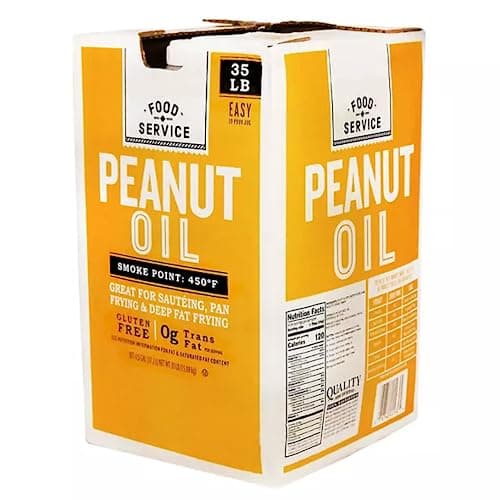 ANF Brands Pure Peanut Oil, 4.5 Gallon JugBuy the oil in one large sealed container and you already own the container you will dispose of it in. | The jug that makes disposal simple | 8.9 | |
| 2 | 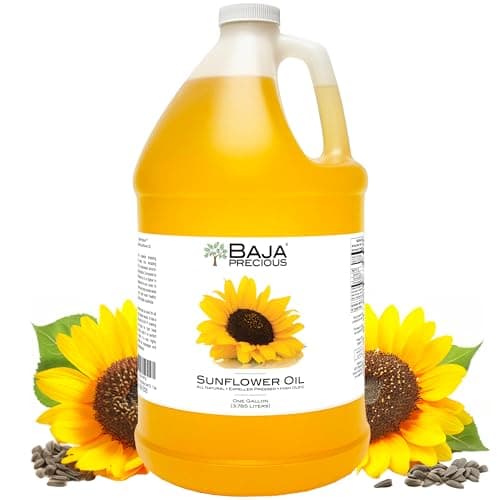 Baja Precious High Oleic Sunflower Oil, 1 GallonExpeller-pressed high-oleic sunflower, neutral in flavor, and it strains and stores as well as peanut does. | The peanut-free alternative | 8.8 | $34.99 · View on Amazon #ad We may earn a commission · Price as of October 10, 2026 |
| 3 | 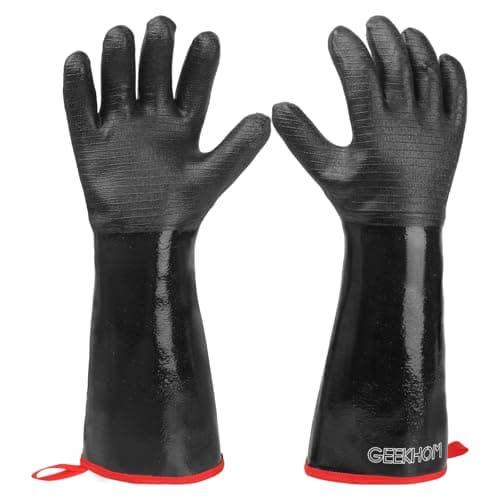 GEEKHOM 18 in Heat-Resistant Waterproof Cooking GlovesAn 18-inch waterproof sleeve, because the pour is the moment oil ends up on a forearm. | What you wear to move the oil | 9.0 | $27.69 · View on Amazon #ad We may earn a commission · Price as of October 10, 2026 |
Scores are our own editorial rubric, explained on how we pick. Four criteria per category, scored out of ten, so the leading pick is clear at a glance.
Step one: do nothing for twelve hours
The most common injury in the whole fryer-oil story happens hours after the turkey is eaten, because frying oil holds enough heat to cause a serious burn for an hour or more after the burner is off, and three to five gallons of it in a heavy pot holds that heat far longer than people expect.
So the first step is a non-step. Shut the burner off or unplug the unit, put the lid on the pot, move it somewhere children and dogs cannot reach, and leave it until the next morning. Overnight is the right unit of time for a full pot. Do not carry a hot pot anywhere, and do not try to speed this up with water, ice or a hose.
If you fried outdoors on propane, leave the pot on the stand rather than lifting it down while it is warm — see the fryer safety guide for the full shutdown sequence, including what to do if the oil ever starts smoking while it is still on heat.
Step two: get it into something that seals
Cold oil wants a rigid plastic container with a screw-on cap. The standard answers are the jug the oil came in, an empty plastic milk jug, or a large soda bottle. All three are food-grade, all three seal properly, and none of them will split in a trash can.
Use a funnel for anything with a narrow neck. If you do not own one, cut the top third off a second plastic bottle and invert it — it works, and you can throw it away afterwards. Pour slowly and over a tray or a doubled bin bag; a gallon of oil finding your garage floor is a bad afternoon.
Two things not to use. Not a paper bag or a cardboard carton: oil wicks straight through. And not a glass jar if it is going in the trash, because it will break in the truck. If the fat has gone solid — lard or shortening rather than liquid oil — a coffee can or shortening tin with a press-on lid is the right container instead.
Step three: trash, or recycling
Household trash. A sealed, cooled jug of used frying oil can go in your regular trash in most places. This is the default and it is legitimate. Seal it properly, do not overfill it, and put it in the can rather than beside it.
Cooking-oil recycling. Plenty of communities run free drop-offs that turn used cooking oil into biodiesel, and some hand you a clean gallon jug to take home for next year. Earth911 runs a zip-code search that tells you whether there is a collection point near you; municipal recycling centers, fire departments and some restaurant-supply yards also take it seasonally. If you have the choice, this is the better option — the oil becomes fuel instead of landfill.
Before either one, ask whether it has to go. A single turkey fry does not usually exhaust good oil. Strain it, store it properly and you may get another two or three fries out of the same jug, which is both cheaper and less waste. The test for whether yours is still good is on the reusing turkey fryer oil page.
The four routes that cost money
Every one of these looks like the quick option and every one of them is more expensive than the errand.
- The kitchen sink. Oil clings to the inside of your drain line as it cools and solidifies, and the clog builds from there. It also contributes to the fat-and-grease blockages in municipal lines that towns spend real money clearing. Hot water and dish soap do not fix this; they just move the problem further down the pipe.
- The toilet. Same pipe, same outcome, plus a worse access problem when it blocks.
- The storm drain. That line goes to a watercourse, not a treatment plant. This is the one that can also get you a fine.
- The yard or the woods. The EPA’s position on cooking oil poured onto ground is that it kills or injures wildlife, and it will draw every raccoon in the neighborhood while it is at it. Composting is not an answer either — oil at this volume turns a compost heap anaerobic.
A fifth one worth naming: do not tip it into someone else’s dumpster. Loose oil in a commercial bin is a contamination problem for whoever empties it.
Doing the arithmetic before you fry
Disposal gets easier when you have not bought more oil than the pot needs. The water-displacement method settles it: put the bird in the empty pot, cover it with water, lift it out, and mark the water line. That line is your oil volume, and for a typical 30-quart pot and a mid-sized bird it lands around three gallons rather than the four or five people tend to buy.
Our oil volume guide has the pot-size-to-gallons table. Getting that number right means one jug in, one jug out, and no half-used containers in the garage until next November.
And if the whole oil lifecycle — buy it, heat it, cool it, strain it, store it, eventually drive it somewhere — reads as more logistics than you signed up for, that is a completely reasonable conclusion. An oil-less infrared cooker gets you most of the way to fried texture with none of this page, and a roaster oven skips it entirely.
The products, in detail
#1 · The jug that makes disposal simple
ANF Brands Pure Peanut Oil, 4.5 Gallon Jug
Peanut oil is the default for a reason: a high smoke point and a flavour that does not fight the bird. One 4.5-gallon jug covers a 30-quart pot with margin.
The disposal-friendly habit is to keep the jug the oil arrived in. It is already food-grade, it already has a screw cap that seals, and it already holds exactly the volume you poured out. Rinse nothing, label it “used frying oil” with a marker, and it becomes the container you carry to the drop-off or set out with the trash.
Peanut oil also gives you the best chance of not disposing of anything at all this year. Its stability at frying heat is why it strains clean and keeps — see whether you can reuse turkey fryer oil for how many fries a jug realistically has in it, and the oil comparison for why it leads that page too.
- Volume
- 4.5 gallon jug
- Type
- Pure peanut oil
- Also
- Kosher certified
- Reuse
- Strain and refrigerate, 2-3 fries
What’s good
- The empty 4.5-gallon jug takes the used oil straight back, no decanting into bottles
- High smoke point, so the oil survives a fry in good enough condition to strain and reuse
- One jug covers a 30-quart pot with margin — no part-filled second container to store
- Kosher certified, which matters at a mixed table
What’s not
- Peanut oil is out if anyone at the table has a peanut allergy
- A full 4.5-gallon jug is heavy and awkward to pour without a second pair of hands
- Costs more per gallon than bulk vegetable oil
Fry performance
9.6
Reuse potential
9.0
Ease of handling
8.2
Value
8.8
#ad We may earn a commission · Price as of October 10, 2026
#2 · The peanut-free alternative
Baja Precious High Oleic Sunflower Oil, 1 Gallon
The peanut-allergy answer. High-oleic sunflower is expeller pressed, neutral in flavour and stable at frying heat, so nobody has to ask what the oil is.
- Volume
- 1 gallon
- Type
- 100% high-oleic sunflower
- Processing
- Expeller pressed, non-GMO
- Why
- No peanut in the kitchen
What’s good
- No peanut in the kitchen, so nobody at the table has to ask
- High-oleic means it holds up at frying temperature rather than breaking down in one session
- Neutral flavor — it does not stamp itself on the bird
- One-gallon jugs are far easier to lift and pour than a 4.5-gallon drum
What’s not
- You need three or four gallons for a 30-quart pot, so that is three or four containers
- More expensive per gallon than peanut oil
- Several part-empty jugs is a messier disposal job than one full one
Fry performance
9.2
Reuse potential
9.0
Ease of handling
9.0
Value
8.0
#ad We may earn a commission · Price as of October 10, 2026
#3 · What you wear to move the oil
GEEKHOM 18 in Heat-Resistant Waterproof Cooking Gloves
Long-sleeve and waterproof, which is the pair that matters: hot oil splashes up your forearm, and a short glove just moves the burn.
- Length
- 18 in sleeve
- Rated
- To 932F
- Coating
- Waterproof neoprene, silicone grip
- Lining
- Cotton
What’s good
- 18-inch sleeve covers the forearm, which is where splash-back lands
- Waterproof neoprene, so a splash does not soak through to skin
- Rated to 932F, well past anything a cooling pot can do to you
- Silicone grip holds a slick pot handle
What’s not
- Bulky — fine for lifting and pouring, clumsy for fine work
- Not a substitute for letting the oil cool first
- Cotton lining takes a while to dry if it does get wet inside
Protection
9.4
Grip
9.0
Comfort
8.4
Value
9.0
Frequently asked questions
No. Oil clings to the walls of your drain line as it cools and solidifies there, and it contributes to the fat-and-grease blockages that clog municipal sewers. Hot water and soap do not prevent it — they move the oil further along before it sets. Seal the cooled oil in a jug and bin it or recycle it instead.
Leave a full pot overnight. Frying oil can retain enough heat to cause a serious burn for an hour or more after the burner is off, and three to five gallons in a heavy pot holds heat much longer than that. Cover it, move it out of reach, and deal with it in the morning.
A rigid plastic container with a screw-on cap: the jug the oil came in, an empty milk jug, or a large soda bottle. Use a funnel for narrow necks. Avoid paper or cardboard, which oil wicks straight through, and avoid glass if the container is going in the trash.
Many communities run free cooking-oil drop-offs that convert it to biodiesel. Earth911’s zip-code search will tell you whether there is a collection point near you; municipal recycling centers and some fire departments also run seasonal collections around Thanksgiving.
Yes, in most places, as long as it is fully cooled and sealed in a container that will not split. That is the standard household route. Recycling is better where it is available, but a sealed jug in the trash is a legitimate disposal method — loose oil in a bin bag is not.
No. Peanut, high-oleic sunflower, canola and vegetable oil all follow the same route: cool, seal, bin or recycle. Peanut oil is worth straining and keeping rather than throwing away, because its stability at frying heat means it usually has more fries left in it.
Sources
Related reading
- Can You Reuse Turkey Fryer Oil?How many fries a jug has in it, the cool-and-strain routine, how long strained oil keeps, and the four tests that say throw it out.
- The Best Oil for Frying a TurkeyPeanut oil, the nut-free alternative, and the thermometer that stops you ruining either one.
- How Much Oil Does a Turkey Fryer Hold?Oil volume by pot size and bird weight, and the water-displacement method that beats every chart.
- Turkey Fryer Safety: How to Do This Without IncidentTen ordered safety steps from published fire-safety and turkey-industry guidance, plus the gear that backs them up.
- The Best Oil-Less Turkey FryersInfrared, indoor electric or a roaster oven — three honest ways to cook the bird without five gallons of hot oil.