Stainless vs Aluminum Turkey Fryer Pot
Aluminum heats faster and costs less. Stainless outlives it and cleans up better. Which one is right turns on a single question: how many times will you actually use it?
By Mike M. · Published · Last updated

How this page is funded: Fryer & Feast is a participant in the Amazon Associates Program. If you buy through a link here we may earn a commission, at no extra cost to you. It never changes which products we recommend — see how we pick and our full affiliate disclosure. Every buy link goes straight to the retailer, so the price you see is the live one on the day you buy.
Buy aluminum if you will fry once or twice a year; buy stainless if you will fry more often than that or you want to own the pot in ten years. Aluminum conducts heat better, so it reaches 350F faster and recovers faster after the bird goes in, and it costs noticeably less. Stainless is heavier, slower to heat, far more resistant to denting, pitting and staining, does not react with brines or acidic marinades, and cleans up to look new. Neither is unsafe. Neither cooks the bird differently once the oil is at temperature.
Quick picks
| # | Product | Best for | Score | Price |
|---|---|---|---|---|
| 1 | 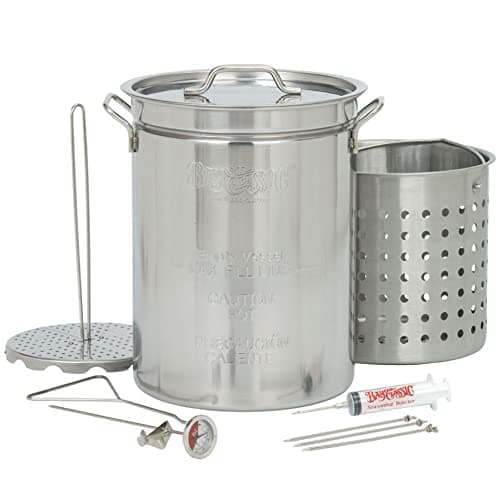 Bayou Classic 1118 32-qt Stainless Turkey Fryer PotA 32-quart stainless pot that arrives with the basket, the vented lid and a thermometer. | Best stainless pot | 9.0 | $149.99 · View on Amazon #ad We may earn a commission · Price as of October 17, 2026 |
| 2 | 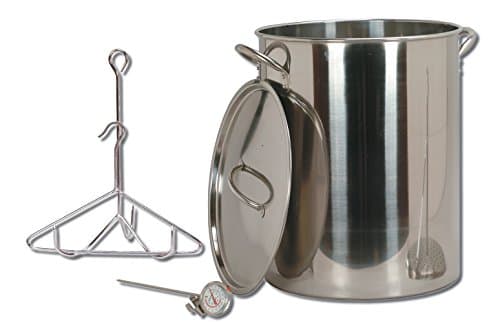 King Kooker 30-Quart Stainless Steel Turkey Pot PackagePot, lid, rack, hook and thermometer in stainless, for people who already own a stand. | Best stainless package without a burner | 9.0 | $83.70 · View on Amazon #ad We may earn a commission · Price as of October 17, 2026 |
| 3 | 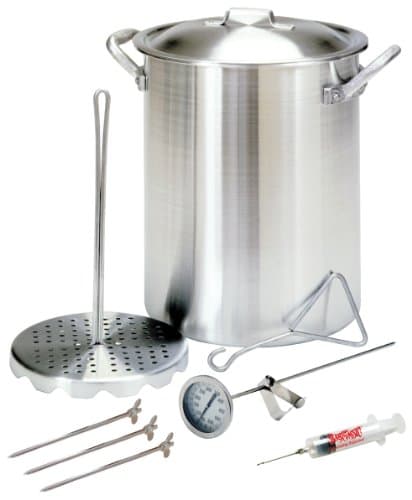 Bayou Classic 30 qt Aluminum Turkey Fryer SetA complete 30-quart aluminum set — pot, rack, hook and a 12-inch thermometer — for about the price of a bare stainless pot. | Best aluminum set | 8.5 | $75.83 · View on Amazon #ad We may earn a commission · Price as of October 17, 2026 |
Scores are our own editorial rubric, explained on how we pick. Four criteria per category, scored out of ten, so the leading pick is clear at a glance.
The two materials, side by side
| Aluminum | Stainless steel | |
|---|---|---|
| Time to 350F | Faster — better heat conduction | Slower from cold |
| Recovery after the bird goes in | Faster | Slower, though the difference narrows with a big burner |
| Weight | Light — easier to carry and to tip for draining | Heavy, empty and full |
| Denting | Dents easily, and a dented pot sits unevenly | Very resistant |
| Staining and pitting | Discolours; pits where salt sits | Cleans back to new |
| Brines and acidic marinades | Reacts — not for long contact | Non-reactive |
| Cleaning | Hand wash, no aggressive scouring | Scours without damage |
| Cost | Lower | Higher |
| Best for | Once or twice a year, oil only | Regular use, boils, brines, long ownership |
Notice what is not in that table: how the turkey tastes. Oil at 350F is oil at 350F. The material changes how long you wait and how the pot looks in five years, not the bird.
Why aluminum heats faster, and when it matters
Aluminum is a substantially better conductor of heat than stainless steel. In a fryer pot that shows up in two places: the climb from cold oil to 350F, and the recovery after an 18-pound bird drops the temperature.
The initial climb is a scheduling problem, not a cooking one. The National Turkey Federation puts it at 45 minutes to an hour for a typical oil volume; an aluminum pot shortens that, a stainless pot lengthens it. Either way you plan for it, and either way it happens before any food is involved.
Recovery is the one that affects the cook. The oil temperature falls when the bird goes in, and the faster it comes back the closer your actual cook is to the three to four minutes per pound the charts assume. Aluminum recovers faster. So does a bigger burner, and so does a wind shield — which is why a stainless pot behind a windshield on a 59,000 BTU burner outperforms an aluminum pot in a draught every time.
Practical conclusion: if you are buying a complete kit, the burner and the wind matter more than the pot material. If you are buying a pot for a burner you already own and that burner is modest, aluminum is the easier life.
Durability, denting and the brine question
Stainless wins here and it is not close. Three specific failure modes separate the materials.
Denting. Aluminum pots dent — in the garage, on a tailgate, when a stand collapses. A dented pot does not sit flat on a burner ring, and an unstable pot of hot oil is a safety problem rather than a cosmetic one.
Pitting and discolouration. Salt left in an aluminum pot pits the surface. Hard water spots it. Over a few seasons the inside goes grey and patchy. It is not dangerous but it is permanent.
Reactivity. This is the one that catches people out. Aluminum reacts with salt and acid, so a pot that doubles as a brining container is the wrong use of it. If you brine, brine in a food-grade bucket or bag — see brining bags and buckets — and keep the fryer pot for oil. Stainless has no such limit, which is part of why a stainless pot does double duty as a boil pot.
Cleaning, and the one mistake to avoid
Cleaning is where owners of aluminum pots do the most damage. Reaching for a harsh scouring pad or a caustic oven cleaner on aluminum strips the surface and accelerates every problem above. Stainless tolerates the same treatment and comes back looking new.
For either material the routine is the same: let the oil cool completely, drain or strain it out, wipe the worst of the residue with paper towel before any water goes near it, then hot water and dish soap with a soft brush. Rinse and dry fully. A stored pot with water in it is how both materials go wrong. The full method, including the burner and the basket, is in how to clean a turkey fryer.
One stainless-only trick: a stubborn burnt film lifts with a long simmer of water and a little dish soap in the pot on a low burner. Do not do this in aluminum.
Which one should you buy?
Buy aluminum if this is your first fryer, you will use it once or twice a year, the only thing going in it is oil, and you want the most complete kit for the least money. The Bayou Classic 30-quart set is the clean version of that choice.
Buy stainless if any of these are true: you fry more than twice a year, you want to boil seafood or corn in the same pot, the pot will live somewhere it can get knocked about, or you simply want to buy once. The Bayou Classic 1118 is the complete stainless answer; the King Kooker 30-quart package is the one to pair with a burner you already have.
Do not use material to decide the size. Get the capacity right first — 30 quarts to about 18 pounds, 32 quarts to about 21 — and choose the material second. Our fryer size chart and the pot roundup both work from the bird, which is the right order.
The products, in detail
#ad We may earn a commission · Price as of October 17, 2026
#1 · Best stainless pot
Bayou Classic 1118 32-qt Stainless Turkey Fryer Pot
The pot most serious outdoor rigs are built around — stainless, properly vented lid, and it ships with the basket and thermometer instead of making you buy them twice.
This is the stainless case made plainly. It is a 32-quart pot with the vented lid, the poultry rack, a thermometer and an injector already in the box, so there is nothing to buy separately on the morning. Thirty-two quarts is the size that takes a genuinely big bird without forcing you to heat five gallons of oil.
What stainless buys you over years rather than hours: it does not dent when the pot gets knocked off a tailgate, it does not pit where salt sat in it, it does not discolour, and it can be scoured without damage. If the pot is also going to see a brine, a boil or anything acidic, stainless removes the reaction question entirely.
- Type
- Propane pot and accessories
- Capacity
- 32 qt
- Material
- Stainless steel
- Included
- Vented lid, poultry rack, thermometer, injector
What’s good
- Stainless — no pitting, no reaction with brine, cleans back to new
- 32 qt takes a 21 lb bird with sensible headroom
- Vented lid, poultry rack, thermometer and injector included
- The pot outlives the burner, which is the point of buying stainless
What’s not
- Heavier than aluminum, empty and full
- Slower to reach 350F from cold
- Costs more than an aluminum set of the same size
- No burner in the box
Durability
9.8
Heat-up speed
8.0
Cleaning
9.6
Value
8.4
#ad We may earn a commission · Price as of October 17, 2026
#2 · Best stainless package without a burner
King Kooker 30-Quart Stainless Steel Turkey Pot Package
Everything that actually touches the bird, in stainless, in one package — pot, lid, lifting rack, hook and a deep-fry thermometer. Nothing left to buy separately on the morning.
The sensible upgrade path. If you already own a burner and stand — or you bought a cheap aluminum kit a few years ago and the pot is now dented — this replaces the half of the rig that matters without buying another burner.
Thirty quarts is the volume most accessories are sized around, which makes baskets, racks and lids easy to find later. Check your bird against it with the water test rather than assuming: 30 quarts is comfortable to about 18 pounds and tight above.
- Capacity
- 30 qt
- Material
- Stainless steel
- Type
- Pot package
- Note
- Pot and accessories, no burner
What’s good
- Everything that touches the bird, in stainless, in one package
- 30 qt — the standard size, and the easiest to find accessories for
- Includes the deep-fry thermometer most pot-only listings omit
- Pairs with a burner you already own
What’s not
- No burner, so it is not a complete fryer on its own
- 30 qt is tight above an 18 lb bird
- Stainless weight, same as any stainless pot
- Slower initial heat-up than aluminum
Durability
9.6
Heat-up speed
8.0
Cleaning
9.6
Value
8.8
#ad We may earn a commission · Price as of October 17, 2026
#3 · Best aluminum set
Bayou Classic 30 qt Aluminum Turkey Fryer Set
The complete set at about the price of a bare pot: a 30-quart aluminum pot with the perforated poultry rack, the lift hook and a 12-inch stainless thermometer already in the box.
The case for aluminum is not just price, although the price is real. Aluminum conducts heat far better than stainless, so the pot gets to 350F sooner and brings the oil back up sooner after a cold bird goes in. On a long, cold afternoon that is a genuine advantage, and it is why a lot of experienced outdoor cooks buy aluminum deliberately rather than as a compromise.
What you accept is wear. It dents, it stains, it will pit if salt or brine sits in it, and it needs washing by hand without harsh scouring. If the pot lives in a garage and comes out once a year for a turkey, none of that matters much. If you boil crawfish in it every spring, buy stainless.
- Capacity
- 30 qt
- Material
- Heavy-duty aluminum
- Included
- Poultry rack, lift hook, injector
- Also included
- 12 in stainless thermometer
What’s good
- Heats to 350F noticeably faster than stainless
- Complete: poultry rack, lift hook, injector and a 12 in thermometer
- Much lighter to carry and to tip for draining
- The cheapest honest route to a usable fryer pot
What’s not
- Dents — and a dented pot never sits quite flat again
- Discolours and pits over time, especially where salt sat
- Reacts with acidic marinades and long brines
- Needs more care in cleaning; no aggressive scouring
Durability
7.2
Heat-up speed
9.4
Cleaning
7.6
Value
9.6
Frequently asked questions
Stainless is the better pot; aluminum is often the better buy. Stainless resists dents, pitting and staining, is non-reactive so it can hold brines and boils, and scours clean. Aluminum conducts heat better so it reaches 350F faster and recovers faster, weighs much less and costs less. For once-a-year frying, aluminum is sensible. For anything more, buy stainless.
No. Once the oil is at 350F, the bird cooks the same in either pot. The material affects how long you wait for that temperature and how quickly the oil recovers when the cold bird goes in — a scheduling difference, not a cooking one.
No. Aluminum reacts with salt and acid, so a long brine in an aluminum pot both damages the pot and can affect the flavour. Brine in a food-grade plastic bucket, a brining bag or a stainless container instead, and keep the aluminum pot for oil.
Cool it completely, drain the oil, wipe the residue out with paper towel first, then wash with hot water, dish soap and a soft brush. No harsh scouring pads and no caustic oven cleaner — both strip aluminum and make it pit and discolour faster. Dry it fully before it goes into storage.
Properly dried, no. Stainless can develop surface spotting from hard water or from salt left sitting in it, but that wipes off and does not pit the way aluminum does. The one thing that causes real trouble with either material is putting the pot away damp.
Sources
Related reading
- The Best Turkey Fryer PotsFour pots and baskets ranked on oil economy, whether the rack and hook are included, and how long stainless lasts against aluminum.
- The Best Propane Turkey FryersFour complete outdoor propane kits compared on burner output, pot material, wind protection and what actually ships in the box.
- What Size Turkey Fryer Do I Need?Pot size to bird weight, in one table — plus the guest-count math that tells you which bird to buy in the first place.
- How to Clean a Turkey FryerThe order of operations for cleaning a turkey fryer: cooling, draining, the pot and basket, the burner and stand, and the storage step that decides what it looks like next year.
- Turkey Fryer Accessories Worth BuyingSix accessories ranked by how much they change the outcome — starting with the two safety items no kit includes.