Prime Rib in a Roaster Oven
A roaster oven will cook a rib roast beautifully and will not, on its own, give it a crust. Knowing that in advance is the whole difference between a great roast and a disappointed table.
By Mike M. · Published · Last updated

How this page is funded: Fryer & Feast is a participant in the Amazon Associates Program. If you buy through a link here we may earn a commission, at no extra cost to you. It never changes which products we recommend — see how we pick and our full affiliate disclosure. Every buy link goes straight to the retailer, so the price you see is the live one on the day you buy.
Heat the roaster to 325F, put the seasoned rib roast in the cookwell on a rack, and cook 13 to 15 minutes per pound to an internal 130F for rare, 135F medium rare, 140F medium or 150F well done. That is Nesco’s own published method for a 6 to 8 pound beef rib roast in an 18-quart roaster, and it serves 8 to 10. The part the recipe does not cover is the crust — a covered roaster is a humid box, so the browning has to come from a sear, before or after.
Quick picks
| # | Product | Best for | Score | Price |
|---|---|---|---|---|
| 1 | No image Nesco 18-Quart Roaster OvenNesco publishes the 325F, 13-15 minutes per pound prime rib instruction for this 18-quart body. | The roaster the published method is written for | 9.1 | |
| 2 | 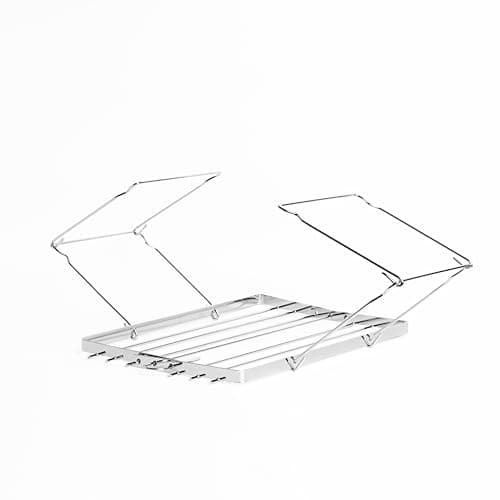 Fox Run Turkey Roasting Rack and LifterA rib roast sitting in rendered fat braises on the bottom; a rack is the fix. | What keeps the roast out of the fat | 9.1 | $19.49 · View on Amazon #ad We may earn a commission · Price as of October 17, 2026 |
| 3 | 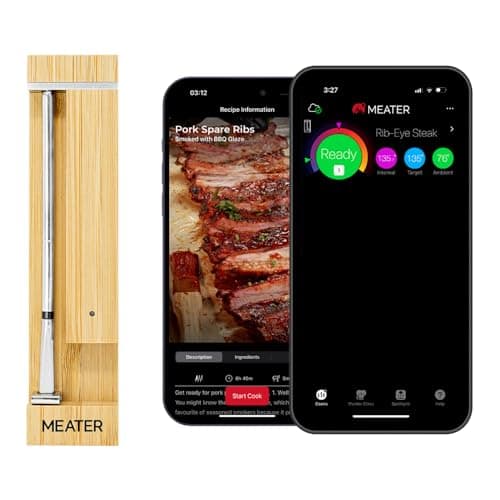 MEATER Pro Wireless Meat ThermometerPrime rib is cooked to a number, and a 5F overshoot is the difference between medium rare and medium. | What tells you when to stop | 9.0 | $99.99 · View on Amazon #ad We may earn a commission · Price as of October 17, 2026 |
Scores are our own editorial rubric, explained on how we pick. Four criteria per category, scored out of ten, so the leading pick is clear at a glance.
The published method
Nesco publishes a prime rib instruction for the 18-quart roaster oven, and it is the figure this page works from rather than a number from anywhere else. For a 6 to 8 pound beef rib roast:
- Combine the seasonings — the published version uses six cloves of minced garlic, a teaspoon of cracked black pepper and a teaspoon and a half of dried thyme — and press them evenly into the surface of the roast.
- Heat the roaster oven to 325F.
- Place the roast in the cookwell.
- Slow cook 13 to 15 minutes per pound.
- Finish by temperature, not by the clock: 130F rare, 135F medium rare, 140F medium, 150F well done.
At the published serving size that is 8 to 10 people from a 6 to 8 pound roast. The timing works out at roughly 80 to 120 minutes for a 6-pound roast and 105 to 160 for an 8-pound one, which is a wide enough band that the thermometer is not optional.
| Roast weight | At 13 min/lb | At 15 min/lb |
|---|---|---|
| 4 lb | About 52 min | About 1 hr |
| 6 lb | About 1 hr 18 min | About 1 hr 30 min |
| 8 lb | About 1 hr 44 min | About 2 hr |
| 10 lb | About 2 hr 10 min | About 2 hr 30 min |
Treat every row as a planning estimate and the probe as the decision. A roast comes out when it hits its number, not when the timer says so.
Getting a crust out of a covered box
This is the one thing a roaster oven will not do for you. It is a covered appliance; moisture leaving the meat stays in the box; and browning needs a dry surface and high heat. Left to itself, a rib roast out of a roaster is beautifully cooked and pale.
Three ways round it, in order of how well they work.
Sear first, in a pan. Get a heavy skillet genuinely hot, oil the roast rather than the pan, and brown every face including the ends — four or five minutes a side. Then into the roaster at 325F. This is the most reliable method and the easiest to time, because the roast comes out of the roaster ready to rest.
Finish in a hot oven. Pull the roast 5F to 10F short, move it to a preheated 450F to 500F oven for eight to twelve minutes to colour the outside, then rest. This gives the best crust but it needs the oven free at exactly the wrong moment on a holiday afternoon.
Lid off for the last stretch. Take the roaster lid off for the final twenty minutes and turn it up. It helps a little. It is not a substitute for either method above, and it costs you temperature control at the point where precision matters most.
Whichever you use, dry the surface hard with paper towel before the seasoning goes on, and salt the roast several hours ahead if you can — a dry surface browns and a wet one steams. The same logic drives dry brining a turkey.
The rack, the fat and the rest
Use a rack. A rib roast renders a lot of fat and a roast sitting in it braises on the underside while the top roasts. A rack lifts it clear, lets heat circulate underneath, and keeps the drippings usable for a jus rather than boiling the base of the meat.
Bone side down. If the roast is bone-in, the bones act as their own rack and insulate the meat above them. Fat cap up, so it bastes the roast as it renders.
Rest it properly. Twenty to thirty minutes, loosely tented with foil, somewhere warm but not hot. This is not optional with a large roast — carve it straight out of the roaster and the juice ends up on the board. The internal temperature will also carry on climbing several degrees while it rests, which is exactly why you pull it at the target number rather than past it.
Carve across the grain, thin. An electric carving knife earns its keep here more than on a turkey — a long even stroke through a rib roast is hard to do by hand without sawing. A board with a juice well is the other half of it; see best carving boards.
Holding it, and what else is in the box
A rib roast is a finished-to-temperature cut, which means it does not tolerate holding the way a braise does. Keeping a medium-rare roast warm for two hours cooks it to medium. Plan to serve it within about forty minutes of it coming out, and use the rest period as the buffer.
What you can do is free the roaster the moment the roast is out. Wipe the cookwell, add an inch of hot water, drop it to its lowest setting and it becomes the holding oven for everything else while you carve — the method is in using a roaster oven to keep food warm.
Do not cook the sides in the cookwell alongside the roast. There is room, and it is still a bad idea: anything you add releases moisture into a box you are already fighting for dryness, and the roast will be paler for it. Sides go in the oven, which is now free.
If you are cooking prime rib because the turkey is going elsewhere, the same roaster handles a ham at 325F and 15 to 20 minutes per pound to 160F — roaster ovens for a ham — and the full set of times and temperatures across cuts is in roaster oven cooking times.
Four mistakes worth avoiding
Cooking to the clock. Thirteen to fifteen minutes per pound is a planning figure covering a two-pound-wide band of roast sizes and a range of starting temperatures. The only thing that decides doneness is the probe.
Starting from refrigerator cold. A large roast straight out of the fridge cooks unevenly — the outside overshoots while the centre catches up. An hour on the counter before it goes in evens it out considerably.
Opening the lid repeatedly. A roaster has no window and recovers slowly. Every look costs you heat and extends the cook. Use a leave-in probe and keep the lid on.
Expecting a crust that was never coming. The single most common disappointment with a roaster-oven rib roast, and it is entirely avoidable by searing first. Decide which browning method you are using before the roast goes in, not when it comes out.
The products, in detail
#1 · The roaster the published method is written for
Nesco 18-Quart Roaster Oven
Heat wraps the cookwell rather than sitting under it, which is why it browns more evenly than the price suggests. Eighteen quarts still swallows a 22-pound turkey.
- Capacity
- 18 qt
- Max bird
- Up to 22 lb
- Element
- Wrap-around, 1,450 W
- Cookwell
- Removable
What’s good
- The manufacturer's own prime rib timing is written for this model
- Wrap-around element browns more evenly than a base-only element
- 18 qt is far more than a 6 to 8 lb rib roast needs
- Removable cookwell, so the fat and jus wash out easily
What’s not
- No searing function — the crust is a separate step
- No window, so every look costs heat
- Still a large appliance to store
- Needs a rack; the roast should not sit in its own fat
Fit for the job
9.4
Evenness
9.2
Cleanup
8.8
Value
9.0
#ad We may earn a commission · Price as of October 17, 2026
#2 · What keeps the roast out of the fat
Fox Run Turkey Roasting Rack and Lifter
Detachable handles are the point: the rack goes in the pan, the handles come off, and the bird comes out without you reaching in with a tea towel.
- Size
- 11 x 6 x 2 in
- Handles
- Detachable
- Material
- Metal
- Care
- Hand wash
What’s good
- Lifts the roast clear so heat circulates underneath
- Detachable handles lift a heavy roast out in one piece
- Keeps the jus clean for gravy instead of boiling the base
- Works for turkey, ham and rib roast alike
What’s not
- Hand wash only
- 11 x 6 in suits a modest roast, not a giant one
- Metal on enamel needs a little care
- One more thing to store with the roaster
Does the job
9.2
Lifting
9.4
Durability
8.6
Value
9.0
#ad We may earn a commission · Price as of October 17, 2026
#3 · What tells you when to stop
MEATER Pro Wireless Meat Thermometer
Fully wireless, so nothing trails out of the roaster lid. The app alarm is the point: you can leave the kitchen and still be told when the bird is done.
- Type
- Wireless probe
- Reads
- Internal and ambient
- Alerts
- Phone app alarm
- Best for
- Roaster ovens and ovens
What’s good
- Fully wireless, so nothing trails out from under the roaster lid
- Reads internal and ambient temperature together
- App alarm, so you are not opening the lid to check
- Reusable for turkey, ham and everything else
What’s not
- The most expensive thermometer option
- Needs charging and a phone nearby
- Signal through a metal appliance can be fussy
- Overkill if you only roast once a year
Accuracy
9.4
Convenience
9.6
Build
9.0
Value
8.0
Frequently asked questions
325F. Nesco’s published instruction for a 6 to 8 pound beef rib roast in an 18-quart roaster oven is to heat the roaster to 325F and slow cook 13 to 15 minutes per pound, finishing to an internal temperature rather than a time.
About 13 to 15 minutes per pound at 325F — roughly an hour and a half for a 6-pound roast and about two hours for an 8-pound one. Those are planning figures. Pull the roast when the probe reads your target: 130F rare, 135F medium rare, 140F medium, 150F well done.
130F for rare, 135F for medium rare, 140F for medium and 150F for well done, measured in the centre of the roast away from bone. Pull it at the target rather than past it — the temperature carries on climbing several degrees during the rest.
Yes, if you want a crust. A roaster oven is a covered, humid appliance and it browns poorly on its own. Searing every face in a very hot skillet before the roast goes in is the most reliable method; the alternative is pulling it a few degrees short and finishing it in a 450F to 500F oven for eight to twelve minutes.
No. Water is for holding food warm, not for roasting beef — it makes the box more humid, which is the opposite of what a rib roast needs. Put the roast on a rack in a dry cookwell so the rendered fat drains away and the heat can circulate underneath.
Sources
Related reading
- Roaster Oven Cooking Times and TemperaturesThe turkey chart, the ham chart, the stuffed-bird adjustment, and why the dial on the lid is the number you should trust least.
- How to Use a Roaster OvenThe whole method from preheat to holding the sides warm afterward, with times by weight.
- The Best Roaster Ovens for a HamWhy a ham wants a low dial rather than a big pan, the 325F / 15-20 minutes per pound numbers, and three roasters that suit the job.
- The Best Electric Carving Knives for Prime RibWhich electric knives cope with a bone-in rib roast, the honest limits on a rare center, and the two-step method that gets clean slices either way.
- The Best Large Roaster OvensThree roaster ovens ranked on the only thing that matters at the top end — maximum bird weight — plus the measurement to take before you buy.