Using a Roaster Oven to Keep Food Warm
The roaster has done its job by two in the afternoon. Its second job — holding six dishes above 140F while the oven finishes — is the one that actually saves the day.
By Mike M. · Published · Last updated
How this page is funded: Fryer & Feast is a participant in the Amazon Associates Program. If you buy through a link here we may earn a commission, at no extra cost to you. It never changes which products we recommend — see how we pick and our full affiliate disclosure. Every buy link goes straight to the retailer, so the price you see is the live one on the day you buy.
Set the roaster to its lowest setting — 150F on an Oster, 125F to 150F on a Hamilton Beach — put an inch of hot water in the cookwell, stand the covered dishes in it, and keep the lid on. The rule the setting has to clear is the USDA one: hot food must be held at 140F or above, because below that you are in the 40F to 140F Danger Zone where bacteria multiply quickly. Check with a thermometer in the food rather than trusting the dial.
Quick picks
| # | Product | Best for | Score | Price |
|---|---|---|---|---|
| 1 | 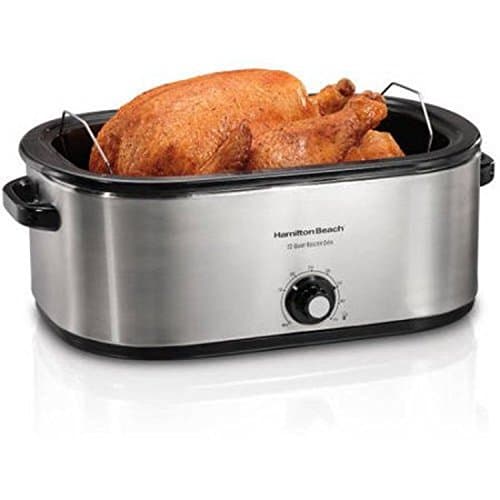 Hamilton Beach 32215 22-Quart Roaster OvenA 125F floor and 22 quarts of room — the widest holding range and the most of it. | Best for holding | 9.2 | $199.99 · View on Amazon #ad We may earn a commission · Price as of October 17, 2026 |
| 2 | No image Oster 22-Quart Roaster Oven with Self-Basting LidThe dimpled lid keeps moisture in the box, which is the whole problem with a long hold. | Best self-basting hold | 9.1 | |
| 3 | 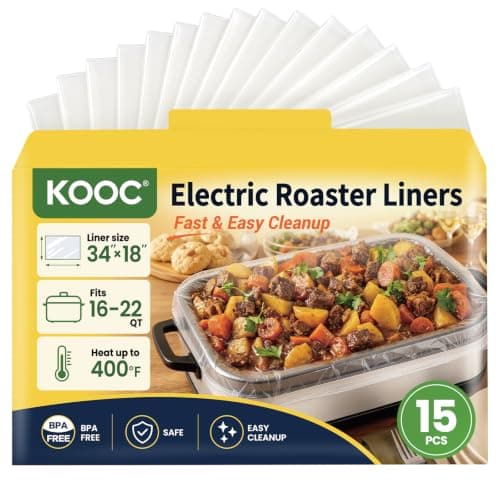 KOOC Electric Roaster Liners, 15 CountA water pan plus gravy plus a four-hour hold is the worst cookwell to clean all year. | What makes the hold painless | 9.0 | $14.99 · View on Amazon #ad We may earn a commission · Price as of October 17, 2026 |
Scores are our own editorial rubric, explained on how we pick. Four criteria per category, scored out of ten, so the leading pick is clear at a glance.
The one rule: 140F or above
Hot food held for service has to stay at 140F or above. The USDA defines 40F to 140F as the Danger Zone, the temperature band in which foodborne bacteria multiply rapidly, and the two-hour rule applies to anything that sits inside it. A holding setup that keeps food at 120F is not keeping it safe; it is incubating it slowly.
This is why the dial number and the food temperature are different things. A roaster set to 150F will not necessarily hold a dense dish of mashed potato at 150F — it depends on how full the box is, how cold the dish went in, and how often the lid comes off. The only honest check is a probe in the food.
Two practical consequences:
- Food goes in hot, not warm. A roaster on a holding setting is not powerful enough to bring a cold dish up through the Danger Zone in reasonable time. Reheat to 165F first, then hold.
- Check once, twenty minutes in. One probe reading after the hold has settled tells you whether your setting is right for this particular load. If it reads below 140F, go up a notch.
The method, step by step
1. Preheat the roaster empty. Lowest setting, lid on, twenty minutes. A cold cookwell pulls heat out of the first dish you put in it.
2. Add about an inch of hot water to the cookwell. This is the single trick that makes a roaster a good holding oven. Water spreads heat evenly around the dishes instead of letting the element hammer whatever is sitting directly on the floor, and it keeps the air in the box humid so food does not dry out. Hot water, not cold — cold water costs you half an hour.
3. Stand the dishes in the water, covered. Heatproof dishes, foil over the top of each. They can sit in the water; they do not need to float, and the water should not come near the rim.
4. Lid on, and leave it. Every lid-off moment dumps the humid air you just created. A roaster has no window and recovers more slowly than an oven, so batch your checks.
5. Probe at twenty minutes, then hourly. Into the thickest part of the densest dish. Above 140F and you are fine.
6. Top the water up if you are holding for hours. It evaporates. A dry cookwell under a holding setting is how the bottom of a dish scorches.
What holds well, and what does not
| Holds beautifully | Holds acceptably | Do not hold |
|---|---|---|
| Mashed potatoes | Carved turkey, under foil with a little stock | Anything with a crisp crust |
| Gravy and sauces | Dressing and stuffing | Roast potatoes |
| Baked beans, chili, braises | Glazed carrots and root vegetables | Green vegetables — they go grey and limp |
| Mac and cheese (before the crumb goes on) | Rolls, briefly, wrapped | Anything breaded or fried |
The pattern is simple: a roaster on a holding setting is a humid box, and humidity is the enemy of crisp and the friend of wet. Hold the wet things in the roaster and give the crisp things the oven at the last minute.
Carved turkey is the awkward case. It holds, but it dries, because carved meat has far more exposed surface than a whole bird. A shallow layer, a few spoonfuls of stock or pan juices in the dish, and foil pressed down onto the surface buys you an hour without disaster. The longer answer is in how to keep turkey warm after cooking.
When the roaster is the wrong holding tool
A roaster is the best holding appliance most people already own, and it is not always the right one.
Use a warming tray if the dishes need to be on the table and visible. A roaster holds food out of sight in a box; a tray holds three dishes where people can serve themselves. See best warming trays.
Use chafing dishes if the event is a buffet and there is no outlet where the food needs to be. Chafers run on fuel cans, not electricity, which is why caterers use them. The setup is in how to set up a buffet table.
Use the slow cooker you already own for one dish. Mashed potatoes and gravy hold perfectly on Warm, and it leaves the roaster free for the bulk.
Use the oven at its lowest setting if the roaster is still cooking. Most ovens will not go below about 170F, which dries food faster than a roaster with water in it, so cover everything tightly.
The full ranking of holding methods, with the trade-offs, is in how to keep food warm for a party.
Fitting the hold into the afternoon
The reason this page exists is a scheduling problem, not a cooking one. One oven cannot roast a turkey, bake dressing, crisp potatoes and warm rolls in the window between two and four o’clock. The roaster solves it by taking the turkey out of the oven’s schedule entirely, and then by holding whatever comes out first.
A workable shape for the afternoon:
- Turkey in the roaster in the morning, finishing about ninety minutes before the meal. It needs to rest anyway.
- Turkey out, rested, carved; roaster wiped, water in, switched to its lowest setting. It is now a warming oven.
- Oven at full temperature for the dressing and the potatoes, which is what it is actually good at.
- Finished dishes into the roaster as they come out, covered.
- Last fifteen minutes: rolls in the oven, gravy finished on the stove, everything else already at temperature.
The hour-by-hour version, written for one oven, is in the Thanksgiving cooking timeline.
The products, in detail
#ad We may earn a commission · Price as of October 17, 2026
#1 · Best for holding
Hamilton Beach 32215 22-Quart Roaster Oven
Stainless, 22 quarts and rated for a 28-pound bird, which is the biggest capacity here — and it holds food warm all afternoon once the bird is out.
- Capacity
- 22 qt
- Max bird
- Up to 28 lb
- Temp range
- 125F to 450F
- Lid
- Self-basting
What’s good
- 125F to 450F, so it cooks at the top and holds low at the bottom
- 22 qt takes several covered dishes side by side
- Same appliance roasts the bird and then holds the sides
- Stainless body wipes clean after a long hold
What’s not
- The 125F setting is below the 140F safe-holding line on its own
- Large and heavy on a crowded counter
- No window, so every check costs heat
- Needs a circuit of its own alongside other kitchen appliances
Holding range
9.6
Capacity
9.6
Evenness
8.8
Ease of use
8.8
#2 · Best self-basting hold
Oster 22-Quart Roaster Oven with Self-Basting Lid
The default answer for most first-time hosts. Twenty-two quarts takes a 26-pound bird, and the dimpled self-basting lid drips condensation back down so you are not opening it every 30 minutes.
- Capacity
- 22 qt
- Max bird
- Up to 26 lb
- Lid
- Self-basting
- Insert
- Removable enamel pan
What’s good
- Self-basting lid returns condensation instead of losing it
- 150F dial floor sits above the USDA 140F line
- 26 lb roasting capacity, so plenty of holding room
- Removable enamel insert washes easily after gravy
What’s not
- 150F is the lowest it goes — delicate dishes can overcook on a long hold
- Enamel chips if stored carelessly
- Same footprint problem as any 22 qt roaster
- Lid needs a landing spot when it comes off
Holding range
8.8
Capacity
9.4
Evenness
9.0
Ease of use
9.2
#ad We may earn a commission · Price as of October 17, 2026
#3 · What makes the hold painless
KOOC Electric Roaster Liners, 15 Count
Not essential, genuinely useful. A liner turns the worst cleanup of the day into lifting a bag out of a pan, which matters when the kitchen is already full of dishes.
- Fits
- 16-22 qt, 18 x 34 in
- Pack
- 15 liners
- Material
- BPA-free nylon blend
- Rated
- To 400F
What’s good
- Turns the cleanup into lifting a bag out
- Fits 16 to 22 qt cookwells
- Rated to 400F, well above any holding temperature
- 15 in a pack, so there is one for the ham and the chili too
What’s not
- Another consumable to remember
- Can tear if a hot dish is dragged across it
- Does not replace washing the cookwell occasionally
- No use at all if you hold dishes in their own covered containers
Cleanup saved
9.4
Fit
9.0
Heat rating
9.2
Value
8.6
Frequently asked questions
Use the lowest setting that keeps the food itself at 140F or above — in practice 150F on most roasters, or 125F to 150F on a model with a lower floor. The dial setting is not the food temperature, so check with a probe in the thickest dish twenty minutes into the hold and raise the setting if it reads under 140F.
Yes, and it is one of the most useful things it does. Preheat it on the lowest setting, put about an inch of hot water in the cookwell, stand covered heatproof dishes in the water and keep the lid on. The water spreads the heat and keeps the air humid, which is what stops food drying out over a long hold.
Several hours, as long as the food stays at or above 140F throughout and it went in hot. Top the water up as it evaporates and check the temperature hourly. What limits the hold is quality rather than safety: most dishes are noticeably better at two hours than at four.
Yes — about an inch of hot water in the cookwell, with the dishes standing in it. It turns the roaster into a gentle water bath, which spreads the heat evenly and keeps the box humid so food does not dry out. Use hot water so you are not waiting for it to come up, and top it up over a long hold.
You can, but it is better to rest the bird whole and carve it late than to hold it for hours. If you must, keep it whole rather than carved, tent it with foil, and hold at the lowest setting that keeps it above 140F. Carved meat dries much faster because there is far more exposed surface.
Sources
Related reading
- How to Use a Roaster OvenThe whole method from preheat to holding the sides warm afterward, with times by weight.
- How to Keep Food Warm for a PartyEight methods ranked, with the 140F safety floor explained and the dishes that simply will not hold.
- How to Keep a Turkey Warm After CookingHolding a cooked turkey for one, two or three hours: resting whole, the foil-and-stock method for carved meat, the 140F floor, and the mistakes that dry a bird out.
- Roaster Oven Cooking Times and TemperaturesThe turkey chart, the ham chart, the stuffed-bird adjustment, and why the dial on the lid is the number you should trust least.
- The Best Large Roaster OvensThree roaster ovens ranked on the only thing that matters at the top end — maximum bird weight — plus the measurement to take before you buy.