How to Carve a Turkey
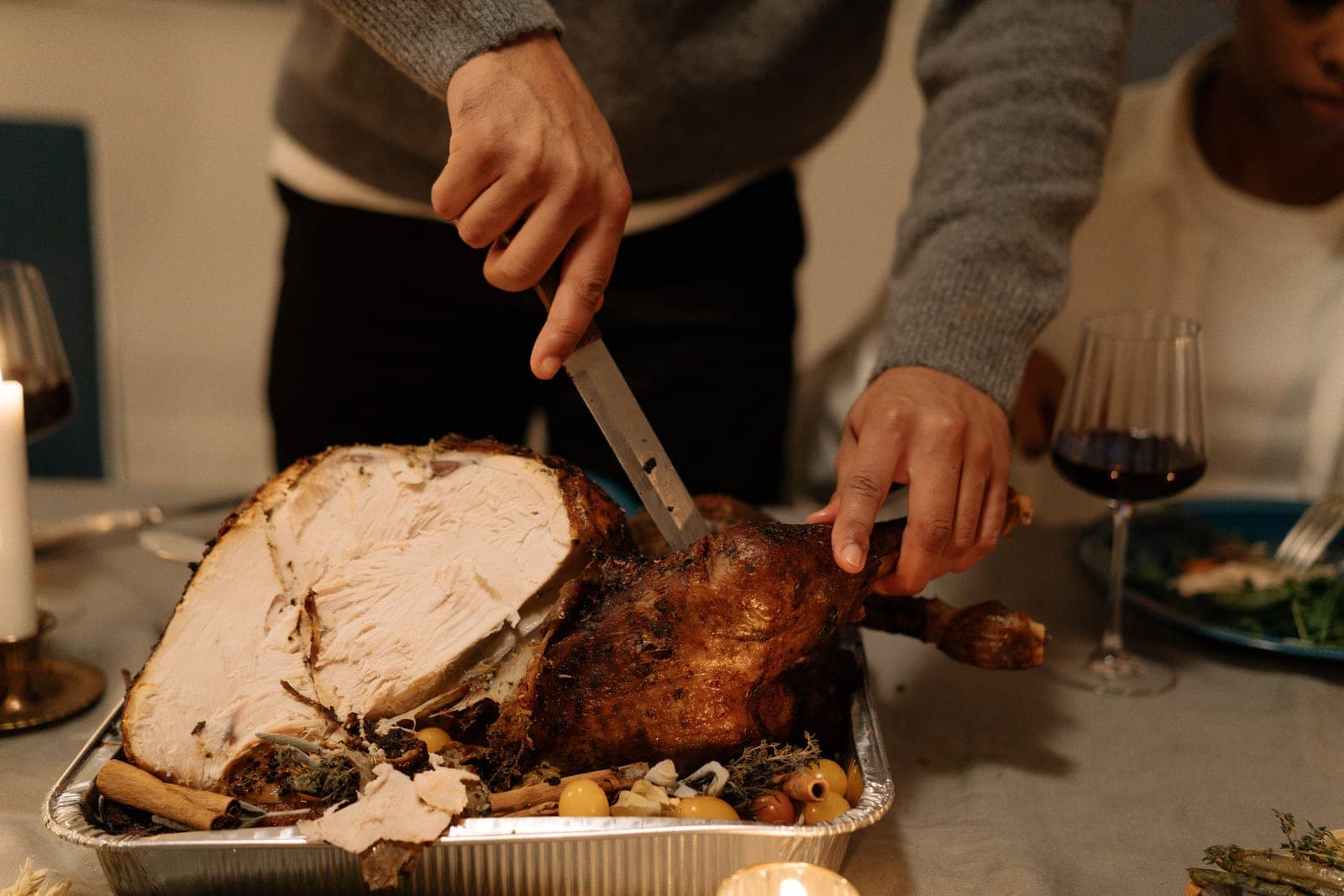
Do it in the kitchen, take the breasts off the bone whole, and slice them on the board. It looks better and it is ten times easier.
By Mike M. · Published · Last updated
How this page is funded: Fryer & Feast is a participant in the Amazon Associates Program. If you buy through a link here we may earn a commission, at no extra cost to you. It never changes which products we recommend — see how we pick and our full affiliate disclosure. We do not publish prices on this site — every buy link sends you to the retailer for the live price.
The method, in six steps:
- Rest the bird 20 to 30 minutes. Do not skip this.
- Remove each leg: cut the skin between thigh and breast, bend the leg outward until the joint pops, and cut through it.
- Separate thigh from drumstick at the joint. Slice the thigh meat off the bone.
- Remove the wings at the shoulder joint.
- Cut down along one side of the breastbone and follow the rib cage to take the whole breast off in one piece. Repeat on the other side.
- Slice each breast across the grain, about half an inch thick, onto a warm platter.
Quick picks
| # | Product | Best for | Score | Price |
|---|---|---|---|---|
| 1 |  Forged Carving Knife and Fork SetA long narrow slicer crosses the breast in one stroke. | The knife for the job | 8.9 | |
| 2 | 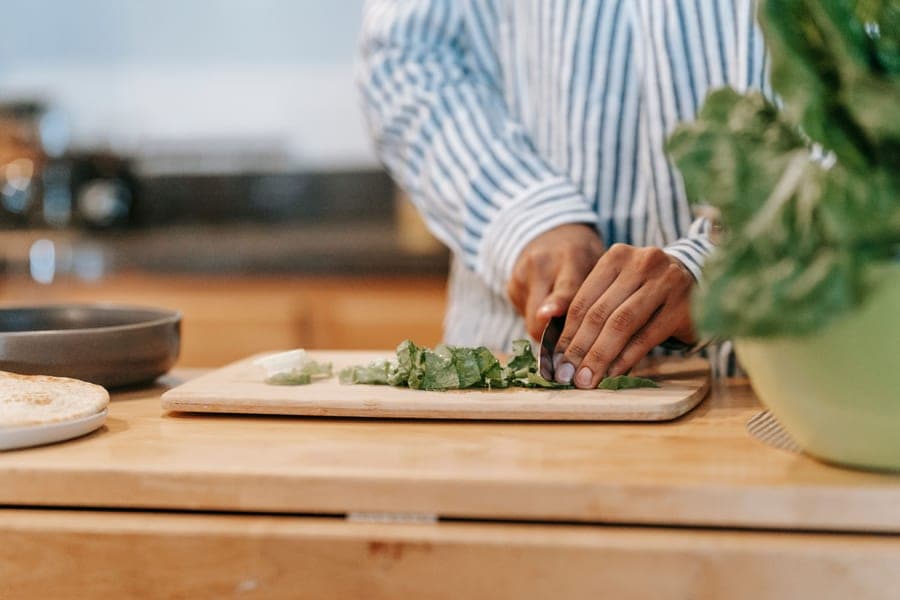 Carving Board with Juice WellA 20 lb bird releases more than a flat board will hold. | The board that catches the juice | 8.5 | |
| 3 | 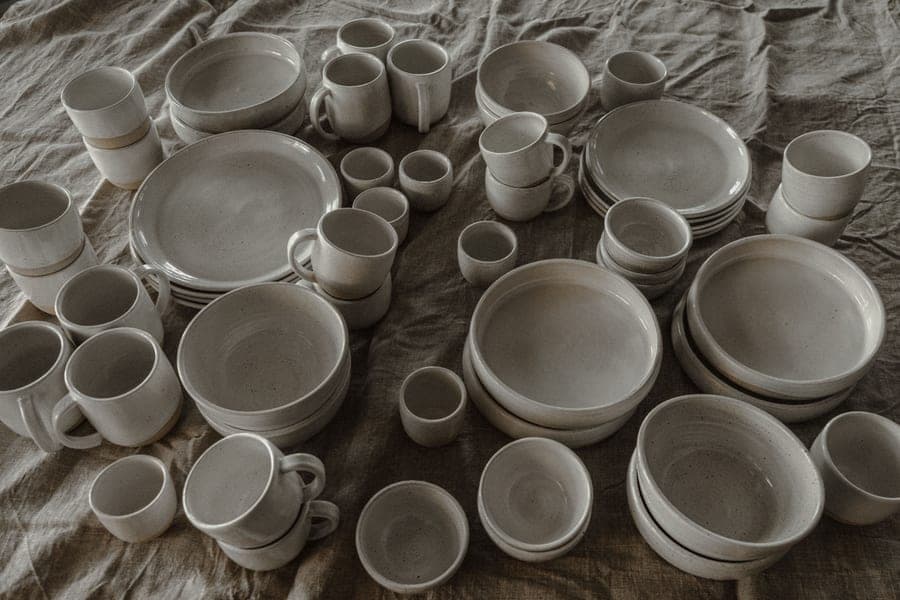 Oval Ceramic Serving Platter Set18 inches minimum, and warm it before you plate. | Where it lands | 8.8 |
Scores are our own editorial rubric, explained on how we pick. They are not customer ratings and we do not publish star ratings for products we have not handled.
Carve in the kitchen, not at the table
Carving at the table is a Norman Rockwell image, not a good idea. You are working at a bad height, on an unstable surface, with a sharp knife, in front of an audience, while the meat cools.
Take the bird to the kitchen. Carve it off the bone onto a proper board, arrange it on a warm platter, and carry the platter out already portioned. It is faster, it is safer, the meat stays hotter, and it honestly looks more considered.
If somebody wants the ceremonial moment, bring the whole bird out for thirty seconds, let people look at it, and then take it back to the kitchen. Everybody gets what they want.
Resting: 20 to 30 minutes, non-negotiable
During cooking the muscle fibers contract and push moisture toward the center. Cut into the bird straight away and that moisture runs out onto the board. Rest it and the fibers relax and reabsorb it.
Twenty minutes for a small bird, 30 for a large one. Tent it loosely with foil — loosely, because sealing it tight steams the skin you worked to crisp.
The bird will not go cold in 30 minutes; a large roast holds heat remarkably well. Use the time to bake the rolls, finish the gravy, and get the sides out of whatever is holding them warm.
The steps in detail
Legs first
Pull the leg away from the body and cut through the skin between thigh and breast. Keep bending it outward until the hip joint pops — you will hear it. Cut through the exposed joint rather than trying to cut through bone. Separate the drumstick from the thigh at its joint, then lay the thigh skin-side down and slice the meat off the bone.
Wings next
Same idea. Pull the wing out, find the shoulder joint, cut through it. Wings usually go out whole.
Breasts off whole — the key step
Do not slice the breast while it is attached. Instead, make a long cut down one side of the breastbone, then work the knife down and along the rib cage, keeping the blade against the bone, until the whole breast lifts off in one piece. Repeat on the other side.
This is what makes carving easy. You now have two boneless breast lobes on a board, which you can slice at whatever thickness you like, at a comfortable angle, without fighting a carcass.
Slice across the grain
Look at the direction the muscle fibers run and cut across them, not along. Half-inch slices. Cutting with the grain gives you long stringy pieces that feel tough even when they are not.
Getting it to the table hot
Warm the platter. Sit it in hot water for five minutes and dry it. A cold platter pulls heat out of the bottom layer of meat immediately — this is free and almost nobody does it.
Arrange dark meat first, breast slices on top. Breast slices dry fastest, so they go on last and get eaten first.
Spoon a little of the reserved juice over. That is what the groove in the carving board was collecting. A tablespoon over the slices makes a visible difference.
Cover loosely with foil if there is a gap before serving, or put the platter on a warming tray on its lowest setting.
Common mistakes
Not resting. The single most common one, and it undoes hours of careful cooking in thirty seconds.
Slicing the breast on the carcass. Fighting the rib cage produces ragged slices and takes three times as long. Take it off whole.
A dull knife. It tears rather than slices, and it slips — which makes it the more dangerous option.
Cutting with the grain. Perfectly cooked meat can read as tough purely because it was sliced the wrong way.
Throwing away the carcass. It makes excellent stock. Bag it and deal with it tomorrow.
The products, in detail
#1 · The knife for the job
Forged Carving Knife and Fork Set
A long, narrow slicing blade beats a chef's knife on a turkey because it clears the breast in one pass instead of sawing. Everything else in a boxed set is optional.
- Blade
- 8-12 in slicer
- Edge
- Granton or plain
- Fork
- Two-tine, long
- Care
- Hand wash, hone before use
What’s good
- 8-12 in blade
- Clean slices
- Used for every roast
What’s not
- Needs honing first
- Some technique required
Cut quality
9.2
Control
9.0
Build
8.8
Value
8.4
#2 · The board that catches the juice
Carving Board with Juice Well
The groove is not decorative. A 20-pound bird releases enough juice to run off a flat board and across the counter — ask anyone who has done it once.
- Feature
- Perimeter juice groove
- Size
- Look for 20 in or wider
- Material
- Hardwood or bamboo
- Bonus
- Reserve juices for gravy
What’s good
- Perimeter groove
- Juices go into the gravy
- Stable surface
What’s not
- Awkward to store
- Hand wash and oil only
Usefulness
9.4
Build
8.8
Storage
6.8
Value
8.8
#3 · Where it lands
Oval Ceramic Serving Platter Set
Measure before you buy. A carved 20-pound turkey needs an 18-inch platter minimum, and most sets top out at 14 because they were designed for a roast chicken.
- Size to look for
- 18 in or larger
- Material
- Porcelain or stoneware
- Oven safe
- Check before warming
- Warm it
- Hot water bath before plating
What’s good
- Holds heat
- Warms in hot water
- Used year-round
What’s not
- Heavy loaded
- Large pieces store awkwardly
Size
9.2
Heat retention
8.8
Durability
8.6
Value
8.6
Frequently asked questions
Twenty minutes for a small bird, 30 for a large one, tented loosely with foil. Resting lets the juices redistribute into the meat rather than running onto the board.
Better not to. Carve in the kitchen on a proper board at a comfortable height, and bring it out already arranged on a warm platter. It is faster, safer and the meat stays hotter.
Off. Cut down beside the breastbone and follow the rib cage to lift each breast off whole, then slice it on the board. It is far easier and the slices are much cleaner.
About half an inch, cut across the grain. Thinner slices dry out quickly on the platter; much thicker and they are awkward to eat.
Make stock. Bag it and refrigerate it if you have no energy on the night — it will keep a couple of days, and it makes the best soup base you will get all year.
Sources
Related reading
- The Best Turkey Carving SetsFour things worth buying for carving, and an honest note about the one thing that matters more than all of them.
- The Best Serving Platters for a Holiday TablePlatters sized for a real carved turkey, plus the charger-plate trick that makes mismatched dinnerware look deliberate.
- Electric vs Manual Carving KnifeEase against control, compared honestly — plus the one factor that settles it for most first-time hosts.
- How to Keep Food Warm for a PartyEight methods ranked, with the 140F safety floor explained and the dishes that simply will not hold.
- Hosting Thanksgiving for the First TimeThe honest overview — what goes wrong, what to skip, and the four decisions that actually matter.