The Best Carving Boards for a Turkey
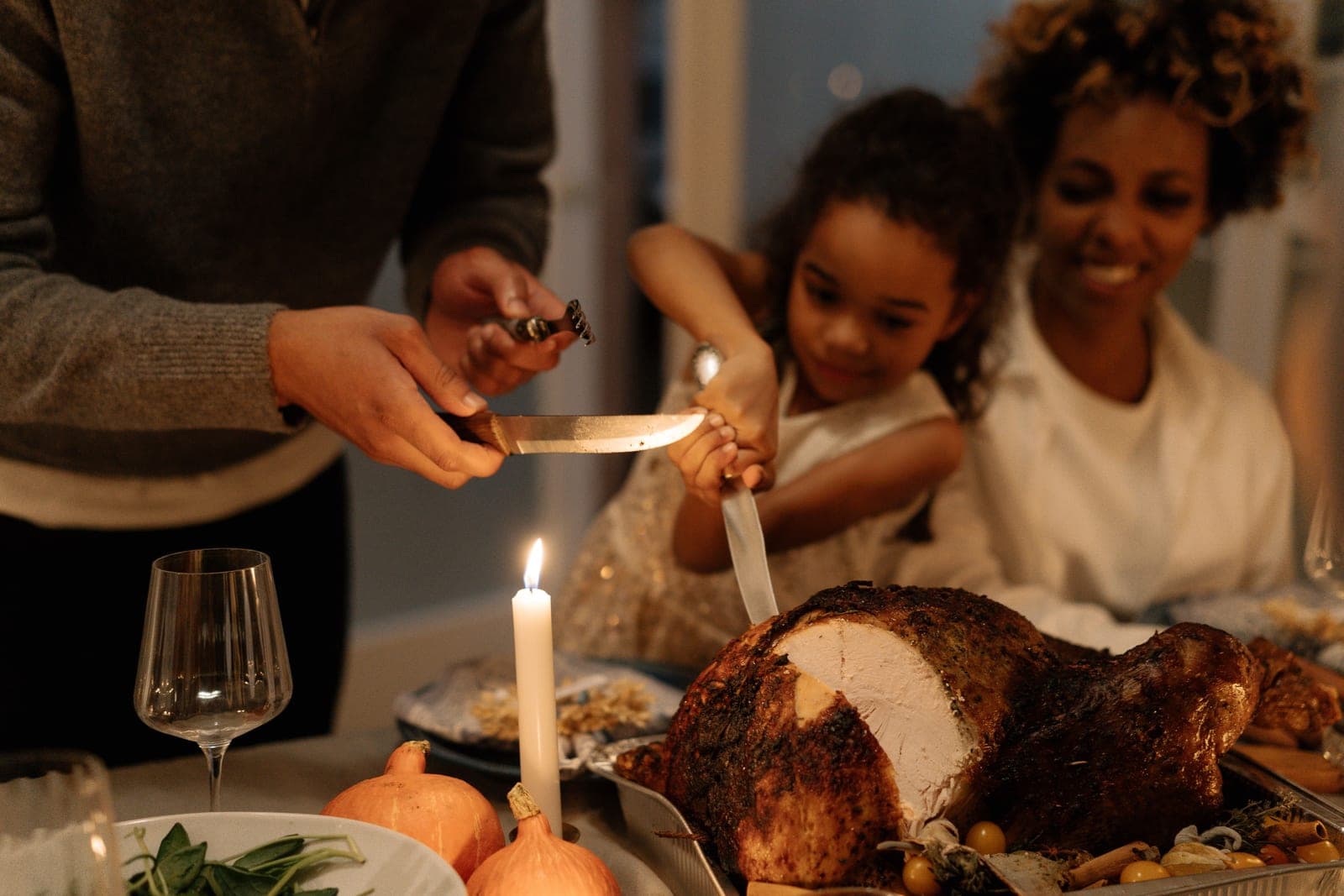
A 20-pound bird releases more juice than most people expect, and a flat cutting board sends all of it onto the counter, down the cabinet front and onto the floor. The groove is the whole product.
By Mike M. · Published · Last updated
How this page is funded: Fryer & Feast is a participant in the Amazon Associates Program. If you buy through a link here we may earn a commission, at no extra cost to you. It never changes which products we recommend — see how we pick and our full affiliate disclosure. Every buy link goes straight to the retailer, so the price you see is the live one on the day you buy.
Short answer: buy a board with a real juice groove that measures at least 18 by 13 inches, and buy 24 by 18 if your counter can take it. Pyramid ridges or spikes in the center are worth paying for, because a cooked turkey is slippery and a board that lets it rotate is how people cut themselves. Wood and bamboo look better and are kinder to knives; HDPE plastic is the one you can put in a dishwasher.
The sizing rule: the board has to hold the bird and leave somewhere to put the slices. Under 18 inches on the long side and you will be carving onto a plate somebody has to hold. Over about 26 inches and you need to check it fits your counter and your sink.
Quick picks
| # | Product | Best for | Score | Price |
|---|---|---|---|---|
| 1 | 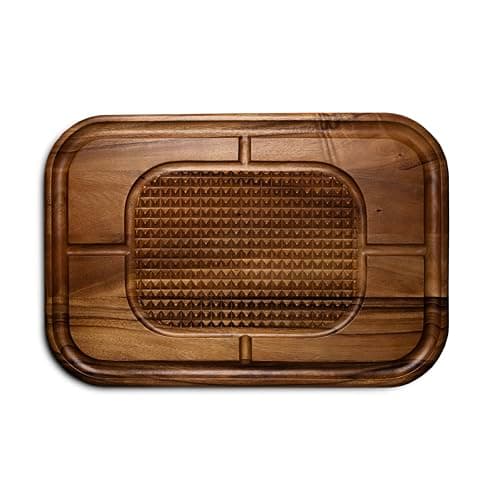 Ironwood Gansevoort Large Acacia Carving Board, 16 x 24 inSixteen by twenty-four inches of acacia with a juice well around a carved grip pad. | Best overall | 9.2 | $134.40 · View on Amazon #ad We may earn a commission · Price as of October 15, 2026 |
| 2 | 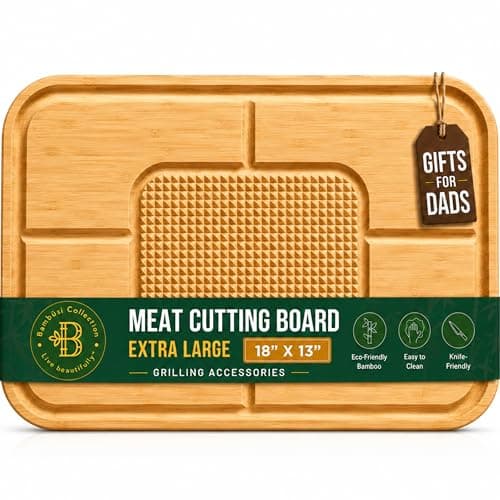 Bambusi Turkey Platter & Carving Board, 18 x 13 in BambooPyramid ridges hold the bird, the groove catches the juice, and it costs less than a bag of groceries. | Best value | 9.1 | $29.99 · View on Amazon #ad We may earn a commission · Price as of October 15, 2026 |
| 3 | 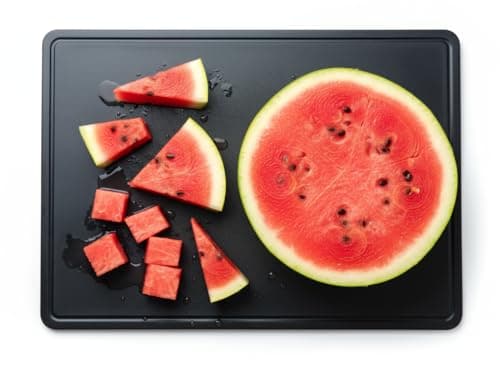 Thirteen Chefs Extra Large Cutting Board, 24 x 18 in Black PlasticCommercial HDPE at 24 by 18 inches — the one board here that can go in a dishwasher. | Best for raw poultry | 9.1 | $47.95 · View on Amazon #ad We may earn a commission · Price as of October 15, 2026 |
| 4 |  Greener Chef ENORMOUS Extra Large Bamboo Cutting Board, 30 x 20 inThirty by twenty inches, with a corner reservoir and a pour spout instead of a rim channel. | Best extra-large | 9.1 | $69.99 · View on Amazon #ad We may earn a commission · Price as of October 15, 2026 |
| 5 | 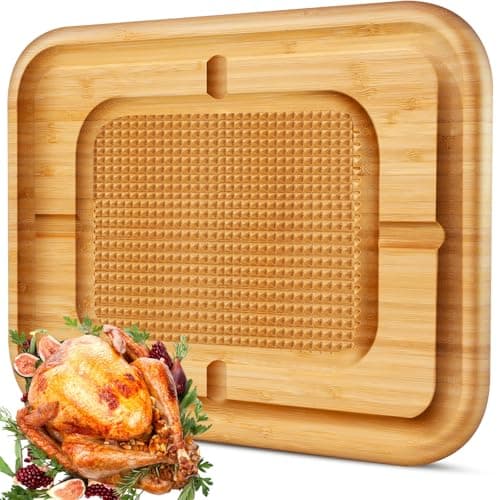 Patelai 16 Inch Large Turkey Carving BoardA pyramid grid plus wooden spikes, which is the feature that keeps a slippery turkey still. | Best grip for a whole bird | 8.6 | $33.99 · View on Amazon #ad We may earn a commission · Price as of October 15, 2026 |
| 6 | 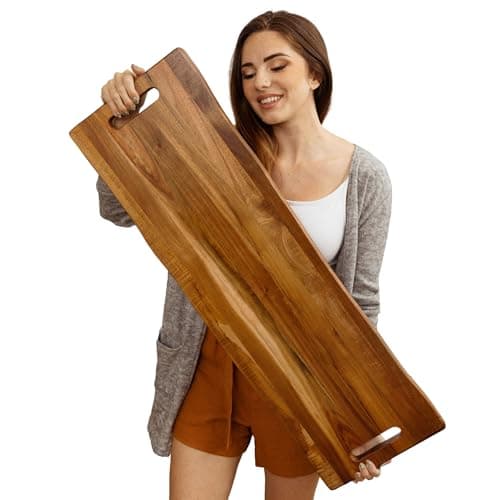 Home Beets Large Acacia Serving Board, 36 x 12 inThirty-six by twelve inches of acacia that works as a grazing board before the meal and a serving board during it. | Best for carving and serving on one board | 7.9 | $63.98 · View on Amazon #ad We may earn a commission · Price as of October 15, 2026 |
Scores are our own editorial rubric, explained on how we pick. Four criteria per category, scored out of ten, so the leading pick is clear at a glance.
What we judged them on
Carving boards get reviewed on how they photograph. These are the five things that decide whether one works on the day it has to.
- Does the whole bird fit, with room left over? This is the first and biggest filter. A turkey takes the middle of the board, and then two breasts come off it and have to be sliced somewhere. Eighteen by thirteen inches is the working minimum. Twenty-four by eighteen is where carving stops being a logistics exercise.
- Where does the juice go? A thin channel routed near the rim holds very little before it overflows the corner. A well — a deep recess with real volume, usually around a raised grip pad or in a corner reservoir — holds a useful amount and can be poured off. If a board has no groove at all it is a serving board, which is a different product.
- Does the bird stay still? Raised pyramid ridges or spikes in the center of the board are not a gimmick. They bite into the skin and stop a round, wet, 16-pound object rotating under the knife. On a flat board the carving fork is doing all of that work by itself.
- How do you clean it, honestly? Not how the listing says you clean it — how you will. HDPE plastic goes in a dishwasher. Wood and bamboo get hot soapy water, a rinse and air drying, and need oil a few times a year. If a board is too big for your sink, washing it becomes a chore you will resent at eleven at night.
- Does it do anything the other 364 days? A reversible board with a flat side is a chopping board all year. A spiked single-purpose board lives in the garage with the roasting pan. Same money, very different use.
What is not on that list: wood species as a status signal, and edge-grain versus end-grain construction. End grain is kinder to a blade over years of daily chopping, which is not what this board is for.
What size carving board you need for a turkey
Work backwards from the job rather than from the bird’s weight. There are three things on the board at once: the carcass, the carving fork pinning it, and the meat you have already cut. The first two are fixed. The third one grows for about fifteen minutes.
- Under 18 by 13 inches: too small for a whole bird. Fine for a turkey breast, a chicken or a pork loin. The 16-inch spiked board in our picks is deliberately at this end because its grip is worth the compromise if your storage is tight.
- 18 by 13 inches: the working minimum for a whole turkey. The bird fits; slices have to be moved to a platter as you go.
- 20 to 24 inches long: the sweet spot. Bird in the middle, slices along one end, no choreography.
- Over 26 inches: buy it only after measuring both the counter run you will carve on and the sink you will wash it in. A 30 by 20 board is excellent and will not fit in most sinks.
Thickness matters less than people think, with one exception. A board under about half an inch can flex, and a flexing board under a sharp knife is unpleasant. Anything an inch or more is rigid, holds more juice in its groove, and stays put from sheer mass.
One more practical note: put a damp kitchen towel under any board that does not have rubber feet. It costs nothing and it is the single most effective anti-slip measure available in a home kitchen.
Wood, bamboo or plastic: what the material decides
Hardwood (acacia, teak, maple). The best-looking option, the kindest to a knife edge, and the heaviest. A thick hardwood board stays where you put it and takes a deep groove or well. The care is real but not onerous: wash by hand in hot soapy water, dry immediately rather than leaving it wet, never soak it, and rub in food-grade mineral oil a few times a year. Never put one in a dishwasher — the heat and the long soak are what split boards.
Bamboo. Technically a grass, treated like wood, and the value choice. MSU Extension notes the USDA recommends bamboo because it is harder and less porous than other hardwoods and absorbs very little moisture, which makes it more resistant to bacteria than other woods. It is harder on a knife edge than maple and it is usually made thinner, so it holds less juice. For a board used a few times a year, those trades are easy to accept.
HDPE plastic. What commercial kitchens use for raw protein, for one reason: it goes in a dishwasher. Nonporous surfaces are easier to clean than wood, and keeping a separate board for raw meat and poultry is standard food-safety advice. The catch is that knife cuts in plastic become permanent grooves, and the guidance is explicit that a board with grooves that cannot be cleaned should be discarded. A plastic board is a consumable; a thick hardwood board is furniture.
Glass and marble. Both are accepted as food-safe surfaces, and both will blunt a carving knife in one session. Use them for cheese.
Whatever the material, the sanitizing method is the same where you want one: wash with hot soapy water after each use, rinse, and air dry. To sanitize, the published dilution is one tablespoon of unscented liquid chlorine bleach per gallon of water, flooded over the surface, left to stand a few minutes, then rinsed and air dried.
The juice problem, and why the groove is the product
Here is what actually happens. You lift a rested 18-pound bird onto the board, cut down one side of the breastbone, and liquid comes out. Not a trickle — enough that a flat board sheds it over the edge within a minute, and a shallow rim channel fills and then overflows at the nearest corner, which is usually the one hanging over the cabinet doors.
So the groove is not trim. Judge it on three things: depth, total volume, and whether there is a way to get the liquid out. A well around a central grip pad holds the most and keeps the liquid under the bird. A corner reservoir with a pour spout holds less but pours cleanly into a jug, which is the better arrangement if you are making gravy from the drippings.
Two habits make any board work better. Rest the bird before you carve — 20 to 30 minutes, which lets the meat reabsorb liquid instead of giving it all to the board, and is the single easiest improvement available to a first-time cook. And carve in the kitchen rather than at the table: the juice stays on a surface you can wipe, and the meat goes to the table on a warm platter instead of cooling on a board in front of everyone. The full method is in how to carve a turkey.
If you are carving well before people sit down — which is usually the right call when the oven is full — the carved meat needs to be held at 140F or above, not left on the board. Between 40F and 140F is where bacteria multiply fastest, and two hours is the limit. Our guide to keeping food warm for a party covers the equipment that does it.
What to buy with it
A long, sharp knife. The board solves stability and mess; it does nothing for a dull blade. A 10 to 12 inch slicer and a carving fork are the traditional pairing, ranked in our carving set roundup. If you would rather let a motor do it, electric versus manual is the honest comparison.
A platter bigger than you think. A carved 20-pound bird does not fit on a 14-inch platter, which is where most dinnerware sets stop. Eighteen inches is the floor; see serving platters. Warm it in hot water for five minutes before the meat goes on.
A probe thermometer, if you do not own one. The board cannot tell you the bird is done. Published guidance puts cooked poultry at 165F internal in the thickest part of the breast and the inner thigh, measured away from bone, and there is no reliable visual substitute. Our thermometer picks are the highest-value purchase on this site.
Food-grade mineral oil, for a wood or bamboo board. A small bottle lasts years. Oil a new board before first use and then whenever the surface starts looking dry and pale.
Care, storage and when to replace a board
Wash it the same evening. Hot soapy water, a rinse, and air dry or pat dry with clean paper towels. Do not leave a wood board sitting in water, and do not leave it lying flat and wet — stand it on edge so both faces dry evenly, which is what stops warping.
Sanitize after raw poultry. One tablespoon of unscented liquid chlorine bleach per gallon of water, flooded over the surface, left for several minutes, then rinsed and air dried. This works on wood and on plastic. Simpler still: keep one board for the raw bird and a different one for carving, which is the standard advice and removes the decision entirely.
Oil wood and bamboo a few times a year. Food-grade mineral oil, rubbed in with a cloth, left overnight, wiped off. A dry board is a board that is about to crack along a glue line.
Store it dry and upright. On edge in a cupboard or on a rack. A big board stored flat under other things stays damp in the middle, which is how the smell starts.
Replace it when it is worn out. The guidance is unambiguous: once a board is excessively worn or has developed grooves that cannot be cleaned, discard it. Plastic reaches that point faster than thick hardwood. A board you cannot get clean is not a bargain, whatever it cost.
Every pick, in detail
#ad We may earn a commission · Price as of October 15, 2026
#1 · Best overall
Ironwood Gansevoort Large Acacia Carving Board, 16 x 24 in
The groove is not decorative. A 20-pound bird releases enough juice to run off a flat board and across the counter — this one wells it around a carved grip pad instead.
Carving a turkey is not like slicing a steak. You are working on an object that weighs 14 to 22 pounds, is slippery, has just come out of a 325F oven or a pot of 350F oil, and is releasing liquid the entire time. Three things decide whether that goes well: the board is big enough, it does not move, and the juice has somewhere to go. This board is the one that gets all three right without a compromise.
Sixteen by twenty-four inches sounds like a lot of board until you put a whole bird on one. The bird itself occupies the middle, the fork pins it, and then you need somewhere to put each breast as it comes off the carcass so you can slice it flat. On a 12 by 18 board those slices go onto a plate someone has to hold for you. On this one they go on the board, and the carving stays a one-person job.
The groove design is the real differentiator. Most boards have a narrow channel routed just inside the rim, which holds perhaps a few tablespoons before it overflows. This one wells the liquid around a carved grip pad in the center, so the capacity is in the middle of the board where the bird actually sits. Practically that means you can carve a whole turkey without stopping to pour anything off — and the drippings you collect are gravy, which is a second reason to care. Our gravy boat picks cover where they go next.
The honest objections are cost and care. This costs several times what a competent bamboo board costs, and acacia is wood, which means hand washing, drying immediately, and food-grade mineral oil a few times a year. If you carve a bird once a year and nothing else, the Bambusi board below does the job for a fraction of the money. If you cook most weekends, this is a twenty-year board.
- Feature
- Juice well around a carved grip pad
- Size
- 16 x 24 x 1.25 in
- Material
- Acacia wood
- Bonus
- Reversible for everyday chopping
What’s good
- 16 by 24 inches, which fits the bird and leaves room to stack slices
- The groove is a well around a grip pad, not a thin channel at the rim
- 1.25 inches thick, so it does not flex or skate while you cut
- Reversible — the flat side is an everyday chopping board the rest of the year
What’s not
- The most expensive board here by a wide margin
- Wood means hand wash only and an occasional oiling
- Heavy enough that carrying it loaded needs two hands and a clear route
- Acacia will take knife marks, which is normal and not a defect
Size for a turkey
9.6
Juice capacity
9.6
Grip and stability
9.4
Value
8.0
#ad We may earn a commission · Price as of October 15, 2026
#2 · Best value
Bambusi Turkey Platter & Carving Board, 18 x 13 in Bamboo
The cheapest board that does the two things a turkey board has to do: raised pyramid ridges that stop the bird sliding, and a groove deep enough to keep the juice off your counter.
This is the pick for the host who is buying a carving board for the first time and does not want to spend real money on one. It has the two features that matter and nothing else: a groove around the edge, and raised pyramid ridges in the middle that bite into the bird so it does not rotate while you are trying to get a breast off the bone.
Eighteen by thirteen inches is the honest floor for a whole turkey. It fits the bird. What it does not do is fit the bird and a growing stack of carved meat at the same time, so have a warm platter next to you and move slices as you go. That is good practice anyway — meat on a board loses heat fast, and a platter big enough for a carved bird is the companion purchase here.
Bamboo is a genuinely sensible material for this job. Michigan State University Extension notes that the USDA accepts bamboo and recommends it as harder and less porous than other hardwoods, which is the reason it absorbs less and cleans up well. It is still wood as far as care is concerned: hot soapy water, dried standing on edge, and a wipe of food-grade mineral oil every few months.
- Size
- 18 x 13 in
- Material
- Bamboo
- Grip
- Raised pyramid ridges
- Reversible
- Smooth side for bread and cheese
What’s good
- Raised pyramid ridges in the center stop the bird sliding as you cut
- Deep juice groove runs the whole way around the edge
- 18 by 13 inches — the smallest footprint that still works for a whole bird
- Reversible, with a smooth side for bread, cheese and vegetables
What’s not
- Tight for a 22-pound bird plus a pile of slices; plan to move slices to a platter
- Bamboo is hand wash, dry upright and oil occasionally — never the dishwasher
- Ridged side traps shreds of skin and needs a brush, not a wipe
- Thinner than the premium boards, so it has less juice capacity
Size for a turkey
8.6
Juice capacity
8.4
Grip and stability
9.4
Value
9.8
#ad We may earn a commission · Price as of October 15, 2026
#3 · Best for raw poultry
Thirteen Chefs Extra Large Cutting Board, 24 x 18 in Black Plastic
The board to buy if raw poultry on a wooden surface bothers you: commercial 3/4-inch HDPE, rated by the maker to 185F, and it can go through a dishwasher that a wood board cannot.
Some people are not comfortable putting a bird that was raw eighteen hours ago onto a wooden surface, and that is a reasonable position rather than a phobia. MSU Extension’s guidance is that the USDA accepts solid wood, plastic, marble, glass and pyroceramic, that nonporous surfaces are easier to clean than wood, and that a separate board should be kept for raw meat and poultry. If you want one surface that handles the raw bird going in and the cooked bird coming out, buy the plastic one.
What you get for that decision is cleaning you can actually verify. A board that goes through a dishwasher cycle is done. A wood board gets hot soapy water, a rinse and air drying, and if you want it sanitized the guidance is a tablespoon of unscented liquid chlorine bleach per gallon of water flooded over the surface and then rinsed — which you can do to wood or plastic, but which most people will not actually do on Thanksgiving afternoon.
The trade is that this is plainly a tool. Nobody carries a black HDPE board to the table, and the surface will accumulate knife cuts. Watch for that: once a board is excessively worn or has grooves that cannot be cleaned, it needs replacing, and a plastic board gets there faster than a thick hardwood one does.
- Size
- 24 x 18 in
- Material
- 3/4" HDPE, maker-rated to 185F
- Weight
- About 10 lb
- Groove
- Channel around the outer edge
What’s good
- 24 by 18 inches of working surface, the same footprint as the premium wood boards
- 3/4-inch HDPE, the material commercial kitchens use for raw protein
- Dishwasher safe, which no wood or bamboo board here is
- Maker rates the plastic to 185F, so a hot bird straight out is a non-event
What’s not
- About 10 pounds, and a plastic board that heavy is awkward in a home sink
- Black plastic will never look like a serving piece — this is a work surface
- Knife marks become permanent grooves, and a grooved board has to be replaced
- The groove is a rim channel, so capacity is lower than a welled wood board
Size for a turkey
9.4
Juice capacity
8.2
Hygiene and cleaning
9.8
Value
9.0
#ad We may earn a commission · Price as of October 15, 2026
#4 · Best extra-large
Greener Chef ENORMOUS Extra Large Bamboo Cutting Board, 30 x 20 in
Thirty inches by twenty is more board than most kitchens need and exactly the right amount for a 20-pound bird plus the knife, the fork and somewhere to stack the slices.
- Size
- 30 x 20 in
- Material
- Bamboo
- Groove
- Corner juice reservoir with pour spout
- Doubles as
- Cover for a stove or sink
What’s good
- 30 by 20 inches — carve the bird and stack every slice on the same board
- Corner juice reservoir with a pour spout, so the drippings pour out cleanly
- Big enough to bridge a sink or a stovetop and buy back counter space
- Bamboo, so it is lighter than a hardwood board this size would be
What’s not
- Will not fit in most sinks, which makes washing it a two-stage job
- Needs a 30-inch gap of clear counter — measure before ordering
- Hand wash and oil, like every other wood or bamboo board here
- Overkill for a 12-pound bird or a small kitchen
Size for a turkey
10.0
Juice capacity
9.2
Grip and stability
8.6
Value
8.8
#ad We may earn a commission · Price as of October 15, 2026
#5 · Best grip for a whole bird
Patelai 16 Inch Large Turkey Carving Board
Wooden spikes and a pyramid grid in the middle, which is the one feature that genuinely makes carving a whole bird easier — on a board small enough to store anywhere.
- Size
- About 16.1 x 12.2 x 0.79 in
- Material
- Bamboo
- Grip
- Pyramid grid and wooden spikes
- Reversible
- Flat serving side
What’s good
- Spikes and a pyramid grid genuinely anchor the bird while you cut
- About 16.1 by 12.2 inches, so it stores in a normal cupboard
- Reversible — the flat side serves, the spiked side carves
- Light enough to carry one-handed when it is empty
What’s not
- The smallest board here; a 20-pound bird uses all of it
- Spikes make the carving side useless for anything but meat
- Only about 0.79 inches thick, so the juice capacity is modest
- Hand wash and air dry; a dishwasher will wreck it
Size for a turkey
7.8
Juice capacity
7.6
Grip and stability
9.8
Value
9.2
#ad We may earn a commission · Price as of October 15, 2026
#6 · Best for carving and serving on one board
Home Beets Large Acacia Serving Board, 36 x 12 in
Does double duty: appetizers before the meal, carved dark meat during it. Warm wood also reads better on a fall table than another white platter.
- Material
- Acacia wood
- Size
- 36 x 12 in
- Handles
- Cut into the edges
- Use
- Grazing board and carving service
What’s good
- 36 by 12 inches, which suits a long narrow table better than a square board
- Handles cut into the edges, so a loaded board is liftable
- Earns its keep twice in one evening: appetizers, then carved dark meat
- Warm wood reads better on a fall table than another white platter
What’s not
- No juice groove at all — this is a serving board, not a carving board
- Twelve inches of width is narrow for carving a whole bird
- Acacia is hand wash only and wants oiling
- Needs a second board, or a tray, for the actual carving
Size for a turkey
8.0
Juice capacity
5.0
Presentation
9.6
Value
9.0
Frequently asked questions
At least 18 by 13 inches for a whole bird, and 20 to 24 inches long if your counter allows it. The board has to hold the carcass, the carving fork and the slices you have already cut. Below 18 inches on the long side you will be moving meat to a platter constantly; above about 26 inches, check the board fits both your counter and your sink before you order it.
Yes, for a turkey. A rested bird still releases a surprising amount of liquid as you cut into it, and a flat board sends all of it over the edge. Judge the groove on depth and volume rather than on whether it exists — a deep well around a central grip pad holds far more than a thin channel routed near the rim, and a corner reservoir with a pour spout is the easiest to empty into a gravy jug.
Both are food safe. The USDA accepts solid wood, plastic, marble, glass and pyroceramic for cutting boards, and nonporous surfaces are easier to clean than wood. Choose plastic if you want one board that can go in the dishwasher and handle the raw bird as well as the cooked one; choose wood or bamboo if you care about how it looks on the table and about your knife edge. Either way, keep a separate board for raw meat and poultry if you can.
Wash with hot soapy water, rinse with clear water, and air dry or pat dry with clean paper towels. To sanitize wood or plastic, flood the surface with a solution of one tablespoon of unscented liquid chlorine bleach per gallon of water, let it stand for several minutes, then rinse and air dry.
Only if it is plastic or glass. Nonporous acrylic, plastic and glass boards are dishwasher safe, and that is the main practical advantage of the HDPE board in our picks. Bamboo and hardwood boards should be hand washed and dried standing on edge — dishwasher heat and a long soak are what split a wood board along its glue lines.
They genuinely help. A cooked turkey is round, wet and heavy, and raised pyramid ridges or wooden spikes bite into the skin so the bird does not rotate while you are cutting a breast off the bone. On a flat board the carving fork has to do all of that work. The trade-off is that a spiked surface is no use for anything other than meat, so look for a reversible board with a flat second side.
When it is excessively worn, or when knife cuts have become grooves that cannot be cleaned. That is the published food-safety guidance and it applies to wood and plastic alike. Plastic boards get there faster than thick hardwood ones, so treat a plastic board as a consumable you will replace every few years.
Sources
Related reading
- The Best Turkey Carving SetsFour things worth buying for carving, and an honest note about the one thing that matters more than all of them.
- How to Carve a TurkeySix steps, in order, plus the resting rule and the warm-platter trick that keeps it hot.
- The Best Serving Platters for a Holiday TablePlatters sized for a real carved turkey, plus the charger-plate trick that makes mismatched dinnerware look deliberate.
- Brining vs Injecting a TurkeyWhat each method actually does to the meat, the time and space each one costs, whether you can do both, and the one combination that oversalts dinner.
- The Best Gravy Boats for ThanksgivingThree gravy boats ranked on the thing that actually goes wrong — heat loss — plus the capacity to buy for the number of guests.
- Electric vs Manual Carving KnifeEase against control, compared honestly — plus the one factor that settles it for most first-time hosts.