Will an Electric Knife Cut Through Bone?
No. And this is not our opinion to argue with - it is printed in the manuals of the knives themselves, including two of the ones we recommend.
By Mike M. · Published · Last updated

How this page is funded: Fryer & Feast is a participant in the Amazon Associates Program. If you buy through a link here we may earn a commission, at no extra cost to you. It never changes which products we recommend — see how we pick and our full affiliate disclosure. Every buy link goes straight to the retailer, so the price you see is the live one on the day you buy.
No. An electric carving knife is not a bone tool, and the manufacturers say so themselves. Cuisinart’s own instruction booklet reads: “We do not recommend using your Cuisinart Electric Knife on bones, as it could cause damage to the knife or personal injury.” Hamilton Beach’s use and care guide says “Slice down to and around bone. Do not attempt to slice through bone.” NutriChef’s manual says “Do not attempt to slice bones, frozen or other hard foods.” What the knife does instead — and does better than a hand knife — is slice evenly down to a bone and around it, and cut poultry apart at the joints. Below: why it fails on bone, the technique that works, and what actually cuts through bone when you genuinely need to.
Quick picks
| # | Product | Best for | Score | Price |
|---|---|---|---|---|
| 1 | 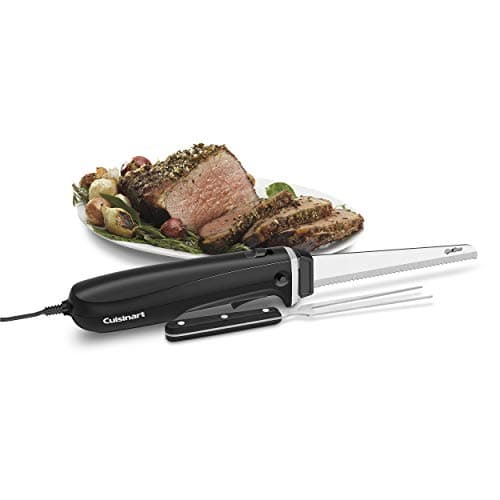 Cuisinart CEK-41 Electric Knife with Board and ForkA complete carving station that slices a breast cleanly down to the rib cage - which is where the manual tells you to stop. | Best for the job it is actually for | 9.3 | $64.95 · View on Amazon #ad We may earn a commission · Price as of November 5, 2026 |
| 2 | 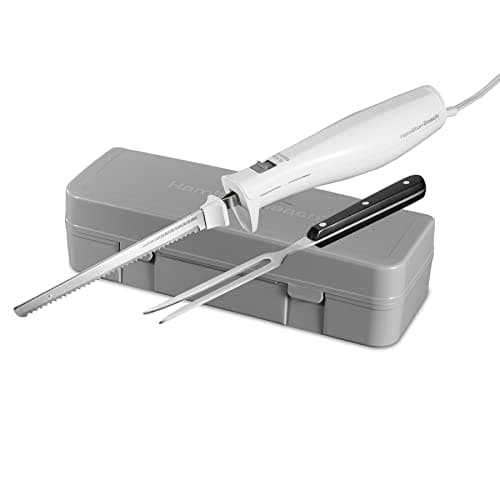 Hamilton Beach 74250 Electric Knife Set with Case and ForkIts own guide gives the technique in five words: slice down to and around bone. | Best for a bone-in ham | 9.3 | $30.95 · View on Amazon #ad We may earn a commission · Price as of November 5, 2026 |
| 3 | 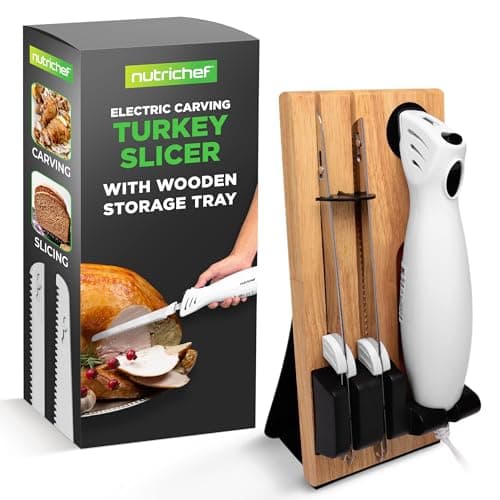 NutriChef Electric Carving Knife Set with Wood StandInterchangeable carve blades, a wooden stand, and a manual that spells out the joints-not-bones rule. | Best for carving poultry at the joints | 9.4 | $26.99 · View on Amazon #ad We may earn a commission · Price as of November 5, 2026 |
| 4 | 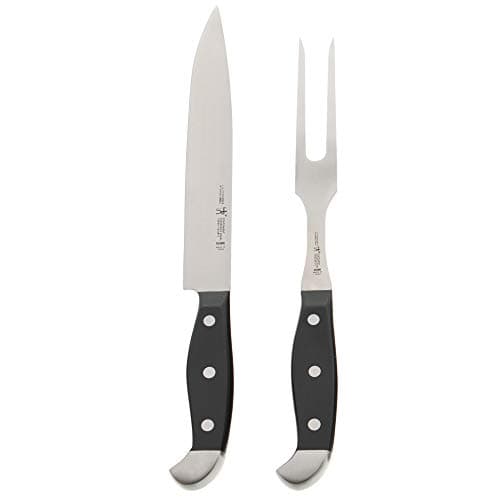 Henckels Statement Turkey Carving Knife and Fork SetA long narrow hand blade gives you the control to work around a joint and feel where the bone is, which no powered blade does. | What to reach for where the blade meets bone | 9.3 | $44.95 · View on Amazon #ad We may earn a commission · Price as of November 5, 2026 |
Scores are our own editorial rubric, explained on how we pick. Four criteria per category on a published 8.4-9.8 scale, so the leading pick is clear at a glance. A product scores the same here as it does on every other page of this site.
What the manuals say, word for word
Three manufacturers, three manuals, one answer. These are quoted directly, and all three were read in full before being cited.
| Manufacturer | What the manual says |
|---|---|
| Cuisinart | “The key to carving the thighs, legs, and wings is to cut through the joints, and not through the bones. We do not recommend using your Cuisinart Electric Knife on bones, as it could cause damage to the knife or personal injury.” |
| Hamilton Beach | “Slice down to and around bone. Do not attempt to slice through bone.” and “Do not cut through frozen foods.” |
| NutriChef | “Do not attempt to slice bones, frozen or other hard foods.” and “Do not cut through hard objects, such as bones or frozen foods as blades may become damaged or may break.” |
Note what they are not saying. None of them says the knife is too weak, or that a better model would manage it. They are describing a category: a pair of thin serrated blades reciprocating at speed is designed for cooked muscle, and bone is outside the design. There is no electric carving knife on the market that is sold as a bone saw, because that is a different tool with a different blade.
What actually happens if you try it
Four things, in roughly this order, and none of them is the bone giving way.
- The blades stop advancing and start skating. Bone does not yield to a serration that fine, so the teeth skid across it. That is when people push harder, which every one of these manuals specifically warns against — NutriChef’s says never to use excessive pressure.
- The edges roll or chip. A micro-serrated edge dulls against bone in seconds, and these blades are not meant to be sharpened at home. A ruined blade is a replacement part.
- The blades bind and the knife jumps. Two blades wedged in a hard cut with a motor still driving them is how the tool comes out of the cut sideways. This is the “personal injury” Cuisinart’s booklet is referring to, and it is why the sawing motion is warned against too.
- The motor labors. These are small motors geared for speed, not torque. Stalling one repeatedly is not what it was built for, and the manuals position bone cutting as misuse — which is not a comfortable position from which to make a claim on a warranty.
Bone fragments are the quiet one. A blade chipping against bone, or bone splintering under it, puts hard pieces into food you are about to serve. That is a different and worse problem from a damaged appliance.
The technique that does work: joints, not bones
Here is the thing worth knowing: you do not need to cut bone to carve a turkey. A bird comes apart at the joints, and two of the three manuals quoted above teach exactly that because it is how it is done properly.
Legs and thighs. Pull the drumstick away from the body and cut where the thigh joins it. The joint opens under tension — NutriChef’s manual describes pulling at the parts while cutting to loosen the joint, which is the whole trick. You are cutting cartilage and skin, never bone.
Wings. Same move. Find the joint, open it, cut through the soft tissue.
Breast. Hold it with the fork and slice parallel to the rib cage from the top down, continuing until you reach the bone and then stopping. This is the one job an electric knife genuinely does better than a hand knife, because even pressure at speed gives even slices the whole length of the breast.
The backbone and rib cage. You do not carve these at all. They go into the stock pot whole. The only time a home cook needs to cut a poultry bone is spatchcocking a raw bird, which is a different job with a different tool.
The full sequence, with what to do before the knife comes out, is in how to carve a turkey.
Bone-in ham: down to it and around it
A ham is the case where the bone is unavoidable and still not something you cut. Both manuals describe the same method from different angles, and Cuisinart’s booklet walks it through step by step: slice into the ham just below the shank at the stifle joint, then cut along the bone — which is curved — and around the socket joint at the sirloin end, rotating the ham to work the uncut side.
In practice that is three movements. Cut parallel slices down to the bone, keeping the blade level. Then turn the knife and run it along the bone underneath those slices to release them all at once. Then rotate the ham and repeat on the next face. The bone is the backstop you cut against, not the thing you cut.
An electric knife is very good at this specifically, because the slices stay the same thickness over a curved surface where a hand knife tends to wander. It is also the reason a ham should be carved on a wooden board — NutriChef’s manual asks for wood because glass and plastic boards get scratched by the blades, and published food-safety guidance on cutting boards accepts solid wood and plastic for raw meat while recommending boards be replaced once they are grooved and no longer cleanable.
Prime rib, racks and ribs
Bone-in prime rib. Take the bones off first, as one piece, with a hand knife. Run a sharp blade down the inside of the rib bones to release the whole roast from the rack, then slice the boneless roast with the electric knife. Trying to go between the bones with a reciprocating blade is the version of this that ends with a damaged knife. Which knives handle a large roast once it is off the bone is covered in the prime rib knife guide.
Rib racks. Cut between the bones, not through them — and for pork ribs a hand knife or kitchen shears does it faster than anything powered.
Brisket. No bone at all, which is why it is the easiest case for an electric knife and why we rank knives for it separately in the brisket knife guide. If you arrived at this page from a brisket search, the answer is that there is nothing in the way.
Frozen meat. Worth saying because it comes up in the same breath: no. Two of the three manuals warn against frozen food in the same sentence as bone, for the same reason. Thaw it — safely, and with enough time.
What actually cuts through bone
If you genuinely need to divide a bone — spatchcocking a raw bird, splitting a rib cage, portioning a bone-in roast raw — none of these is an electric carving knife, and we do not keep a pick in the registry for any of them, so this is advice rather than a shopping list.
- Poultry shears. The right tool for a raw chicken or turkey backbone. Short blades, a long handle, and leverage that a knife cannot match.
- A heavy cleaver or a stiff chef’s knife. For the joints a bird will not give up and for splitting a small carcass. One confident stroke, never a sawing one.
- A hand bone saw. What the trade uses on large bones. Overkill in a home kitchen unless you are breaking down whole primals.
- The butcher. Genuinely the best answer for a bone-in roast you want portioned. They have a band saw, it takes them seconds, and they will usually do it when you buy the meat.
What none of this changes is what the electric knife is for. On a cooked bird or a ham it is the better tool, and the comparison with a hand blade — speed, evenness, control, and which jobs each one wins — is in electric versus manual carving knives. The full ranking by use case is in the best electric carving knives.
The products, in detail
#ad We may earn a commission · Price as of November 5, 2026
#1 · Best for the job it is actually for
Cuisinart CEK-41 Electric Knife with Board and Fork
The complete carving station in one box — knife, fork, bamboo board and a storage tray — and it goes through a 14-pound bird without bogging down.
We lead with this one because its booklet is the clearest statement of the answer on this page. Alongside the carving instructions it prints the tip in full: the key to carving the thighs, legs and wings is to cut through the joints and not through the bones, and the company does not recommend using the knife on bones at all because of the risk to the knife and to you.
Read that as a specification rather than a disclaimer. This is a reciprocating pair of micro-serrated blades designed to glide through cooked muscle at low pressure. It is excellent at taking a whole breast off in even slices right down to the rib cage, which is the single hardest thing to do neatly with a hand knife. It is not a saw, and the thing that makes it good at the first job is exactly what makes it bad at the second.
- Type
- Electric, corded
- Includes
- Board, fork, tray
- Blades
- Micro-serrated, interchangeable
- Warranty
- 3-year limited
Why we picked it
- Knife, fork, bamboo board and storage tray in one box
- Micro-serrated interchangeable blades, so the meat blade stays the meat blade
- Goes through a 14 lb bird without bogging down
- The manual actually teaches the joints-not-bones technique
- 3-year limited warranty
Good to know
Will not cut bone, and the manual says so plainly
Slicing down to bone
9.8
Joint work
9.4
What is in the box
9.8
Even slices
9.8
#ad We may earn a commission · Price as of November 5, 2026
#2 · Best for a bone-in ham
Hamilton Beach 74250 Electric Knife Set with Case and Fork
The one that keeps turning up in other people's kitchens twenty years after it was bought. A hard case and a 5-foot cord, which sounds dull and is exactly why it survives.
A bone-in ham is the case where this question comes up most, and it is also the case with the cleanest answer. Hamilton Beach’s guide tells you to slice down to and around the bone, not through it, and that is precisely how a ham is carved properly anyway: cut down to the bone in parallel slices, then run the blade along the bone to release them all at once.
The same guide is worth reading for two other lines. It says to move the knife through the food rather than using a back and forth sawing motion — sawing is what people do when they hit something hard, and it is the exact action that bends a blade. And it says not to sharpen the serrated blades at home, which matters here because a blade dulled against bone is a replacement, not a repair.
- Blades
- Reciprocating serrated stainless
- Includes
- Storage case and carving fork
- Cord
- 5 ft
- Also cuts
- Bread, ham, crafting foam
Why we picked it
- Reciprocating serrated blades cut ham cleanly along the bone line
- Hard storage case and a 5 ft cord, which is why these survive decades
- Carving fork included
- Manual is explicit about what it is for: cooked meats, poultry, bakery items
- Also handles bread, which is the other job it gets used for
Good to know
Do not attempt to slice through bone - the guide's own words
Slicing down to bone
9.8
Joint work
9.0
Durability
9.8
Ham carving
9.8
#ad We may earn a commission · Price as of November 5, 2026
#3 · Best for carving poultry at the joints
NutriChef Electric Carving Knife Set with Wood Stand
A carving set with somewhere to put it: interchangeable carve blades and a wooden stand, so the knife lives on the counter instead of loose in a drawer.
- Blades
- Interchangeable carve blades
- Cuts
- Meat, bread, cheese, fruit
- Storage
- Wooden stand included
- Finish
- White
Why we picked it
- Interchangeable blades for meat and for bread
- Wooden stand, so it lives on the counter and gets used
- Manual names its intended use: meats, thick bread and cheese
- Teaches pulling the joint open while cutting, which is the trick
Good to know
Do not attempt to slice bones, frozen or other hard foods, per the manual
Slicing down to bone
9.4
Joint work
9.8
Storage
9.6
Blade options
9.4
#ad We may earn a commission · Price as of November 5, 2026
#4 · What to reach for where the blade meets bone
Henckels Statement Turkey Carving Knife and Fork Set
A long, narrow slicing blade beats a chef's knife on a turkey because it clears the breast in one pass instead of sawing. Two pieces, German engineered, nothing else in the box to lose.
- Set
- 8 in carving knife and fork
- Make
- German engineered
- Blade
- Single-piece, satin finished
- Care
- Dishwasher or hand wash
Why we picked it
- You feel the bone before you hit it, which is the whole advantage
- Finds and opens a joint far better than a reciprocating blade
- No cord, no outlet, nothing to set up for two cuts
- A proper slicing profile clears a breast in one pass
- Two pieces, nothing in the box to lose
Good to know
Still not a bone tool - a carving knife is for meat, not for cutting through bone
Control near bone
9.8
Joint work
9.6
Even slices
8.8
Simplicity
9.8
Frequently asked questions
No. Cuisinart’s instruction booklet says the company does not recommend using its electric knife on bones because it could damage the knife or cause personal injury; Hamilton Beach’s guide says to slice down to and around bone and not to attempt to slice through it; NutriChef’s manual says not to attempt to slice bones, frozen or other hard foods. An electric carving knife is a pair of thin serrated blades for cooked meat, not a saw.
Not among electric carving knives — no manufacturer sells one for that job, because the blade type is wrong for it. Powered tools that do cut bone are a different category altogether: a butcher’s band saw, or a reciprocating bone saw. For a home kitchen the practical answers are poultry shears, a heavy cleaver, or asking the butcher to portion the meat before you take it home.
For a cooked turkey, nothing — the bird comes apart at the joints, and that is how it is meant to be carved. Pull the drumstick away from the body and cut where the thigh joins it, cutting cartilage rather than bone. For a raw bird you are spatchcocking, poultry shears cut the backbone out quickly, and a stiff chef’s knife or cleaver handles the rest.
Yes, and it is one of the things it does best — provided you cut down to the bone and along it rather than through it. Make parallel slices down to the bone keeping the blade level, then run the knife along the bone to release them all at once, and rotate the ham to work the next face. Hamilton Beach’s guide puts it in five words: slice down to and around bone.
No, and the manuals warn about it in the same sentence as bone. Hamilton Beach says not to cut through frozen foods; NutriChef says not to attempt to slice bones, frozen or other hard foods, and that blades may become damaged or may break on hard objects. Thaw the meat first — for a turkey that means planning days ahead rather than hours.
The serrations skate instead of cutting, so people press harder, which every manual here warns against. The edges roll or chip, and these blades are not meant to be sharpened at home. The blades can bind and the knife can jump out of the cut, which is the injury the Cuisinart booklet refers to. And bone or blade fragments can end up in food you are about to serve.
Yes — brisket is boneless, so nothing on this page applies to it. It is close to the ideal job for an electric knife, because the cut is long and the whole challenge is even slices against the grain across a wide piece of meat. The knives that handle it best are ranked separately on our brisket knife page.
Sources
- Hamilton Beach — Electric Knife use and care guide (840122200), Hints for Use
- Cuisinart — Electric Knife instruction booklet (CEK-41 set)
- NutriChef PKELKN16 Electric Kitchen Knife — manufacturer manual (safety instructions and hints for use)
- Michigan State University Extension — Cutting boards and food safety
Related reading
- The Best Electric Carving Knives for MeatFour electric knives ranked on how cleanly they get through skin, what comes in the box, and which ones are still working after twenty years.
- Electric vs Manual Carving KnifeEase against control, compared honestly — plus the one factor that settles it for most first-time hosts.
- How to Carve a TurkeySix steps, in order, plus the resting rule and the warm-platter trick that keeps it hot.
- The Best Electric Carving Knives for Prime RibWhich electric knives cope with a bone-in rib roast, the honest limits on a rare center, and the two-step method that gets clean slices either way.
- The Best Electric Carving Knives for BrisketWhich electric knives have the blade length and motor to get through a packer brisket in one stroke - and the honest case for a slicing knife instead.
- The Best Turkey Carving SetsFour things worth buying for carving, and an honest note about the one thing that matters more than all of them.