How to Set Up a Buffet Table
A buffet that works and a buffet that jams are the same food in a different order. The order is the whole skill, and it takes ten minutes to get right.
By Mike M. · Published · Last updated
How this page is funded: Fryer & Feast is a participant in the Amazon Associates Program. If you buy through a link here we may earn a commission, at no extra cost to you. It never changes which products we recommend — see how we pick and our full affiliate disclosure. Every buy link goes straight to the retailer, so the price you see is the live one on the day you buy.
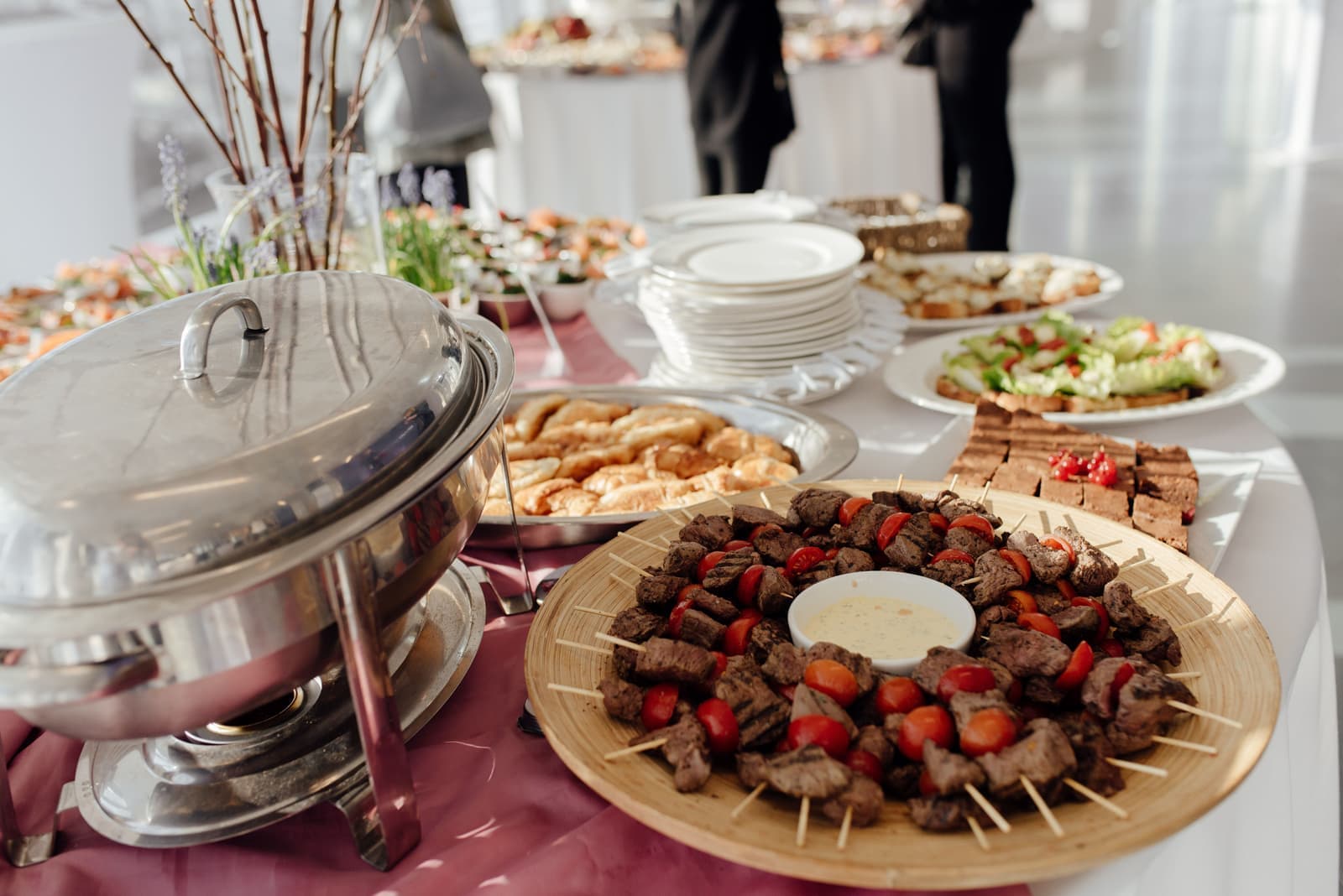
Plates at the start, cutlery and napkins at the very end, and the food in between in this order: sides first, the main second, sauces and gravy immediately after the main, bread last. Pull the table away from the wall so people can serve from both sides, keep the drinks on a separate surface entirely, and put the slowest dish — usually carving — at the end of the line rather than the middle of it.
Quick picks
| # | Product | Best for | Score | Price |
|---|---|---|---|---|
| 1 | 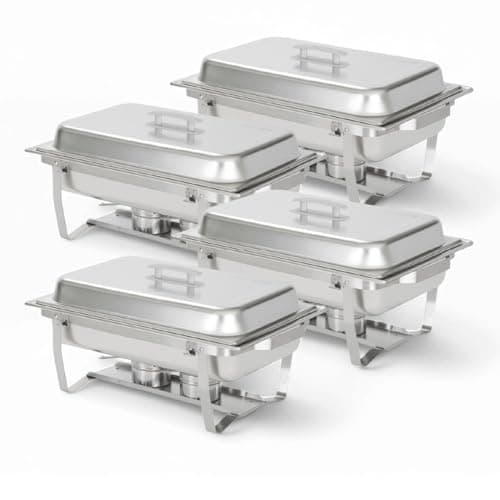 Alpha Living Stainless Chafing Dish Set, 4 PackFour full-size chafers, no cords, no outlets — which is what lets a buffet go anywhere. | Best for holding the main dishes | 9.0 | $129.99 · View on Amazon #ad We may earn a commission · Price as of October 17, 2026 |
| 2 | 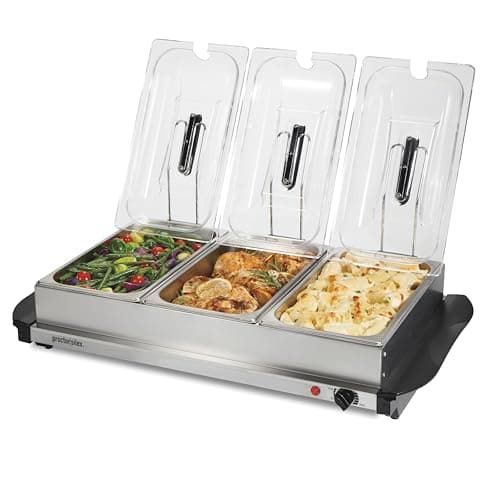 Proctor Silex Electric Buffet Server and Food Warmer with LidsThree lidded pans plus a warming surface, which turns a counter into a buffet without a flame. | Best plug-in station | 9.1 | $54.99 · View on Amazon #ad We may earn a commission · Price as of October 17, 2026 |
| 3 | 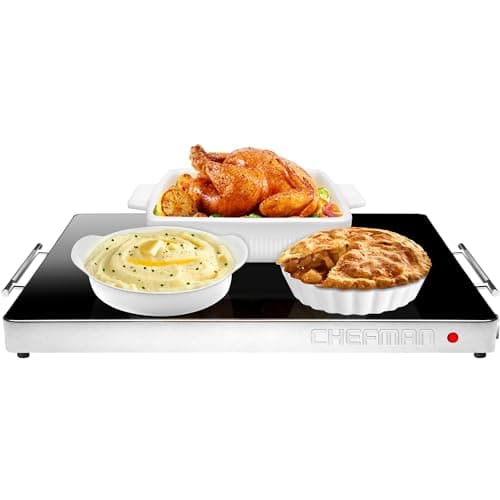 Chefman Electric Warming Tray, 21 x 16 inNot everything belongs in a chafer — a tray holds three serving dishes as they are. | Best for the dishes that stay in their own bowls | 9.1 | $74.99 · View on Amazon #ad We may earn a commission · Price as of October 17, 2026 |
| 4 | 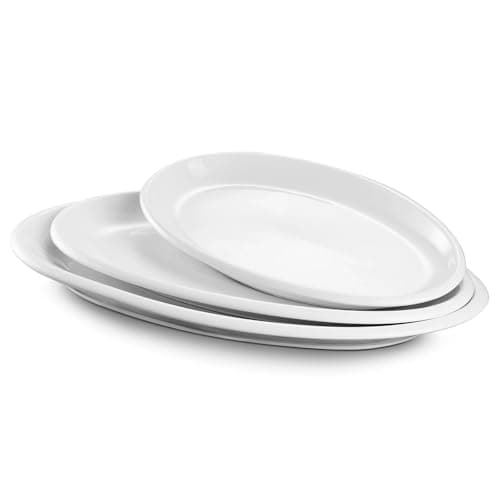 DOWAN Oval Serving Platter Set of 3Three sizes means the turkey, the dark meat and a side each get the right platter. | What the carved meat sits on | 9.1 | $31.99 · View on Amazon #ad We may earn a commission · Price as of October 17, 2026 |
Scores are our own editorial rubric, explained on how we pick. Four criteria per category, scored out of ten, so the leading pick is clear at a glance.
The order, and why it is that order
Every rule about buffet order comes from one observation: people fill their plates in the order they meet the food, and a plate that is full too early causes a jam.
- Plates. At the very start, stacked, warmed if you can manage it. Nothing before them.
- Cold sides and salads. Cheap on the plate and cheap on time. They also spread the first bottleneck.
- Hot sides. Potatoes, dressing, vegetables, the casseroles. The bulk of the meal, and the bulk of the serving time.
- The main. Carved turkey or ham, late in the line. This is deliberate: people take less meat when the plate is already two-thirds full, which is how one bird feeds twenty.
- Gravy and sauces. Immediately after the main, never before it. Gravy on an empty plate goes everywhere.
- Bread and rolls. Last of the food. They are a gap-filler and they are what people drop when their plate is full.
- Cutlery and napkins. Absolutely last. Someone carrying a knife and fork cannot serve themselves, and a napkin picked up first ends up under a spoonful of gravy. Better still, roll the cutlery into the napkin and put it at the end of the table or on the dining table itself.
Drinks go somewhere else entirely — a side table, a counter, another room. A drinks station in the food line is the single most reliable way to stop a buffet moving.
Layout: one side, two sides, or two lines
Pull the table off the wall. A table against a wall can only be served from one side, which halves your throughput for no gain. Four feet of clearance all round lets people queue on both sides and lets you reach every dish to top it up.
| Guests | Setup | Why |
|---|---|---|
| Up to 10 | One table, one side | The line never builds up |
| 10 to 20 | One table, both sides, mirrored dishes | Two lines from one table doubles the rate |
| 20 or more | Two separate stations in different places | Splits the crowd rather than the queue |
Mirroring is the trick most home hosts miss. If you are serving from both sides, put two of everything — two gravy jugs, two serving spoons in the potatoes, plates stacked at both ends. One set of utensils on a two-sided table creates a reach-across that is slower than a single line.
Leave a clear landing zone of about a foot beside each dish. People put their plate down to serve, and nowhere to put it is what makes a buffet feel cramped.
Keeping it hot for the length of the line
A buffet at home usually runs for one to three hours between the first plate and the last refill, and the USDA line applies throughout: hot food held at 140F or above, cold food at 40F or below, and nothing sitting between the two for more than two hours.
Chafing dishes for the bulk. Two six-hour fuel cans per full-size chafer, about an inch of hot water in the water pan, food in hot. Chafers are the only holding method with no cord, which is why they can go anywhere. If you are using the disposable kind, the assembly matters — how to use a disposable chafing dish.
A warming tray for dishes that look better in their own bowls. Vegetables, a gratin, anything you would rather not decant into a hotel pan.
A roaster oven as backstage storage. The best thing on a long buffet is a second batch held out of sight, so you refill a half-empty pan with hot food rather than topping up cooling food with more cooling food. Lowest setting, inch of water, lid on.
Cold dishes on ice. A deeper tray with ice and the serving bowl set into it. Salads, shrimp, anything dairy.
Half pans beat full pans at home. A shallower, smaller quantity holds its temperature far more evenly, and you replace it from the kitchen rather than letting one enormous pan go lukewarm — see half-size vs full-size chafing dishes.
Height, spacing and making it look deliberate
A buffet laid flat looks like food on a table. A buffet with two or three heights looks arranged, and it also uses the space better.
Risers at the back. Upturned baking dishes, sturdy boxes or cake stands under a cloth. Tall items at the back, short at the front, nothing so tall it has to be lifted down.
Vary the shapes. A long wooden board among round bowls breaks up the line. A large oval platter for the carved meat anchors the middle of the table.
A cloth, and something under the chafers. The cloth covers the risers and makes it read as one surface. Chafers and hot trays need a board or a trivet between them and the cloth.
Label anything that is not obvious, especially anything vegetarian, gluten-free or nut-containing. A folded card saves ten conversations.
Keep the decoration low and to the edges. This is a serving surface before it is a display. Candles anywhere near chafing fuel are a bad idea; the layered approach that works on a dining table is in Thanksgiving table decor.
Running it once people start eating
Top up before a pan looks empty. An almost-empty chafer is both unappealing and a food-safety problem, because a thin layer loses heat quickly. Refill at about a third remaining, with hot food from the kitchen.
Never top up a cooling pan with hot food. Swap the pan. Mixing new hot food into old cooling food drops everything into the Danger Zone and resets nothing.
One serving utensil per dish, resting in the dish. Not across the top of two dishes, not on the cloth. If something needs two utensils — a salad — set both in it.
Check the water pans. Hourly. A dry chafer scorches the food pan.
Start the clock. Two hours is the limit for anything sitting out in the Danger Zone, and the clock starts when the food leaves the heat, not when the last guest eats. After the meal, leftovers go into shallow containers and into the refrigerator inside that window.
If this is a New Year’s Eve buffet rather than a holiday meal, the dishes that survive a five-hour table are a different list entirely — party food that stays hot.
The products, in detail
#ad We may earn a commission · Price as of October 17, 2026
#1 · Best for holding the main dishes
Alpha Living Stainless Chafing Dish Set, 4 Pack
No cord, no outlet, no extension lead across a doorway. The trade is fuel cans and a real open flame, so this belongs on a sturdy table away from children.
- Pack
- 4 chafers
- Capacity
- 8 qt full-size pan each
- Frame
- Stainless, folding legs
- Fuel
- 2 holders per chafer; cans sold separately
What’s good
- Four chafers covers a full buffet line in one purchase
- 8 qt full-size pans, the standard size everything else fits
- Folding legs, so it stores flatter than a rigid frame
- No power needed, so the table can go wherever it fits
What’s not
- Open flame — not for a room with small children in it
- Fuel cans sold separately, two per chafer
- Stainless is heavy to carry and store
- Needs a heatproof surface under it
Hold quality
9.2
Capacity
9.4
Flexibility
9.6
Storage
7.8
#ad We may earn a commission · Price as of October 17, 2026
#2 · Best plug-in station
Proctor Silex Electric Buffet Server and Food Warmer with Lids
Three lidded pans plus a warming surface in the middle. This is the one that turns a kitchen counter into something that reads as a buffet.
- Pans
- Three 2.5 qt stainless
- Lids
- Domed, with lid rests
- Control
- Adjustable dial
- Best for
- Sides and a carving station
What’s good
- Three 2.5 qt stainless pans with domed lids and lid rests
- No open flame, so it is the safer choice with children around
- Adjustable dial rather than one fixed heat
- The warming plate in the middle takes the gravy jug
What’s not
- Needs an outlet within reach of the table
- 2.5 qt pans are smaller than a full chafer
- Cord management is a real consideration on a walkway
- Only three dishes
Hold quality
9.0
Capacity
8.4
Safety
9.6
Ease of use
9.4
#ad We may earn a commission · Price as of October 17, 2026
#3 · Best for the dishes that stay in their own bowls
Chefman Electric Warming Tray, 21 x 16 in
The size is the point: 21 by 16 inches takes three serving dishes at once, which is the difference between a warm buffet and one warm side dish.
- Surface
- 21 x 16 in tempered glass
- Control
- Adjustable temperature
- Holds
- About 3 dishes
- Clean
- Wipe-down glass top
What’s good
- 21 x 16 in takes about three serving dishes at once
- Food stays in the bowls it was cooked in, which looks better
- Adjustable temperature
- Glass top wipes clean
What’s not
- Heats from below only — cover the dishes or they skin over
- Needs an outlet
- Hot surface needs clearance from a cloth
- Will not hold as long as a fuelled chafer
Hold quality
8.6
Capacity
9.0
Looks on a table
9.4
Ease of use
9.2
#ad We may earn a commission · Price as of October 17, 2026
#4 · What the carved meat sits on
DOWAN Oval Serving Platter Set of 3
Measure before you buy. A carved 20-pound turkey wants the largest platter you can find, and this set's 16-inch oval is about as big as ceramic gets — with 14 and 12 inch platters for the sides.
- Sizes
- 16, 14 and 12 in oval
- Material
- White porcelain
- Oven safe
- Yes
- Warm it
- Hot water bath before plating
What’s good
- 16 in oval takes a carved 20 lb bird
- 14 and 12 in platters for dark meat and sides
- Oven safe, so they can be warmed before plating
- Plain white reads correctly against any table linen
What’s not
- Heavy once loaded
- Needs warming — cold porcelain cools meat quickly
- Three large items to store
- Chips on a hard edge
Size
9.4
Heat retention
9.0
Looks
9.2
Value
8.8
Frequently asked questions
Plates first, then cold sides and salads, then hot sides, then the main dish, then gravy and sauces immediately after it, then bread, and cutlery and napkins last of all. Drinks belong on a separate surface entirely. The logic is that a plate filling up early slows the whole line, and nobody can serve themselves while holding cutlery.
Plates at the very beginning of the line and silverware at the very end, ideally rolled into napkins or set out on the dining table instead. Picking up cutlery first leaves people trying to serve with one hand, which is the most common reason a home buffet queue stops moving.
Assemble each chafer on the table it will stay on, put about an inch of hot water in the water pan, light two six-hour fuel cans away from the table and slide them underneath, then add the food already hot. Put a board or trivet under each chafer, keep them toward the back of the table, and check the water level hourly.
Only for a small group. Pulling the table away from the wall lets people serve from both sides, which roughly doubles how fast the line moves, and it lets you reach every dish to refill it. If you do serve from both sides, mirror the dishes and put a serving utensil in each one on each side.
Two hours in the 40F to 140F Danger Zone, and the clock starts when the food leaves the heat. Hot dishes held properly in chafers or on a warming tray at 140F or above, and cold dishes kept on ice at 40F or below, are not in that window and can stay out longer — but check them, do not assume.
One per hot dish you intend to hold, which for a holiday meal is usually two to four. At home, two half-size chafers are often better than one full-size: a shallower quantity holds its temperature more evenly and you can refill one while the other is still serving.
Sources
Related reading
- How to Keep Food Warm for a PartyEight methods ranked, with the 140F safety floor explained and the dishes that simply will not hold.
- The Best Chafing Dishes for Home UseFour chafers sized for a home sideboard rather than a banquet hall, with the lid types compared and the flame rules spelled out.
- How to Use a Disposable Chafing DishAssembly, water depth, fuel placement, lighting and extinguishing a disposable chafing dish — plus the four mistakes that make one fail halfway through a party.
- The Best Buffet Servers and Food WarmersLidded electric servers ranked against chafing dishes and a plain warming tray, with the safe holding temperature explained.
- The Best Serving Platters for a Holiday TablePlatters sized for a real carved turkey, plus the charger-plate trick that makes mismatched dinnerware look deliberate.