Chafing Dish vs Warming Tray
The decision is usually made by your outlets, not by the food. Here is how to work out which you actually need.
By Mike M. · Published · Last updated
How this page is funded: Fryer & Feast is a participant in the Amazon Associates Program. If you buy through a link here we may earn a commission, at no extra cost to you. It never changes which products we recommend — see how we pick and our full affiliate disclosure. We do not publish prices on this site — every buy link sends you to the retailer for the live price.
Get a warming tray if there is an outlet where the food needs to be, you want the simplest possible setup, and you would rather not have an open flame on a table with children around it.
Get chafing dishes if the serving area has no power, your kitchen circuits are already loaded with a roaster and two slow cookers, or you need three or four stations for a crowd.
Quick picks
| # | Product | Best for | Score | Price |
|---|---|---|---|---|
| 1 | 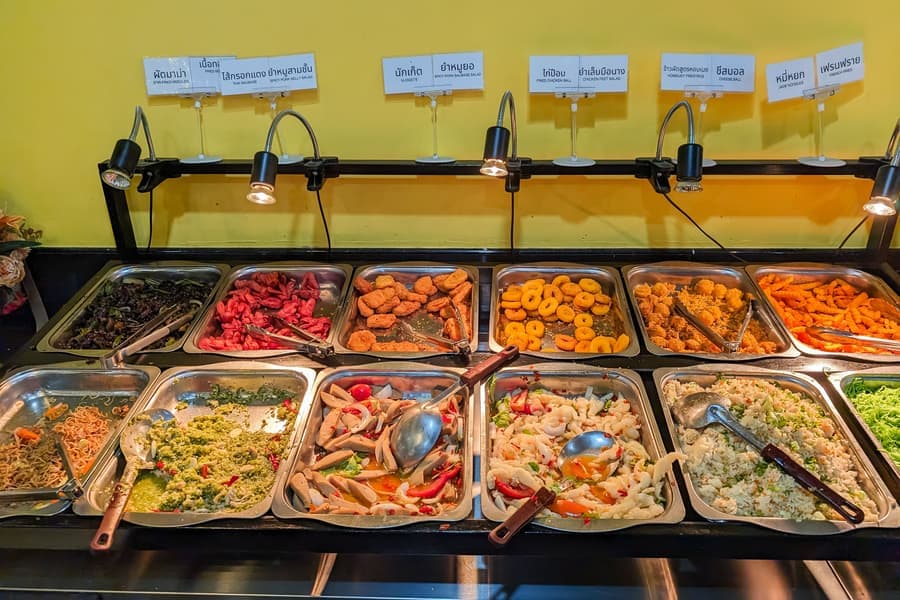 Chefman Electric Warming Tray, 21 x 16 inSimpler, safer, and it uses the serving dishes you own. | Get a warming tray if you have an outlet | 8.8 | |
| 2 | 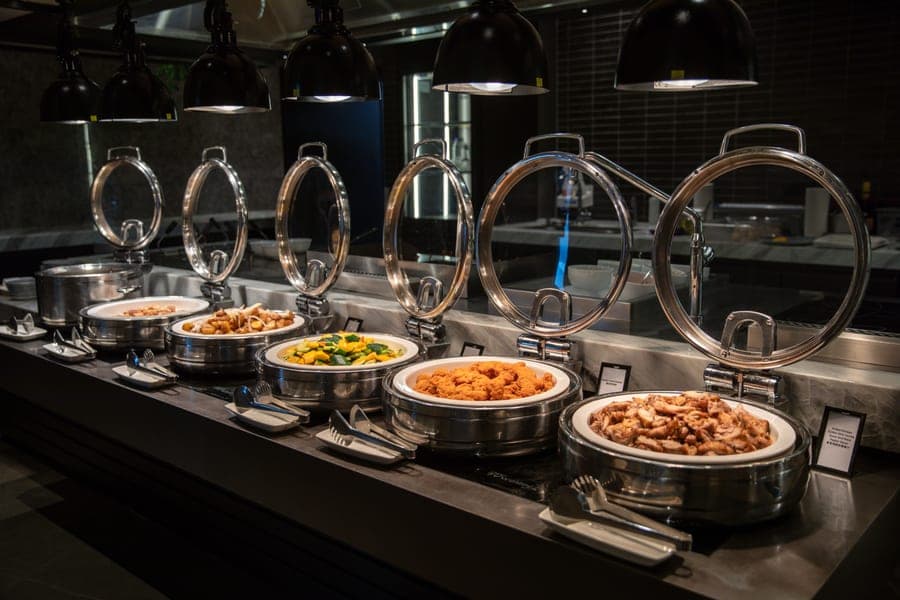 Stainless Chafing Dish Set with Fuel HoldersCompletely independent of outlets and extension leads. | Get chafing dishes if you do not | 7.9 |
Scores are our own editorial rubric, explained on how we pick. They are not customer ratings and we do not publish star ratings for products we have not handled.
How each one actually works
A warming tray is a flat electric heating surface — glass or stainless — that you set serving dishes on. The heat is conducted upward through the base of your dish. Simple, controllable, and it uses the dishes you already own.
A chafing dish is a frame holding a pan of hot water, with a food pan sitting in the water and a lid on top. The water is heated by gel or wick fuel burning underneath. Because the food sits in a water bath rather than on direct heat, it cannot scorch — which is why caterers use them.
Both aim at the same target: hot food held at or above 140F, per published USDA guidance, which is the floor for safe serving.
Side by side
| Warming tray | Chafing dish | |
|---|---|---|
| Power needed | Yes, an outlet | None |
| Heat source | Electric element | Gel or wick fuel, open flame |
| Heat retention | Moderate — no lid | Long — lid plus water bath |
| Can food scorch? | Possible on a hot setting | No — the water bath prevents it |
| Uses your own dishes | Yes | No, decant into the pans |
| Consumables | None | Fuel cans, every time |
| Child-safe | Hot surface only | Open flame — needs supervision |
| Setup time | Plug in | Assemble, fill with water, light |
The outlet problem, which usually decides it
Work out what is plugged in on the day. A roaster oven, a buffet server, two slow cookers, a coffee maker, a microwave. Kitchen circuits are typically 15 or 20 amps, and a roaster oven alone can take most of one.
Now consider where the food actually gets served. Often that is a dining table or a sideboard in a room with one outlet on a wall nobody wants a cord running across.
A chafing dish does not care about any of this. That is its real advantage, and it is why caterers default to them — not because they hold heat better, but because they work in rooms with no power at all.
The flame, taken seriously
Chafing fuel is a real open flame that burns for several hours and is close to invisible in daylight. That last part is what catches people out — a canister that looks extinguished is often still burning.
- Stable, heat-resistant surface only. Never a tablecloth edge.
- Nothing flammable above it — no low-hanging decor
- Out of reach of children, and out of the traffic path
- Never refill or move a canister that is lit, or one you think might be
- Extinguish with the snuffer lid, never by blowing
None of this makes chafing dishes unsuitable — they are standard catering equipment for good reason. It means they need a decision about placement, in advance.
The honest answer: many hosts end up with both
A warming tray in the kitchen, where there is power and where you are plating. Chafing dishes on the serving table, where there is not.
If you are only buying one this year, buy the warming tray. It is easier, safer and more flexible, and it is the one you will use at every gathering rather than only the big ones. Our warming tray roundup covers the options, and the full guide to keeping food warm covers everything including the methods that cost nothing.
The products, in detail
#1 · Get a warming tray if you have an outlet
Chefman Electric Warming Tray, 21 x 16 in
The size is the point: 21 by 16 inches takes three serving dishes at once, which is the difference between a warm buffet and one warm side dish.
- Surface
- 21 x 16 in tempered glass
- Control
- Adjustable temperature
- Holds
- About 3 dishes
- Clean
- Wipe-down glass top
What’s good
- No flame, no fuel to buy or store
- Adjustable temperature
- Your own dishes go straight on it
- Easy to wipe clean
What’s not
- Needs an outlet where the food is going
- No lids, so heat escapes faster
- Adds to an already loaded kitchen circuit
Convenience
9.2
Safety
9.4
Heat retention
7.6
Value
8.8
#2 · Get chafing dishes if you do not
Stainless Chafing Dish Set with Fuel Holders
No cord, no outlet, no extension lead across a doorway. The trade is fuel cans and a real open flame, so this belongs on a sturdy table away from children.
- Heat
- Gel or wick fuel
- Capacity
- Typically 8 qt
- Power
- None needed
- Caution
- Open flame; keep clear
What’s good
- Works anywhere — a side table, a porch, a garage
- Deep lidded pans hold heat for hours
- Scales cheaply to three or four stations
- Nothing to trip a breaker
What’s not
- Open flame from gel or wick fuel
- Fuel cans are a consumable you must buy in advance
- Not suitable with small children at reachable height
Convenience
7.2
Safety
7.0
Heat retention
8.8
Value
8.4
Frequently asked questions
Yes, comfortably above the 140F safe holding floor, and the lid plus water bath means they hold it for hours. Check with a thermometer rather than assuming, especially after the lid has been off repeatedly.
Gel and wick canisters are typically sold in two, four and six hour burn times. Buy the longer ones and buy spares — running out mid-service is the common failure.
Safer than an open flame, but it is still a hot surface and it still draws current. Do not run it on a lightweight extension cord, and do not leave it on a surface that cannot take sustained heat.
Yes — it is standard catering equipment for indoor service. It needs a stable heat-resistant surface, clearance above, and to be out of reach of children.
Sources
Related reading
- The Best Warming Trays for a Holiday BuffetFive ways to hold food above 140F until dinner, ranked — from a 21-inch glass tray to the slow cooker you already own.
- The Best Buffet Servers and Food WarmersLidded electric servers ranked against chafing dishes and a plain warming tray, with the safe holding temperature explained.
- How to Keep Food Warm for a PartyEight methods ranked, with the 140F safety floor explained and the dishes that simply will not hold.
- New Year's Eve Party at Home: The ChecklistA week-out to midnight countdown, with the quantities, the food that survives five hours, and the midnight plan.
- Thanksgiving Dinner for 20 PeopleQuantities for twenty, the two-bird argument, and the equipment that makes the scale work.