Chafing Dish vs Crock Pot for Keeping Food Warm
Most people already own the crock pot, which is why this is the comparison worth reading before buying anything.
By Mike M. · Published · Last updated
How this page is funded: Fryer & Feast is a participant in the Amazon Associates Program. If you buy through a link here we may earn a commission, at no extra cost to you. It never changes which products we recommend — see how we pick and our full affiliate disclosure. Every buy link goes straight to the retailer, so the price you see is the live one on the day you buy.
Use the crock pot if the food is saucy or soft — mashed potatoes, gravy, stuffing, beans, meatballs — and there is an outlet where you are serving. You already own it and it holds safely on Warm. Do not buy anything.
Use a chafing dish if you are serving a main dish to twelve or more, your serving area has no usable outlet, or your kitchen circuits are already carrying a roaster oven. Wide, shallow, no power, about 8 quarts.
Verdict for most first-time hosts: start with the crock pots you own, and buy one chafer only if the outlet problem is real. The outlet is almost always what actually decides it.
Quick picks
| # | Product | Best for | Score | Price |
|---|---|---|---|---|
| 1 | 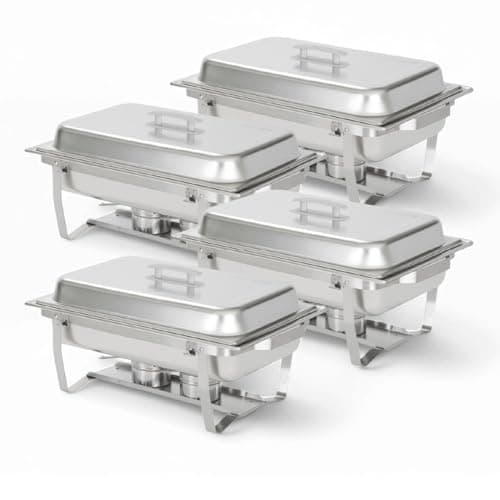 Alpha Living Stainless Chafing Dish Set, 4 PackEight quarts of wide, shallow serving with no outlet needed. | Use a chafing dish for the main, and for a crowd | 9.1 | $129.99 · View on Amazon #ad We may earn a commission · Price as of October 4, 2026 |
| 2 | 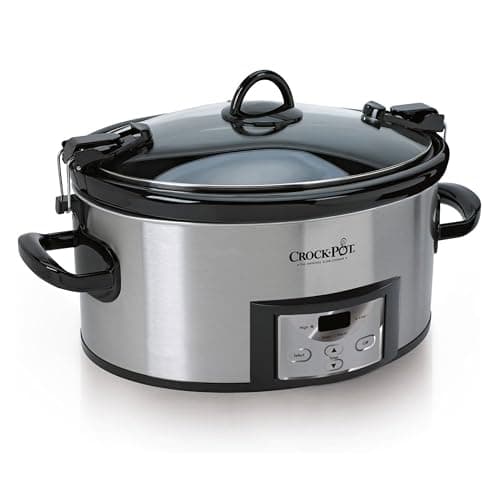 Crock-Pot 6-Quart Cook & Carry Programmable Slow CookerYou already own it, and Warm holds above 140F for hours. | Use a crock pot for potatoes, gravy and anything saucy | 7.3 | $59.99 · View on Amazon #ad We may earn a commission · Price as of October 4, 2026 |
Scores are our own editorial rubric, explained on how we pick. Four criteria per category, scored out of ten, so the leading pick is clear at a glance.
What each one actually is
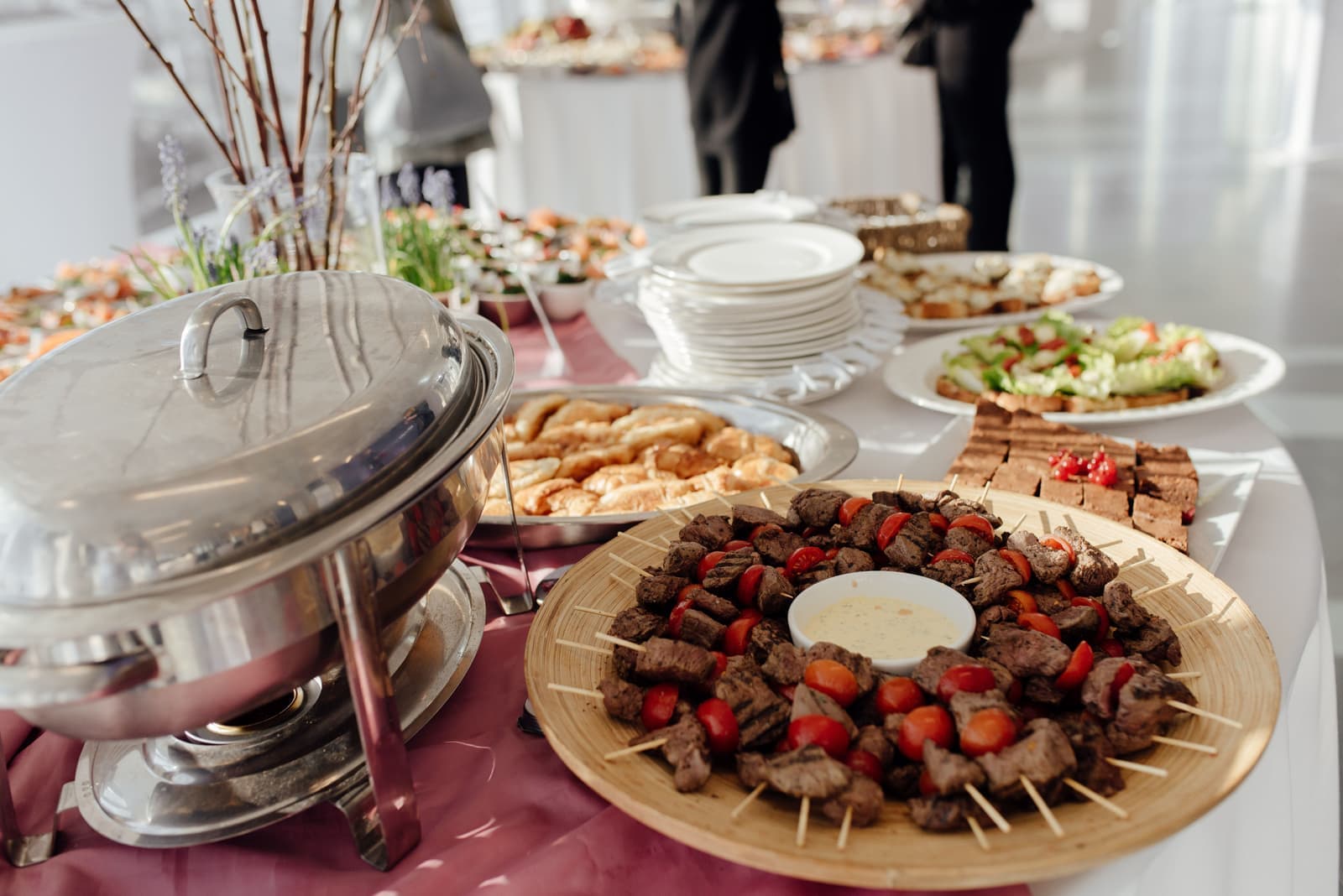
A chafing dish is a frame holding a pan of hot water, with a food pan sitting in the water and a lid over it. Gel or wick fuel burns underneath. Because the food sits in a water bath rather than on direct heat it cannot scorch, which is why it is catering standard for service lasting hours.
A crock pot — a slow cooker — is a ceramic insert in a heated housing. It is a cooking appliance with a holding mode rather than a holding appliance. USDA guidance describes slow cookers operating generally between 170F and 280F, and the Warm setting sits above the 140F safe-holding floor.
Both get to the same safe temperature. Everything that follows is about shape, capacity and what is plugged in.
Side by side
| Chafing dish | Crock pot | |
|---|---|---|
| Power needed | None | Yes, an outlet |
| Heat source | Gel or wick fuel, open flame | Electric element |
| Typical capacity | 8 qt full size, 4 qt half | 6 qt |
| Pan shape | Wide and shallow | Deep and narrow |
| Serving from it | Easy, buffet style | Awkward once half empty |
| Can it scorch? | No — water bath | Edges can, over hours |
| Consumables | Fuel cans, every time | None |
| Already own it? | Unlikely | Almost certainly |
| Child-safe | Open flame — supervise | Hot exterior only |
The outlet problem, which usually decides it
Count what is plugged in on the day. A roaster oven at around 1,450 watts, a buffet server, two crock pots, a coffee maker, a microwave. Kitchen circuits are commonly 15 or 20 amps and a roaster alone takes a large share of one.
Then look at where the food is actually served. Usually a dining table or a sideboard in a room with one socket on a wall nobody wants a cord crossing. That is the situation a chafing dish exists for, and it is why caterers default to them — not because they hold heat better, but because they work in rooms with no power at all.
If your serving surface has a usable outlet and your circuits have headroom, the electric options are simpler in every respect. Full treatment on how to keep food warm for a party.
Which dishes belong in which
Crock pot: mashed potatoes, gravy, stuffing, braised greens, baked beans, meatballs, mulled cider, pulled pork. Anything where softness is the goal and a deep pot is not a problem because you are ladling rather than lifting.
Chafing dish: sliced turkey or ham, casseroles, pasta bakes, green bean dishes, anything a queue of guests serves itself from with tongs or a spoon. The wide shallow pan is what makes self-service work.
Neither: roast potatoes, stuffing with a crust, anything fried, rolls. Both of these hold food under a lid in humid heat, and humidity destroys crunch. Those dishes go from oven to table and get eaten first — that is the plan, not a failure.
The rules for both
Hot-holding is where food safety most often slips at a home gathering, because the meal stretches out. Published USDA guidance gives the numbers:
- Hold at or above 140F. Check with a thermometer rather than trusting a dial or a label.
- 40F to 140F is the danger zone, and food should not accumulate more than two hours inside it.
- Neither appliance is a reheater. Do not put cold or leftover food in either and expect it to come up safely. Bring it to temperature on the stove or in the oven, then move it across to hold.
- Chafing fuel is a real flame. Stable surface, nothing flammable above, out of children’s reach, snuffed with a lid and never water. Details on chafing dish fuel.
The verdict
Do not buy a chafing dish to replace a crock pot. They are not competing for the same dishes. The crock pot you own already handles potatoes and gravy better than a chafer would.
Buy a chafing dish when the outlet runs out. That is the trigger: you have more dishes to hold than sockets to hold them, or the serving area has no power. One half-size chafer plus the two crock pots in your cupboard covers a table of twelve comfortably.
If there is an outlet and you would rather not have a flame, an electric buffet server sits between the two — lidded pans like a chafer, a plug like a crock pot. That is the buffet server roundup, and the chafing dish roundup covers the sizes if you have decided to go with fuel.
The products, in detail
#ad We may earn a commission · Price as of October 4, 2026
#1 · Use a chafing dish for the main, and for a crowd
Alpha Living Stainless Chafing Dish Set, 4 Pack
No cord, no outlet, no extension lead across a doorway. The trade is fuel cans and a real open flame, so this belongs on a sturdy table away from children.
The real difference is not temperature — both hold food above the 140F floor published by USDA. It is the shape of the vessel and what that does to serving.
A chafer is wide and shallow, so twelve people can serve themselves from it in sequence without reaching into a deep well. A crock pot is deep and narrow, which is right for a braise and awkward at a buffet — the last few servings are at the bottom of a hot ceramic pot.
The second difference is placement. A chafer needs no outlet, which is why it is the answer when your serving area is a sideboard, a porch or a folding table. A crock pot needs a socket where the food goes, and on a day when a roaster oven is already drawing around 1,450 watts, adding more to the same circuit is a real consideration.
- Pack
- 4 chafers
- Capacity
- 8 qt full-size pan each
- Frame
- Stainless, folding legs
- Fuel
- 2 holders per chafer; cans sold separately
What’s good
- Wide shallow pan — guests serve from it without digging
- No power at all, so it goes anywhere
- Around 8 quarts, against 6 for a typical crock pot
- Water bath means nothing scorches over hours
What’s not
- Open flame and fuel cans to buy
- You have to own one — most people do not
- Assembly, water, lighting: more setup than plugging in
Capacity
9.2
Serving access
9.4
Placement freedom
9.8
Value
7.8
#ad We may earn a commission · Price as of October 4, 2026
#2 · Use a crock pot for potatoes, gravy and anything saucy
Crock-Pot 6-Quart Cook & Carry Programmable Slow Cooker
The warming appliance most people already own. Mashed potatoes and gravy hold beautifully on Warm; anything with a crust does not.
- Capacity
- 6 qt
- Control
- Programmable, digital timer
- Best for
- Potatoes, gravy, stuffing
- Not for
- Anything crisp
What’s good
- Already in your cupboard — no purchase at all
- Warm setting holds safely above 140F
- Perfect for mashed potatoes, gravy, stuffing, beans
- No flame, nothing to supervise, nothing to buy
What’s not
- Needs an outlet where the food is being served
- Deep narrow pot is awkward to serve from at a buffet
- Six quarts, and moisture collects so textures soften
Capacity
7.0
Serving access
6.8
Placement freedom
5.4
Value
9.8
Frequently asked questions
Not meaningfully — both hold food above the 140F safe-holding floor. The chafer’s advantages are that it needs no outlet, holds more, and has a wide shallow pan that is far easier to serve a queue of guests from. The crock pot’s advantage is that you already own it.
For saucy and soft dishes, effectively yes — set it to Warm and it holds safely for hours. The limits are capacity, the deep narrow pot that guests find awkward to serve from once it is half empty, and the need for an outlet where the food is.
Yes, provided it is genuinely holding at or above 140F — verify with a thermometer rather than trusting the setting. Start with food that is already hot; do not use Warm to bring cold or leftover food up to temperature.
Electrically, several — a slow cooker draws only a few hundred watts. The constraint is usually sockets rather than amps, unless a roaster oven at around 1,450 watts is on the same circuit. That is the point at which a no-power chafing dish starts to look attractive.
The crock pot, comfortably, because you already own it and it has no consumables. A chafing dish costs the unit plus fuel cans every time you use it. Buy the chafer for the capability it adds — service with no outlet — not to save money.
Sources
- USDA Food Safety and Inspection Service — "Danger Zone" (40F-140F)
- USDA Food Safety and Inspection Service — Slow Cookers and Food Safety
- USDA Food Safety and Inspection Service — "Danger Zone" (40F-140F)
- Oster 22-Quart Roaster Oven — manufacturer specifications
- WebstaurantStore — Chafing Fuel Guide (types, burn times, safety)
Related reading
- The Best Chafing Dishes for Home UseFour chafers sized for a home sideboard rather than a banquet hall, with the lid types compared and the flame rules spelled out.
- The Best Chafing Dish FuelWick, gel and safe-pad fuels compared on real burn time, smoke and resealability, with the quantity to buy for a home buffet.
- Chafing Dish vs Warming TrayPower, safety and heat retention compared — and the case for owning one of each.
- How to Keep Food Warm for a PartyEight methods ranked, with the 140F safety floor explained and the dishes that simply will not hold.
- The Best Buffet Servers and Food WarmersLidded electric servers ranked against chafing dishes and a plain warming tray, with the safe holding temperature explained.
- Roaster Oven vs Slow Cooker for Holiday CookingThe temperature ceiling is the whole difference — 450F versus about 280F. Which appliance cooks the bird, which one holds the sides, and why both end up on the counter.
- Thanksgiving Dinner for 20 PeopleQuantities for twenty, the two-bird argument, and the equipment that makes the scale work.
- The Best Chafing Dish Sets with Sterno FuelComplete chafer-and-fuel kits ranked on what is genuinely in the box, how long the included cans actually burn, and whether the frame survives storage.
- The Best Roll-Top Chafing DishesFour roll-top chafers compared on lid stops, finish and build - plus the clearance measurement that decides whether a roll-top fits your sideboard at all.