The Best Chafing Dish Fuel
The consumable nobody budgets for and everybody runs out of. Buy 6-hour wick, buy more than you think, and buy it before the week of.
By Mike M. · Published · Last updated
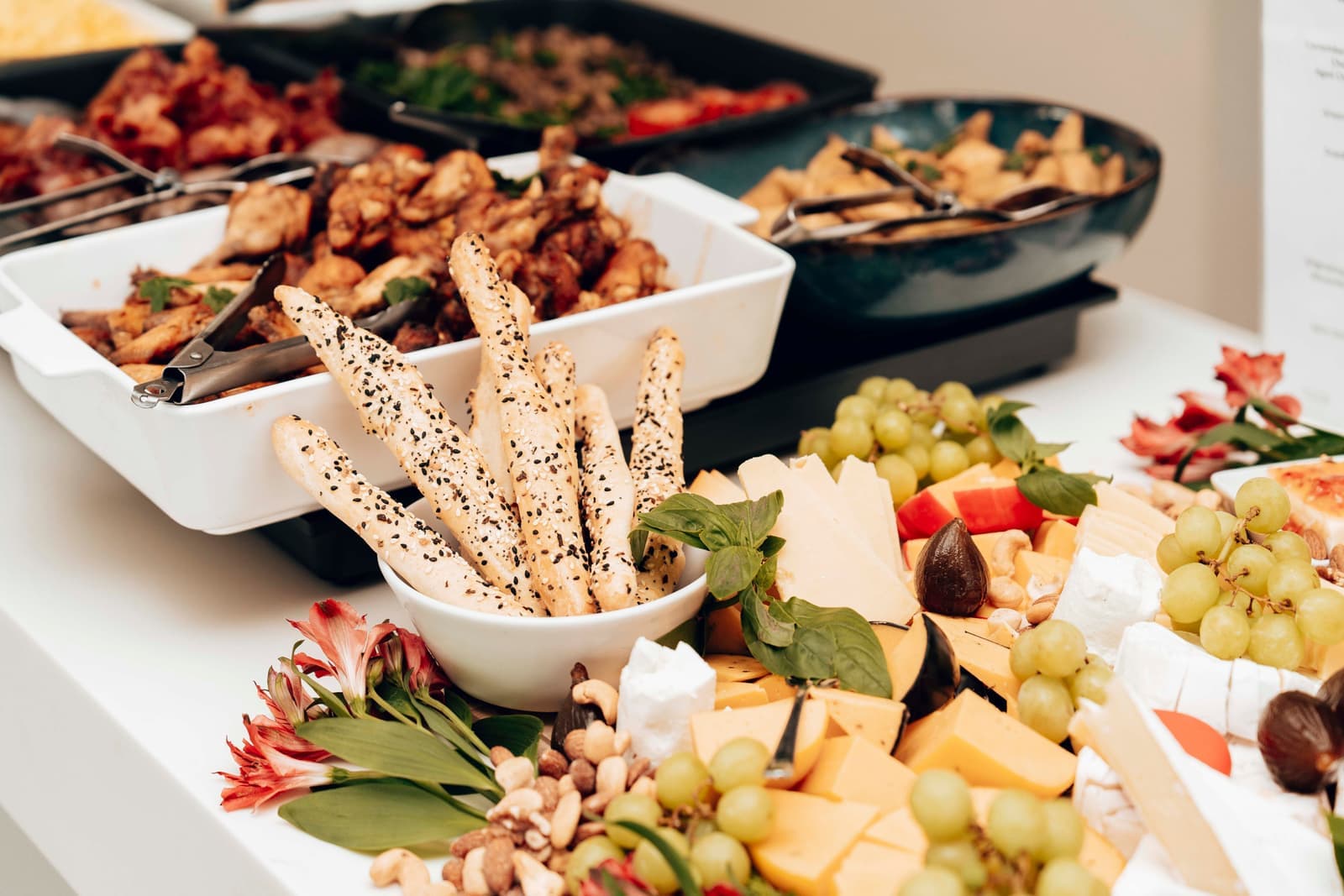
How this page is funded: Fryer & Feast is a participant in the Amazon Associates Program. If you buy through a link here we may earn a commission, at no extra cost to you. It never changes which products we recommend — see how we pick and our full affiliate disclosure. Every buy link goes straight to the retailer, so the price you see is the live one on the day you buy.
Short answer: buy 6-hour wick fuel, and buy two cans per chafing dish per event. Wick burns longer and more steadily than gel, the fuel does not ignite if spilled, and the resealable twist caps mean unused cans survive until next year.
The mistake everyone makes is buying 2-hour cans for a 3-hour meal and assuming they can swap mid-service. You cannot safely move or refill a lit canister, and chafing flames are nearly invisible in daylight. Buy long, and buy spares.
Quick picks
| # | Product | Best for | Score | Price |
|---|---|---|---|---|
| 1 | 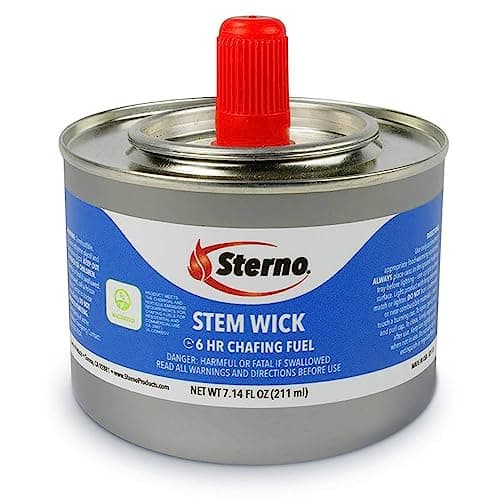 Sterno 6 Hour Stem Wick Chafing Fuel, 24 PackSix real hours, steady flame, and the can stays cool. | Best overall | 9.1 | $113.89 · View on Amazon #ad We may earn a commission · Price as of October 4, 2026 |
| 2 | 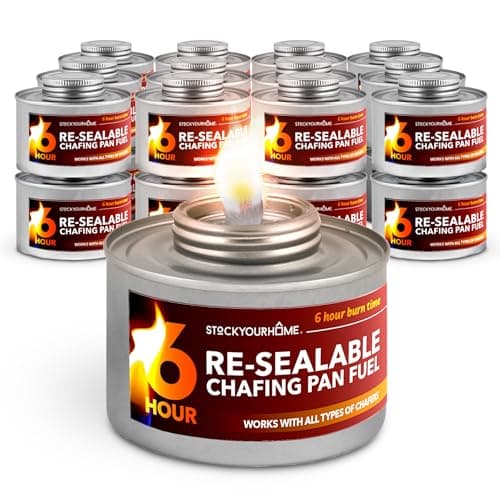 Stock Your Home 6-Hour Wick Chafing Fuel, 24 PackBy the case, with a cap that lets you keep the spares. | Best value | 9.3 | $44.99 · View on Amazon #ad We may earn a commission · Price as of October 4, 2026 |
| 3 | 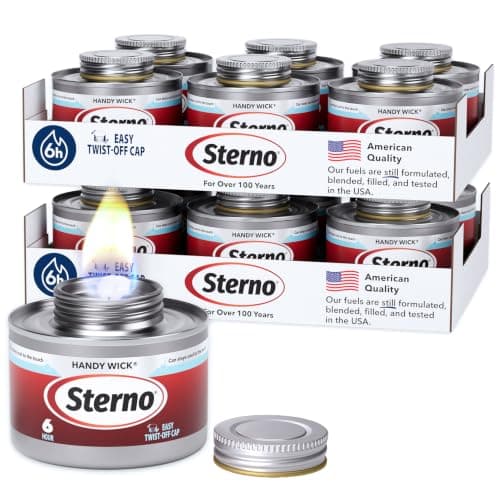 Sterno Handy Wick Twist Top Chafing Fuel, 12 PackA twelve-pack is the realistic home quantity. | Best for one holiday | 8.9 | $30.99 · View on Amazon #ad We may earn a commission · Price as of October 4, 2026 |
| 4 | 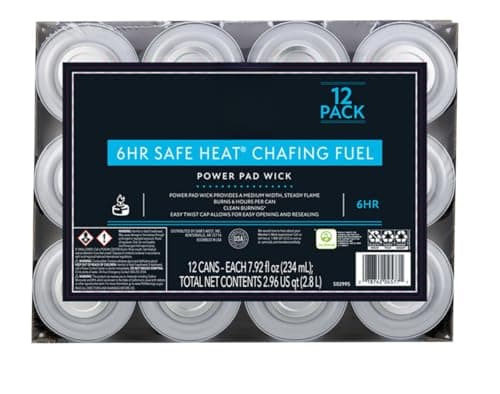 Member's Mark Safe Heat 6-Hour Chafing Fuel with PowerPad, 12 ctA wider, hotter flame for a chafer that is losing ground. | Best heat output | 8.7 | $42.99 · View on Amazon #ad We may earn a commission · Price as of October 4, 2026 |
Scores are our own editorial rubric, explained on how we pick. Four criteria per category, scored out of ten, so the leading pick is clear at a glance.
The three types, and which to buy
Wick fuel. A glycol-based liquid burned through a wick, sold in traditional and stem formats with 2, 4 or 6 hour burn times. Longest and steadiest burn. Diethylene glycol is the most common formulation — odorless with minimal smoke. Its real safety advantage is that spilled glycol will not combust without a wick. This is what to buy.
Gel fuel. Sold as ethanol (usually pink) or methanol (usually blue), in 45-minute, 2, 4 and 6 hour versions. Ethanol burns cleanly with little smoke and odor. Methanol is cheaper with noticeably higher smoke output — worth avoiding under food. Gel lights easily and is convenient, but real-world burn from the small cans is often shorter than the label.
Safe pad fuel. A hybrid pad rather than a canister, also in 2, 4 and 6 hour versions, producing a wider and hotter flame than either wick or gel. Buy this if your chafer is struggling to bring temperature up rather than simply hold it.
Real burn times vs printed burn times
Printed burn times are best-case figures from still indoor conditions. What people report in use is lower, and the gap is wider for gel than for wick.
Gel cans of the common small size are frequently reported burning closer to one and a half to two and a half hours in real conditions. Screw-cap wick cans hold up better, delivering something in the range of two to six hours depending on the can size you bought. Outdoors or in a draught, take another 10 to 15 per cent off whatever the can claims.
Which is the practical argument for six-hour wick cans even for a three-hour meal: you are buying margin, not burn time. Running out mid-service is the failure mode, and it is not one you can fix by swapping a lit can.
How many cans to buy
Two cans per chafing dish per event. One burning, one unopened spare. That is the number, and it is deliberately generous because the spare costs very little and the alternative is cold food.
So two half-size chafers at Thanksgiving means four cans on hand. If you also host New Year’s Eve, that is eight. Which is roughly where case pricing starts to make sense — a case of 24 covers several years of hosting at about half the per-can price.
Store them cool, dry and away from any heat source, with the twist caps closed. Sealed properly they keep for years; left open they evaporate and you will find half-empty cans next November.
Lighting it, and putting it out
This is the part that goes wrong, so it is worth being specific.
Lighting. Fill the water pan with about an inch of water first, assemble the chafer, then place the fuel in its holder and light it with a long match or extended lighter. Never light a can and then position it.
Putting it out. Use the snuffer lid that came with the fuel, or slide a lid or a metal spoon or spatula over the opening to smother it. Never use water. Never blow on it. Then leave it alone — a just-extinguished can is hot and the flame may not be fully out.
Never refill or move a lit canister. A chafing flame is almost invisible in daylight, so a can that looks extinguished frequently is not. Let it cool completely before it is handled or binned.
If you would rather not have a flame at all
Entirely reasonable, particularly with small children in the house. The electric alternatives do the same job with a cord instead of a canister.
An electric buffet server has lidded pans on a heated base — see the best buffet servers. A warming tray takes your own dishes; that is the warming tray roundup. And a slow cooker on Warm is already in your cupboard.
The trade is the one that sent you to chafing fuel in the first place: all of those need an outlet where the food is going. Chafing dish vs warming tray works through that decision properly.
Every pick, in detail
#ad We may earn a commission · Price as of October 4, 2026
#1 · Best overall
Sterno 6 Hour Stem Wick Chafing Fuel, 24 Pack
The default for a reason: a steady medium flame, and the can stays cool enough to handle while it is burning. Bought by the case, which is how chafing fuel is sold.
Wick fuel is a glycol-based fuel burned through a wick, and it is the right default for home buffet service for two reasons. First, the burn is genuinely long and genuinely steady — a stem wick can holds a consistent medium flame for the full six hours rather than burning hot early and fading.
Second, and this is the part worth knowing: the fuel in a wick can does not ignite on its own if it spills. It needs the wick. Diethylene glycol, the most common wick fuel, is also odorless and produces very little smoke, which matters when the flame is under the food people are about to eat.
One expectation to set. Printed burn times are measured in still indoor conditions. In a draughty room or outdoors, expect roughly 10 to 15 per cent less than the number on the can — which is one of the reasons the six-hour cans are better value than the two-hour ones even for a three-hour meal.
- Burn time
- Up to 6 hours
- Type
- Stem wick
- Pack
- 24 cans
- Note
- Can stays cool to the touch
What’s good
- Full six-hour burn from a single can
- Steady medium-width flame rather than a flaring one
- Can stays cool enough to handle while lit
- Wick fuels do not combust when spilled without a wick
What’s not
- More expensive per can than gel
- Once lit it burns until it is snuffed or spent
- Still a real open flame
Burn time
9.6
Heat output
8.8
Safety
9.2
Value
8.8
#ad We may earn a commission · Price as of October 4, 2026
#2 · Best value
Stock Your Home 6-Hour Wick Chafing Fuel, 24 Pack
Buying by the case is roughly half the price per can, and the twist cap means the unused ones keep until next year instead of evaporating in a drawer.
- Burn time
- 6 hours
- Type
- Wick, diethylene glycol
- Cap
- Resealable screw-on
- Pack
- 24 cans
What’s good
- Roughly half the price per can compared with small packs
- Resealable safety twist cap, so unused cans keep
- Same six-hour wick format as the top pick
- Enough for several years of hosting
What’s not
- 24 cans is a lot of cans to store
- Storage needs to be cool, dry and away from heat
- Overkill if you host once a year with one chafer
Burn time
9.4
Heat output
8.6
Safety
9.2
Value
9.8
#ad We may earn a commission · Price as of October 4, 2026
#3 · Best for one holiday
Sterno Handy Wick Twist Top Chafing Fuel, 12 Pack
A twelve-pack is the realistic home quantity — enough for two chafers over two holidays rather than a case you will still be looking at in 2029.
- Burn time
- 6 hours
- Type
- Twist-top wick
- Cap
- Resealable twist top
- Pack
- 12 cans
What’s good
- Right amount for two chafers over two gatherings
- Safety twist cap for the leftovers
- Widely stocked, so easy to top up locally
- Cheaper outlay than a full case
What’s not
- More per can than case pricing
- Twelve cans is still more than one meal needs
- Check the burn rating on the pack you buy — they vary
Burn time
9.0
Heat output
8.6
Safety
9.0
Value
9.0
#ad We may earn a commission · Price as of October 4, 2026
#4 · Best heat output
Member's Mark Safe Heat 6-Hour Chafing Fuel with PowerPad, 12 ct
A wider, hotter flame than wick or gel, which is what you want if a chafer is struggling to bring a cold dish back up rather than just holding a hot one.
- Burn time
- 6 hours
- Format
- PowerPad rather than canister
- Pack
- 12 count
- Best for
- Recovering temperature, not just holding
What’s good
- Wider and hotter flame than wick or gel
- Better at bringing a dish back up, not just holding it
- Six-hour burn, so it outlasts the meal
- Pad format is harder to knock over than a can
What’s not
- Hotter flame needs more care about what is above it
- Less widely stocked than Sterno cans
- Not resealable in the way a twist-cap can is
Burn time
8.6
Heat output
9.6
Safety
8.2
Value
8.4
Frequently asked questions
Wick fuel is sold in 2, 4 and 6 hour versions and the 6-hour cans genuinely burn close to that indoors. Gel is sold in 45-minute, 2, 4 and 6 hour versions, and the small gel cans are commonly reported burning nearer one and a half to two and a half hours in practice. Outdoors or in a draught, expect 10 to 15 per cent less than the printed figure.
Wick, for home buffet service. It burns longer and more steadily, and the glycol fuel will not combust if it spills because it needs the wick to burn. Gel lights more easily and is cheaper, but the small cans under-deliver on burn time and methanol gel smokes noticeably.
Two per chafing dish per event — one burning and one unopened spare. You cannot safely swap a lit canister mid-service, so the spare is the whole point. Two chafers at one dinner means four cans on hand.
Use the snuffer lid supplied with the fuel, or smother the opening with a lid or a metal spoon or spatula. Never use water and never blow on it. Leave the can to cool completely before handling or disposing of it — the flame is nearly invisible in daylight, so a can that looks out often is not.
Yes, if it has a resealable safety twist cap and you let it cool completely before closing it. Store it upright, cool and dry, away from heat. Cans without a cap evaporate once opened, which is why the twist-cap versions are worth the small premium.
Sources
Related reading
- The Best Chafing Dishes for Home UseFour chafers sized for a home sideboard rather than a banquet hall, with the lid types compared and the flame rules spelled out.
- Chafing Dish vs Warming TrayPower, safety and heat retention compared — and the case for owning one of each.
- Chafing Dish vs Crock Pot for Keeping Food WarmCapacity, power, texture and cost compared — plus the honest answer about which dishes belong in which.
- The Best Buffet Servers and Food WarmersLidded electric servers ranked against chafing dishes and a plain warming tray, with the safe holding temperature explained.
- How to Keep Food Warm for a PartyEight methods ranked, with the 140F safety floor explained and the dishes that simply will not hold.
- New Year's Eve Party at Home: The ChecklistA week-out to midnight countdown, with the quantities, the food that survives five hours, and the midnight plan.
- The Best Chafing Dish Sets with Sterno FuelComplete chafer-and-fuel kits ranked on what is genuinely in the box, how long the included cans actually burn, and whether the frame survives storage.
- The Best Chafing Dish Racks and StandsFolding wire racks and frames bought separately from the pans - what they cost per station, how they store, and where they are genuinely worse than a chafer.