The Thanksgiving Tablescape Guide
Start with a tape measure, not a mood board. Once you know how much table the food needs, the decor decisions make themselves.
By Mike M. · Published · Last updated
How this page is funded: Fryer & Feast is a participant in the Amazon Associates Program. If you buy through a link here we may earn a commission, at no extra cost to you. It never changes which products we recommend — see how we pick and our full affiliate disclosure. We do not publish prices on this site — every buy link sends you to the retailer for the live price.
Do this before anything else. Extend the table to the size it will be on the day. Lay out every serving dish you plan to use, plus the turkey platter, plus a place setting for each guest. Look at what is left.
On most dining tables what is left is a strip six to ten inches wide down the center. That strip is your decor budget, in surface area, and knowing it in advance turns every later decision into an easy one.
Quick picks
| # | Product | Best for | Score | Price |
|---|---|---|---|---|
| 1 | 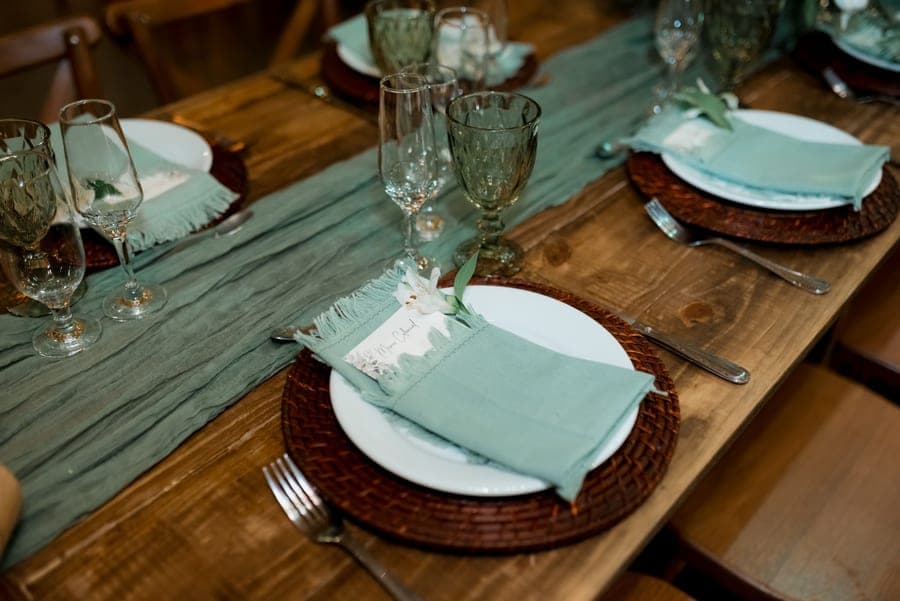 Benson Mills Fall and Thanksgiving TableclothSpill-resistant, in sizes that fit an extended table. | Layer one | 8.9 | |
| 2 | 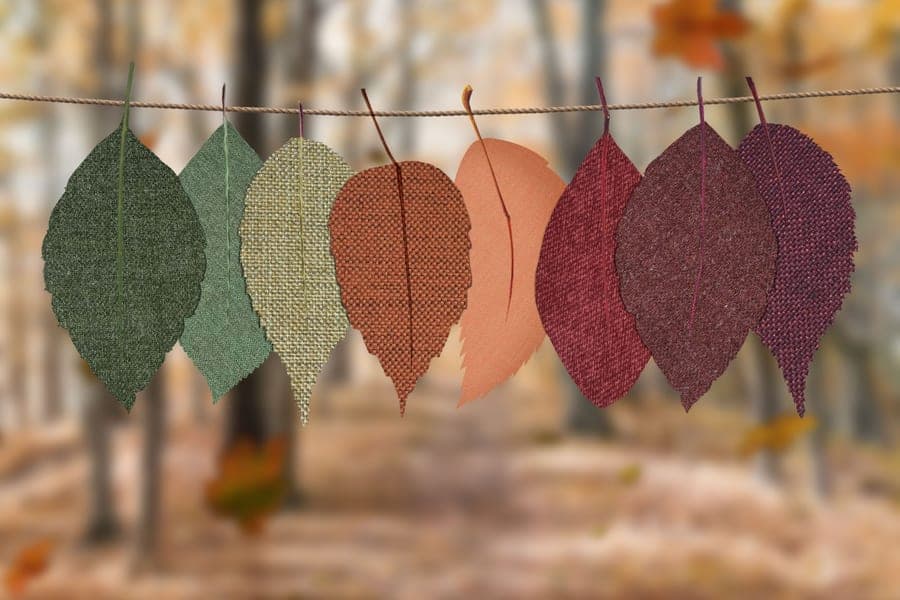 Artificial Autumn Leaf and Berry GarlandThe center line that does most of the work. | Layer three | 9.3 | |
| 3 |  Charger Plate Set for Holiday Place SettingsWhere a table stops looking laid and starts looking set. | Layer four | 8.8 | |
| 4 | 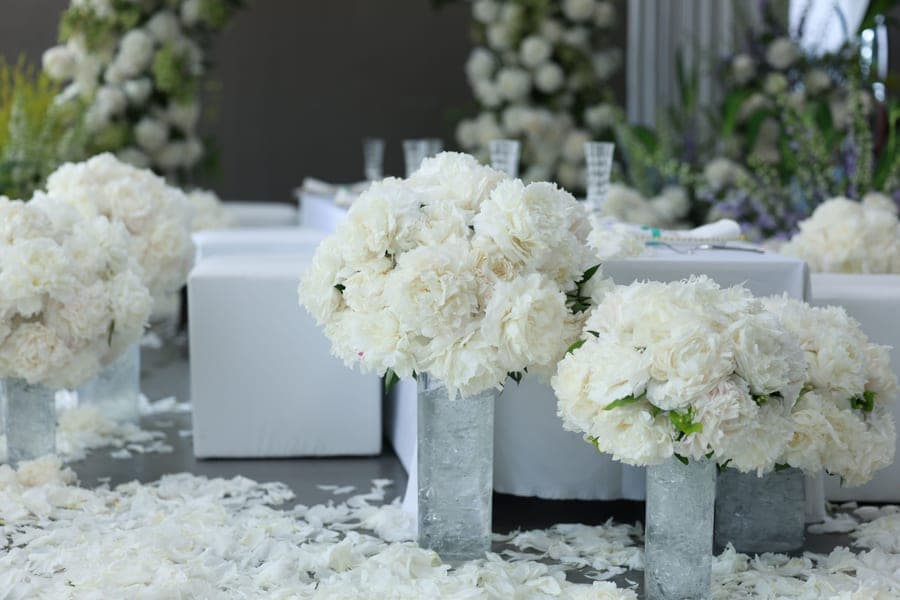 Low-Profile Fall Floral CenterpieceBuy the low-profile version, or three small ones instead of one. | If you want the traditional look | 7.7 |
Scores are our own editorial rubric, explained on how we pick. They are not customer ratings and we do not publish star ratings for products we have not handled.
Layer one: the base
A tablecloth, a runner, both, or bare wood. All four are correct choices and they say different things.
Cloth covers a table that has seen better days, softens the sound of a crowded meal, and reads as more formal. Measure the table extended, then add twice the drop — 10 to 12 inches per side is standard.
Runner on bare wood shows off a table you are proud of and is less to launder. It also gives you a natural visual channel down the center, which is exactly where the decor is going.
Both is the most layered look and works particularly well on a long table.
Full sizing detail is in our fall table linens guide.
Layer two: decide how you are serving
This is not decoration and it determines all of it, which is why it sits in the middle of the sequence rather than at the end.
Family style — platters on the table, passed around. Warm and traditional. It also means the center of the table is occupied by food, so your decor has to live at the perimeter or be genuinely low and linear.
Buffet or sideboard — people serve themselves and sit. Above about eight guests this is almost always better: no reaching across, no cold food waiting its turn, and your table stays decorated all evening.
Plated — you serve each plate in the kitchen. Most control, most work, and the table stays entirely free.
Our guide to feeding a crowd works the trade-offs through at scale.
Layer three: the center line
This is the layer that makes the table look decorated, and it lives in the strip you measured at the start.
Stay under about ten inches tall. A seated eye line is roughly twelve to sixteen inches above the table. Anything in that band means your guests spend dinner leaning around it.
Go linear rather than circular. A garland, a row of candles, or a line of small objects runs the length of the table, scales to any size, and lets you serve over it. A round arrangement in the middle occupies exactly where the platter wants to be.
If you want flowers, three small low arrangements spaced along the table beat one large one on every practical measure and still read as traditional. More in our centerpiece guide.
Layer four: the place settings
This is where a table stops looking laid and starts looking set, and it is the cheapest layer to improve.
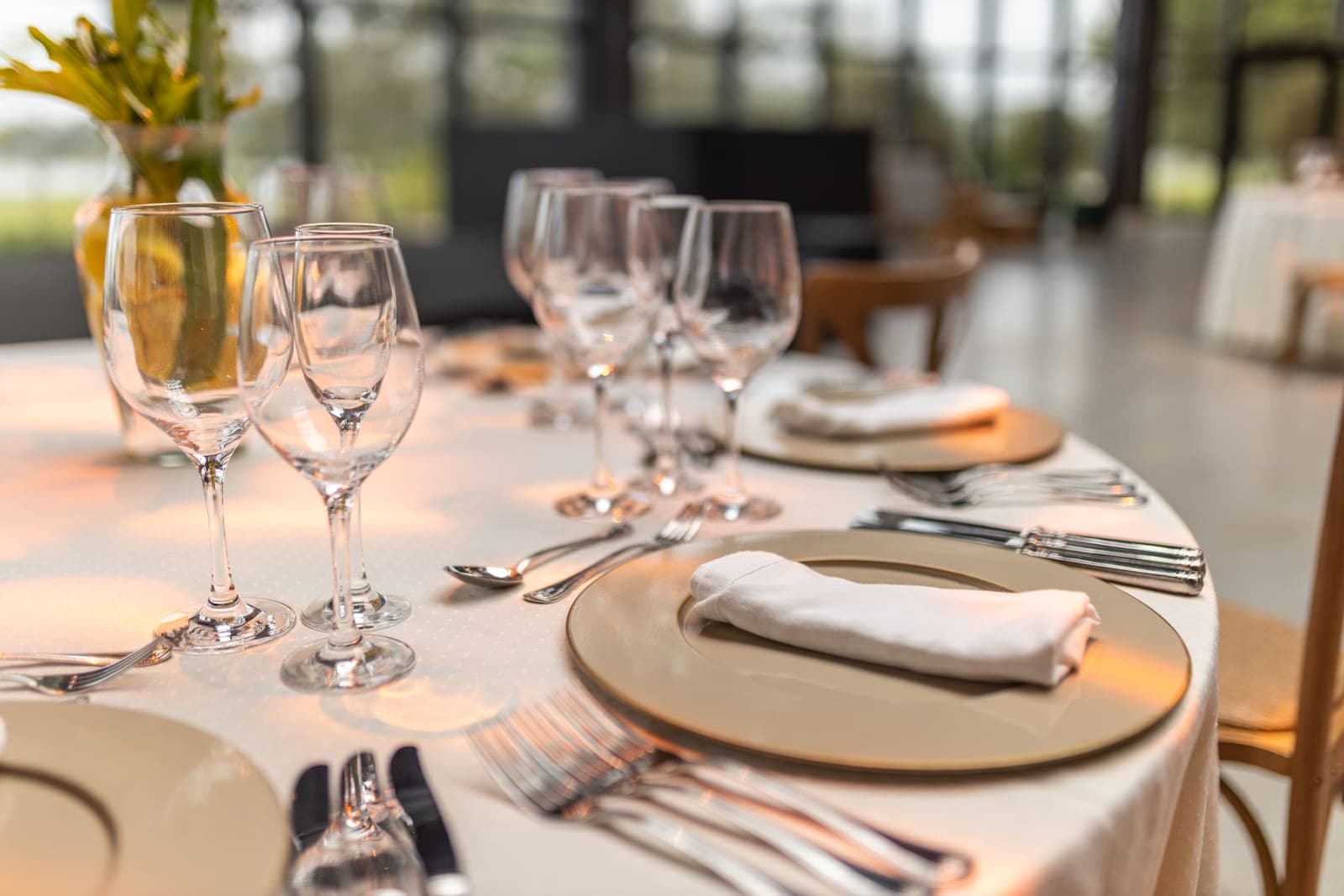
Chargers unify mismatched plates, which is the actual problem when you are suddenly seating twelve from a set of eight. A few dollars a setting and the whole table reads as deliberate.
Napkins matter more than people expect. Cloth rather than paper, folded the same way at every setting. Not elaborately — consistently. Consistency is most of what reads as effort.
Glassware — water and wine at each setting if you have them. If you do not have twelve matching wine glasses, use tumblers for everyone rather than eight matching and four mismatched.
The rule underneath all of this: consistent beats expensive. Twelve identical cheap settings look better than eight beautiful ones and four improvised.
Layer five: the filler, and knowing when to stop
A few faux pumpkins tucked along the garland. Some pine cones. A scatter of leaves. A handful, not a harvest.
This layer is where tables go wrong, because it is the one with no natural limit. Two tests:
- Can every guest reach their glass without moving something? If not, remove filler until they can.
- Can you put the turkey platter down without rearranging? If not, the center line is too wide.
Run both tests with the table fully laid, the evening before. Fixing it then takes two minutes; fixing it at five o’clock on the day does not.
The layer nobody counts: light
Lighting changes a dining room more than any object in it, and it is free.
Turn the overhead light down or off. Harsh downlighting flattens everything, makes food look worse, and is the single biggest reason a carefully decorated room still feels like a canteen.
Replace it with lower, warmer light: table lamps in the room, a dimmer if you have one, and flameless candles at mixed heights along the center. If you set their timers for four o’clock, the room lights itself while you are dealing with the turkey.
Set the table the evening before
Not for calm, though that helps. For the two tests above, which you can only run on a fully laid table.
Lay everything, sit down in a chair, and look across at where a guest would be. Check you can see them. Check you can reach your glass. Put a large plate where the turkey platter will go and confirm it fits.
Then leave it. One less thing on the day, and the whole countdown gets easier for it.
The products, in detail
#1 · Layer one
Benson Mills Fall and Thanksgiving Tablecloth
One of the largest table linen makers in the US, and the spill-resistant fall prints are the practical choice on a table that will see gravy.
- Sizes
- 52x70 up to 60x104
- Finish
- Spill-resistant options
- Style
- Autumn prints and jacquards
- Care
- Machine washable
What’s good
- Up to 60 x 104 in
- Spill-resistant
- Machine washable
What’s not
- Measure with the leaves in
- Prints date faster than plain
Impact
8.6
Practicality
9.4
Reusability
8.8
Value
8.8
#2 · Layer three
Artificial Autumn Leaf and Berry Garland
The highest-impact, lowest-effort decor on the list. Run it down the center of the table and you have a centerpiece without losing any table surface.
- Length
- 6 ft typical
- Height
- Low — stays below sightlines
- Reuse
- Stores flat, lasts years
- Pairs with
- Flameless candles
What’s good
- Low and linear
- Costs almost no surface
- Reusable
What’s not
- Needs arranging
- Keep clear of flame
Impact
9.4
Space cost
9.6
Reusability
9.2
Value
9.0
#3 · Layer four
Charger Plate Set for Holiday Place Settings
The cheapest trick for making mismatched dinner plates look deliberate — which is exactly the problem when you are suddenly feeding twelve.
- Count
- Buy 12+ for a crowd
- Material
- Melamine or metal
- Note
- Decorative, not for food
- Storage
- Stacks flat
What’s good
- Unifies mixed plates
- Stacks flat
- Cheap per setting
What’s not
- Decorative only
- Buy 12 or more
Impact
8.8
Space cost
8.0
Reusability
9.4
Value
9.0
#4 · If you want the traditional look
Low-Profile Fall Floral Centerpiece
Buy low, not tall. Anything above about ten inches means your guests spend dinner talking to a flower arrangement instead of each other.
- Height rule
- Under 10 in
- Footprint
- Leave room for platters
- Material
- Faux stems reuse yearly
- Alternative
- A garland runs flatter
What’s good
- The expected look
- Faux stems reuse
- Low profiles exist
What’s not
- Competes with the platter
- Tall versions block conversation
Impact
9.0
Sightline
7.2
Space cost
6.4
Value
8.2
Frequently asked questions
Just a decorated table, considered as a whole rather than as separate objects — the linens, the center line, the place settings and the light, built in layers.
Measure first. Lay out every serving dish and place setting, see what strip is left down the center, and keep the decor inside it — low and linear rather than tall and round.
Yes. Not only for calm, but because it is the only way to check that guests can see each other and that the turkey platter actually fits. Fixing either on the day is much harder.
If a guest cannot reach their glass without moving something, or the platter needs a rearrangement to land, you have gone too far. Both are easy to test the night before.
Related reading
- Thanksgiving Table Decor That Still Fits the FoodFive decor buys that make a table look considered without taking the space the food needs.
- Thanksgiving Centerpieces That WorkFour centerpiece approaches ranked, with the height rule that decides whether any of them work.
- How to Set a Thanksgiving TableWhere each piece goes, how much space each guest needs, and the seating math for squeezing in twelve.
- Fall Table Decor That Lasts the Whole SeasonLinens and layers for a table that stays dressed from September through November.
- The Best Serving Platters for a Holiday TablePlatters sized for a real carved turkey, plus the charger-plate trick that makes mismatched dinnerware look deliberate.