How Much Champagne Do You Need for a Party?
One bottle pours five to six glasses. Everything else on this page is arithmetic from that number, and the arithmetic is the difference between a toast and an apology.
By Mike M. · Published · Last updated

How this page is funded: Fryer & Feast is a participant in the Amazon Associates Program. If you buy through a link here we may earn a commission, at no extra cost to you. It never changes which products we recommend — see how we pick and our full affiliate disclosure. Every buy link goes straight to the retailer, so the price you see is the live one on the day you buy.
For a single midnight toast, buy one 750 ml bottle for every four to five guests. If champagne is the drink for the whole evening, buy one bottle for every two guests. The arithmetic behind both: a 750 ml bottle holds about 25.3 fluid ounces, the standard pour for sparkling wine is 4 to 4.5 ounces, and that gives five to six glasses per bottle. A party of 20 therefore needs 4 to 5 bottles for a toast, or around 10 for the night.
Quick picks
| # | Product | Best for | Score | Price |
|---|---|---|---|---|
| 1 | 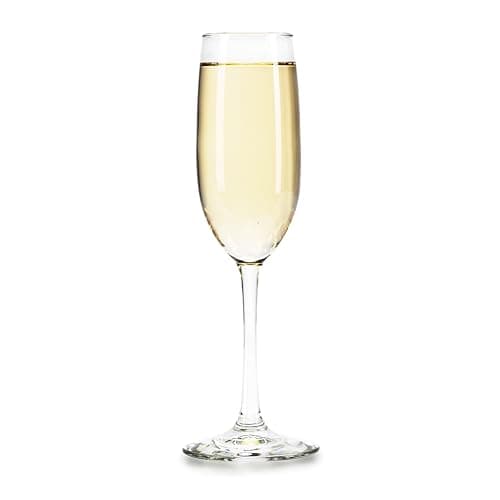 Libbey 7500 Vina Stemmed Flute Glasses, 8 oz, Set of 12Twelve real glass flutes in one box, with an 8 oz bowl that takes a proper pour with headroom. | Best glasses for a toast | 9.4 | $59.99 · View on Amazon #ad We may earn a commission · Price as of October 17, 2026 |
| 2 | 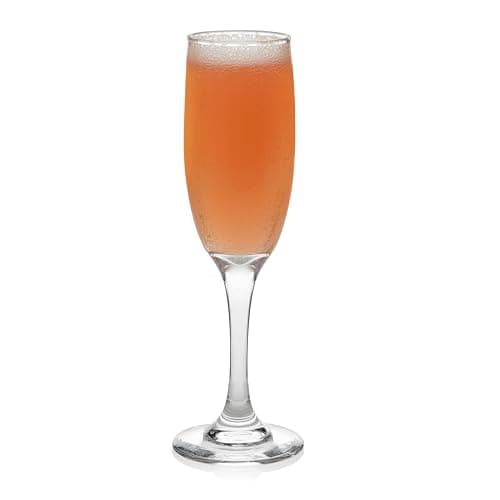 Libbey Catawba Champagne Flutes, 6 oz, Set of 12A 6 oz flute is the traditional size, and a smaller bowl makes a bottle go further. | Best for stretching the bottles | 9.1 | $29.49 · View on Amazon #ad We may earn a commission · Price as of October 17, 2026 |
| 3 | 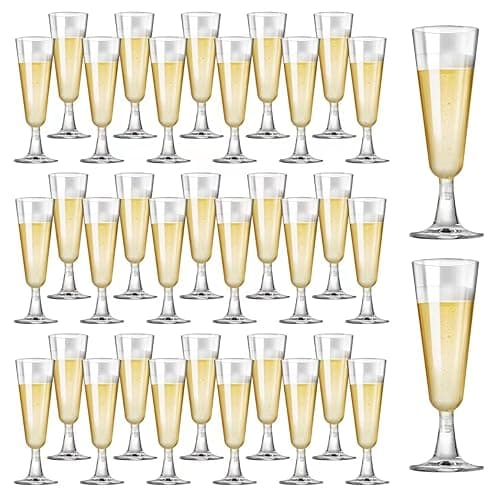 SUREHOME Plastic Champagne Flutes, 40 PackForty shatterproof flutes, which is the honest answer above about 25 people. | Best for a big crowd | 8.8 | $16.99 · View on Amazon #ad We may earn a commission · Price as of October 17, 2026 |
Scores are our own editorial rubric, explained on how we pick. Four criteria per category, scored out of ten, so the leading pick is clear at a glance.
The maths, in one paragraph
A standard 750 ml bottle holds about 25.3 fluid ounces. The standard pour for sparkling wine is 4 to 4.5 ounces — smaller than the 5 ounces poured for still wine, because a flute is narrow and because sparkling wine warms quickly in the glass. Divide one into the other and a bottle gives five to six glasses.
Everything else follows from that. For a toast, everyone gets one glass, so one bottle covers five people — call it four to five to allow for generous pouring and the glass someone knocks over. For champagne as the drink of the evening, plan on two to three glasses a head over the night, which is one bottle for every two guests.
The one adjustment worth making: count every head in the house, not every drinker. Sparkling cider or sparkling water in the same flute is what gets the non-drinkers and the children into the toast rather than standing at the edge of it holding a mug.
The chart
| Guests | Toast only (1 glass each) | Toast plus a top-up (2 each) | All evening (2 to 3 each) |
|---|---|---|---|
| 10 | 2 bottles | 4 bottles | 5 bottles |
| 12 | 3 bottles | 5 bottles | 6 bottles |
| 20 | 4 to 5 bottles | 8 bottles | 10 bottles |
| 30 | 6 to 7 bottles | 12 bottles | 15 bottles |
| 40 | 8 to 9 bottles | 16 bottles | 20 bottles |
| 50 | 10 to 11 bottles | 20 bottles | 25 bottles |
Round up, always. An unopened bottle keeps; a party that runs out at 11:55 does not recover. Two spare bottles is the right insurance on any guest count above about fifteen.
And buy the glasses to match. One flute per guest plus about twenty percent, rounded up to the pack size — people put a glass down, lose it and take another. The glassware decision itself, including stemmed versus stemless and whether to use glass at all, is in best champagne flutes for a party.
What to actually buy
For a toast, the bottle does not need to be champagne. That is not a cost-cutting dodge, it is what most people prefer in a flute at midnight anyway.
Prosecco is the sensible default for a crowd: lighter, a little sweeter, cheaper by a wide margin and better at scale than a mid-price champagne. For twenty people who will each drink one glass, it is the right call.
Cava is the dry one. Made by the same method as champagne, drier than most prosecco, and usually the best value on the shelf if your crowd prefers a crisp glass.
Champagne proper is worth it for a small group, a seated dinner, or a celebration with a reason attached to it. At forty people it is a lot of money poured into plastic flutes.
Something non-alcoholic that is not lemonade. A decent sparkling cider or a non-alcoholic sparkling wine, chilled and poured from a bottle into the same flute. This is the detail that makes a toast feel inclusive rather than polite.
Magnums are worth knowing about for a large party: one 1.5 litre bottle is two standard bottles, so it pours 10 to 12 glasses, it chills more slowly but stays cold longer, and it means half as many corks at midnight.
Chilling: the part people leave too late
Warm sparkling wine foams violently, pours badly and tastes worse. Chilling is not a finishing touch, it is the step that makes the pour work.
Refrigerator, from the afternoon. Three to four hours is the easy route. The constraint is shelf space: ten bottles will not fit in a fridge that also has the party food in it, which is why most hosts end up using ice.
Ice and water, 20 to 30 minutes. The fast method and the better one. Half ice, half cold water, bottles submerged to the neck. The water is the active ingredient — ice alone has very little contact with the glass and barely cools a bottle. A handful of salt in the bucket drops the temperature further.
Never the freezer. Twenty minutes is fine; the problem is that nobody remembers at twenty minutes. A frozen bottle of sparkling wine is a cleanup, not a drink.
Chill in waves. You do not need twenty bottles cold at eleven o’clock. Chill what you need for the toast, and put the next batch into the ice as the first comes out. A tub, a cooler or a clean sink all work as the holding bath.
Pouring for a crowd at midnight
The failure mode of a midnight toast is not the quantity of wine. It is that at 11:58 the host is still wrestling a cork and half the room has an empty hand. Four things fix it.
Set every glass out at 11:30. All of them, on one surface, in rows. This single step is the difference between a toast and a scramble, and it also tells you immediately whether you have enough glasses.
Open the bottles before you need them. Sparkling wine does not go flat in ten minutes. Open two or three at 11:45, and open the rest as you go rather than one at a time with a queue forming.
Pour in two passes. Tilt the glass, pour down the inside wall, fill each about halfway on the first pass, then go back along the line once the foam has settled. Nothing overflows and the whole row is done in a couple of minutes.
Recruit someone. Twenty glasses is a two-person job. One pours, one carries.
Opening a bottle safely, for completeness: take the foil off, keep a thumb on the cork the whole time the cage is loose, hold the cork and turn the bottle rather than the cork, and ease it out with a sigh instead of a bang. Point it away from people and away from the ceiling light.
The rest of the evening’s timing — when the food goes out, when the decorations go up, when to start the countdown — is in the New Year’s Eve party checklist.
What else to buy alongside it
Champagne is the one drink nobody plans properly and it is rarely the only drink. A rough shape for a four to five hour party:
- One drink per person per hour across everything, falling off after the first two hours.
- Ice: two pounds a head. It is always the thing that runs out. Buy more than you think and keep it somewhere cold.
- Mixers and soft drinks for a third of the room. Not everyone is drinking, and the ones who are will want water.
- Something to eat that holds. A party that runs to midnight needs food at nine, not just at seven — the dishes that survive a five-hour table are in party food that stays hot.
And the glasses. More parties are short of flutes than short of wine, because stemware is sold in fours and sixes and a party is twelve or twenty. Count the heads, add twenty percent, and buy to the pack size — the full breakdown, including when to give up on glass entirely, is in best champagne flutes. The rest of the kit list is in New Year’s Eve party supplies.
The products, in detail
#ad We may earn a commission · Price as of October 17, 2026
#1 · Best glasses for a toast
Libbey 7500 Vina Stemmed Flute Glasses, 8 oz, Set of 12
Twelve real glass flutes from a restaurant-glassware maker, dishwasher safe, in one box. For a party where everyone gets a toast, this is the default.
- Count
- 12 glasses
- Capacity
- 8 oz
- Glass
- Restaurant-quality, minimal beading
- Care
- Dishwasher safe
What’s good
- Twelve in a set, which is the count a party needs
- 8 oz bowl — a 4.5 oz pour sits comfortably at half
- Dishwasher safe, which decides what the next morning looks like
- Libbey is a commercial glassware maker, so breakages can be replaced
What’s not
- Stemmed glass at a standing party on a hard floor is a real risk
- Tall flutes do not stack, so they need cupboard height
- Twelve is twelve — a party of 20 needs two boxes
- The dearest glassware option here
Looks right
9.6
Pour headroom
9.4
Cleanup
9.4
Count and value
9.0
#ad We may earn a commission · Price as of October 17, 2026
#2 · Best for stretching the bottles
Libbey Catawba Champagne Flutes, 6 oz, Set of 12
The cheapest way to put a dozen real glass flutes on a table. Six ounces is the traditional pour size, which also means a bottle stretches further.
- Count
- 12 glasses
- Capacity
- 6 oz
- Shape
- Stemmed, blossom-inspired bowl
- Care
- Dishwasher safe
What’s good
- Twelve real glass flutes at the lowest price here
- 6 oz is the classic flute size — a bottle reliably gives six glasses
- Dishwasher safe
- Plain stemmed shape that does not date
What’s not
- 6 oz fills quickly — a 4.5 oz pour is close to the rim
- Lighter glass than the 8 oz set, so it feels less substantial
- Thin stems are the first thing to break in a dishwasher basket
- Still glass, with all the floor risk that implies
Looks right
9.0
Pour headroom
8.0
Cleanup
9.4
Count and value
9.8
#ad We may earn a commission · Price as of October 17, 2026
#3 · Best for a big crowd
SUREHOME Plastic Champagne Flutes, 40 Pack
Shatterproof and countable. Real glass at midnight, on a floor, with everyone standing up, is a decision you get to regret at 12:05.
- Count
- 40 glasses
- Size
- 5 oz
- Material
- Clear rigid plastic
- Why
- No glass underfoot at midnight
What’s good
- 40 in a pack — enough for a large party with spares
- Cannot break on a hard floor at five past midnight
- 5 oz, which is a sensible single-pour size
- Nothing to wash afterwards
What’s not
- Disposable, which is a fair objection
- Reads as plastic close up
- 5 oz leaves little headroom at a generous pour
- Rigid plastic cracks rather than bending if stepped on
Looks right
7.4
Pour headroom
8.2
Cleanup
9.8
Count and value
9.6
Frequently asked questions
Four to five bottles for a single midnight toast, eight if everyone gets a top-up, and about ten if champagne is the drink for the whole evening. The maths: a 750 ml bottle is about 25.3 fluid ounces and the standard sparkling pour is 4 to 4.5 ounces, so one bottle fills five to six glasses.
Five to six. A standard 750 ml bottle holds about 25.3 fluid ounces and the standard pour for sparkling wine is 4 to 4.5 ounces — smaller than the 5-ounce pour used for still wine. A 1.5 litre magnum therefore gives 10 to 12 glasses.
One glass, which works out at about a fifth of a bottle a head — so one bottle for every four to five guests once you allow for generous pouring. Count everyone in the room, not just the drinkers: sparkling cider in the same flute is what brings the non-drinkers and the children into the toast.
Three to four hours in the refrigerator, or 20 to 30 minutes in a bucket of half ice and half cold water with the bottles submerged to the neck. The water matters — ice on its own barely touches a bottle. Avoid the freezer: twenty minutes is fine and nobody ever remembers at twenty minutes.
No, and for a large crowd you probably should not. Prosecco is lighter and much cheaper at scale, cava is made by the same method as champagne and is usually the best value dry option, and both pour and taste well in a flute at midnight. Save real champagne for a small group or a seated dinner.
Set every glass out in rows before you start, open two or three bottles ahead of time, then pour in two passes — tilt each glass, pour down the inside wall, fill about halfway along the whole line, and go back to top up once the foam settles. Twenty glasses is a two-person job: one pours, one carries.
Sources
Related reading
- The Best Champagne Flutes for a PartyFive flute sets from real glass to shatterproof plastic, with the count math for a midnight toast and the honest case for not using glass at all.
- New Year's Eve Party at Home: The ChecklistA week-out to midnight countdown, with the quantities, the food that survives five hours, and the midnight plan.
- The Best New Year's Eve Party SuppliesFour buys that cover a home New Year's party, sized by guest count rather than by enthusiasm.
- New Year's Eve Party Food That Stays HotWhat holds for five hours, what does not, and the equipment that lets a buffet run without you.
- New Year's Eve with KidsThe early-countdown trick, what to buy for children specifically, and how to keep the adult evening intact.